
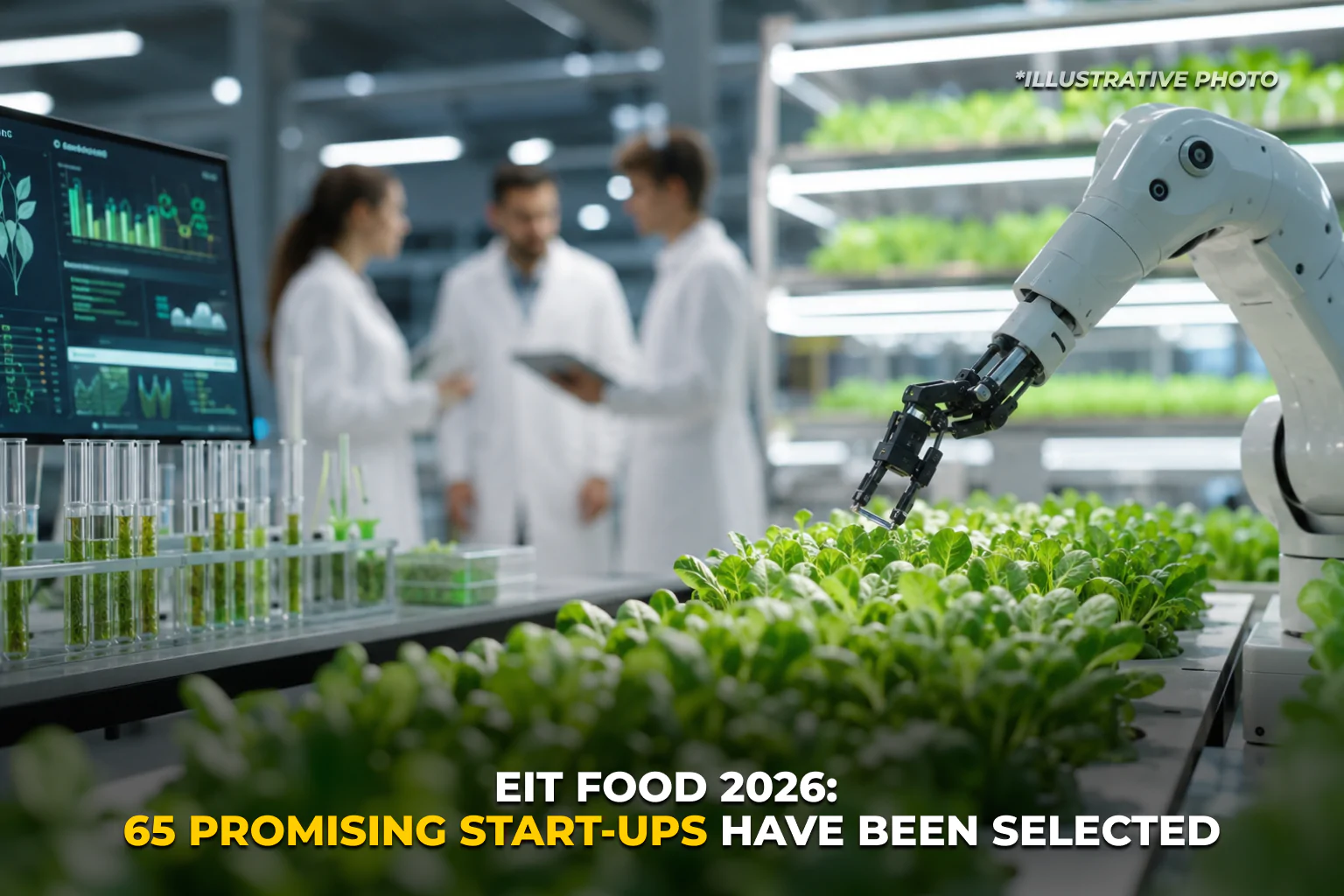
EIT Food’s latest cohort of 65 start-ups spans biotech ingredients, digital and autonomous agricultural systems, circular food solutions and low-carbon supply chains. As Food Ingredients First reports, the programme centres on technology validation and direct collaboration between start-ups, corporations and research institutions.
Europe’s agri-food innovation ecosystem is entering a new phase focused on scaling and real-world impact. Against a backdrop of climate pressure, shifting consumer expectations and tightening investment conditions, programmes that connect start-ups with corporations and research organisations are becoming central to how food system innovations actually reach the market.
Preparing for commercial growth
With specialised hubs in six countries and direct engagement with major industry players — including Bayer, Cargill, Danone, Mars and Mondelēz International — the programme is designed to take ideas beyond the lab and into real-world application. Each hub focuses on a key area shaping the future of food:
- water-smart agri-food systems in Catania (Italy);
- circular food solutions in Helsinki (Finland);
- low-carbon and smart supply chains in Munich (Germany);
- biotech ingredients and processes in Paris (France);
- digital and autonomous agriculture in Wageningen (Netherlands);
- climate-resilient agriculture in Warsaw (Poland).
Major food companies are increasingly setting specific challenges they need start-ups to solve, rather than simply scouting for new ideas. In response, start-ups are expected to demonstrate that their technology works, is evidence-backed, meets regulatory requirements and can be realistically scaled — a shift towards more practical, outcome-oriented innovation in agri-food.
Scaling food innovation
Benoît Buntinx, Director of Business Creation at EIT Food, explains that the programme differs from traditional accelerators by placing technology validation at the centre of its support model. Participating start-ups receive individual technology roadmaps, validation opportunities, access to research and technology organisations, and direct collaboration with corporate partners through open innovation challenges.
“Transforming the global food system requires the synchronised power of our entire innovation network. By connecting these 65 start-ups with world-class research institutions, market gatekeepers and specialised investors, we are providing the ecosystem integration they need to bring cutting-edge science to market,” says Buntinx.
Throughout the programme, participating companies will take part in targeted networking events with investors, researchers and corporate partners, as well as reverse pitching sessions where large food and agriculture companies present specific commercial and technological challenges they need solved.
Building innovation ecosystems
Marie Russier, Head of Entrepreneurship Programmes at EIT Food, says:
“Deep technologies in agri-food require uncompromising operational and scientific validation to survive the transition from lab to industrial scale. Our milestone-driven acceleration programme directly addresses this, enabling start-ups to rigorously validate their technologies and increase technology readiness levels, building investment-ready, market-ready businesses capable of delivering real impact across the food system.”
Since its launch nine years ago, the EIT Food Accelerator Network has supported over 500 European start-ups, with several alumni securing Series A and Series B funding, launching new products and expanding to international markets. As pressure grows to build more resilient, sustainable and competitive food systems, programmes that combine scientific validation with commercial partnerships are becoming an increasingly important part of Europe’s agri-food innovation landscape.
Source: Food Ingredients First