
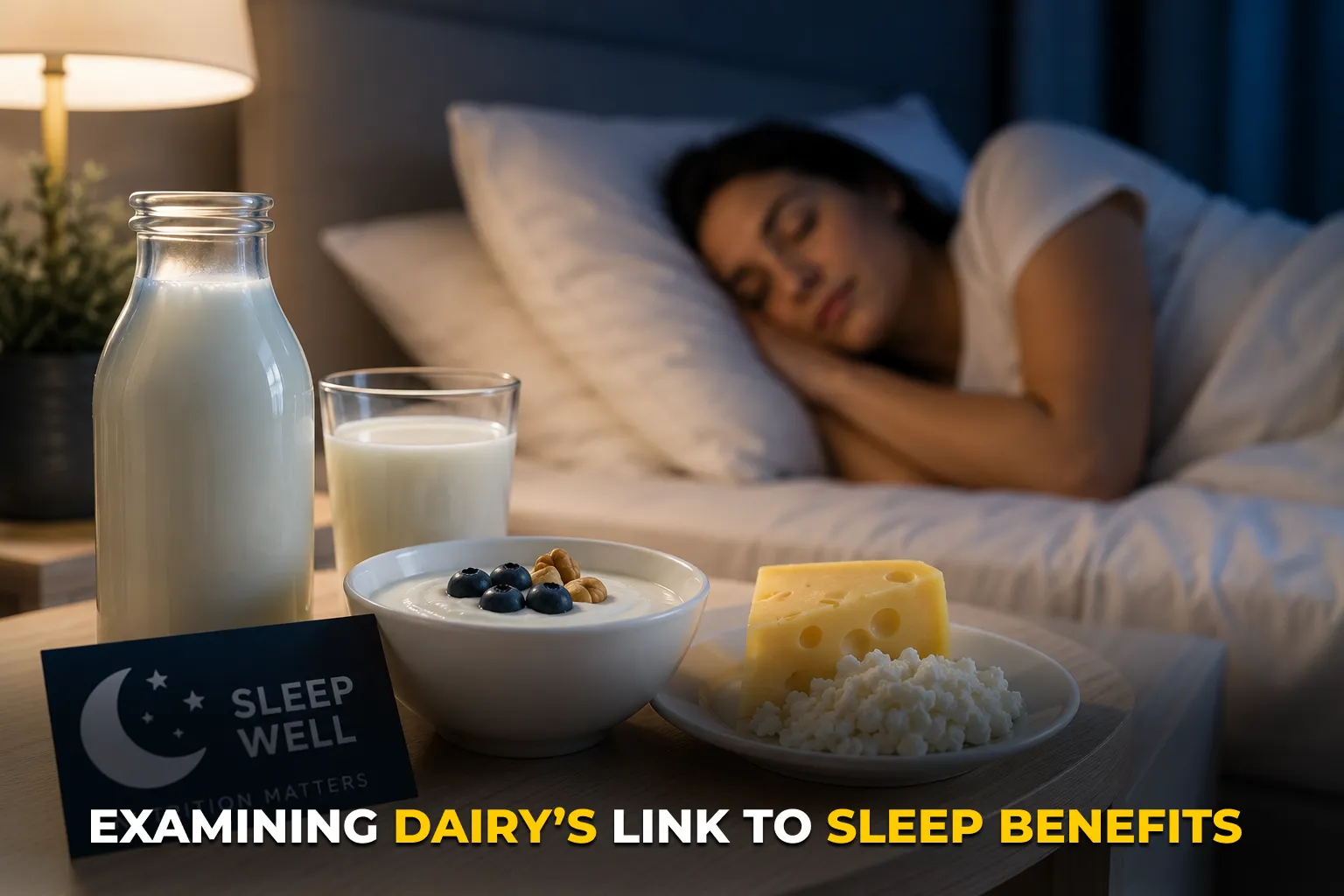
Consuming about three servings of dairy foods a day may be linked to more consistent and favourable sleep patterns, writes Dr. Matthew Pikosky, vice president of Nutrition Research at the National Dairy Council (NDC), in a column for Dairy Foods.
Sleep is widely seen as a pillar of health — it features in the American Heart Association’s «Life’s Essential 8», alongside diet and physical activity — so consumers increasingly want evidence-based ways to sleep well. New NDC-sponsored research, using US National Health and Nutrition Examination Survey (NHANES) data, examined links between dairy intake and both self-reported and objectively measured sleep in adults, and found that around three daily servings may be associated with better sleep patterns.
Compared with people eating just over half a serving a day, those consuming about three servings were less likely to get too little sleep (under seven hours), too much (over nine hours), or to have trouble sleeping overall. Among a subset with sleep-tracking data, higher dairy intake — especially fermented options such as yogurt and cheese — was tied to more regular sleep timing, with a 28% to 31% lower risk of poor sleep outcomes.
The nutrient mix in dairy may help explain this: tryptophan, zinc and magnesium in milk support sleep-related neurotransmitters, while fermented dairy may benefit the gut microbiome, another system involved in sleep regulation. Cause and effect cannot yet be established, Pikosky notes, but this is a strong study with a nationally representative dataset. For dairy companies, the implication is clear — as consumers prioritise sleep, dairy may offer a credible, science-backed way to help meet that need while reinforcing healthy eating patterns.
About the author
Dr. Matthew Pikosky is vice president of Nutrition Research at the National Dairy Council, with over 20 years of experience in scientific research and translating nutrition science into actionable recommendations. He leads NDC’s Consumer Benefits and NHANES research programmes, and previously worked at Nestlé Health Science and the US Army Research Institute of Environmental Medicine. He holds bachelor’s, master’s and Ph.D. degrees from the University of Connecticut. Full bio on his Dairy Foods author page.
Source: Dairy Foods