

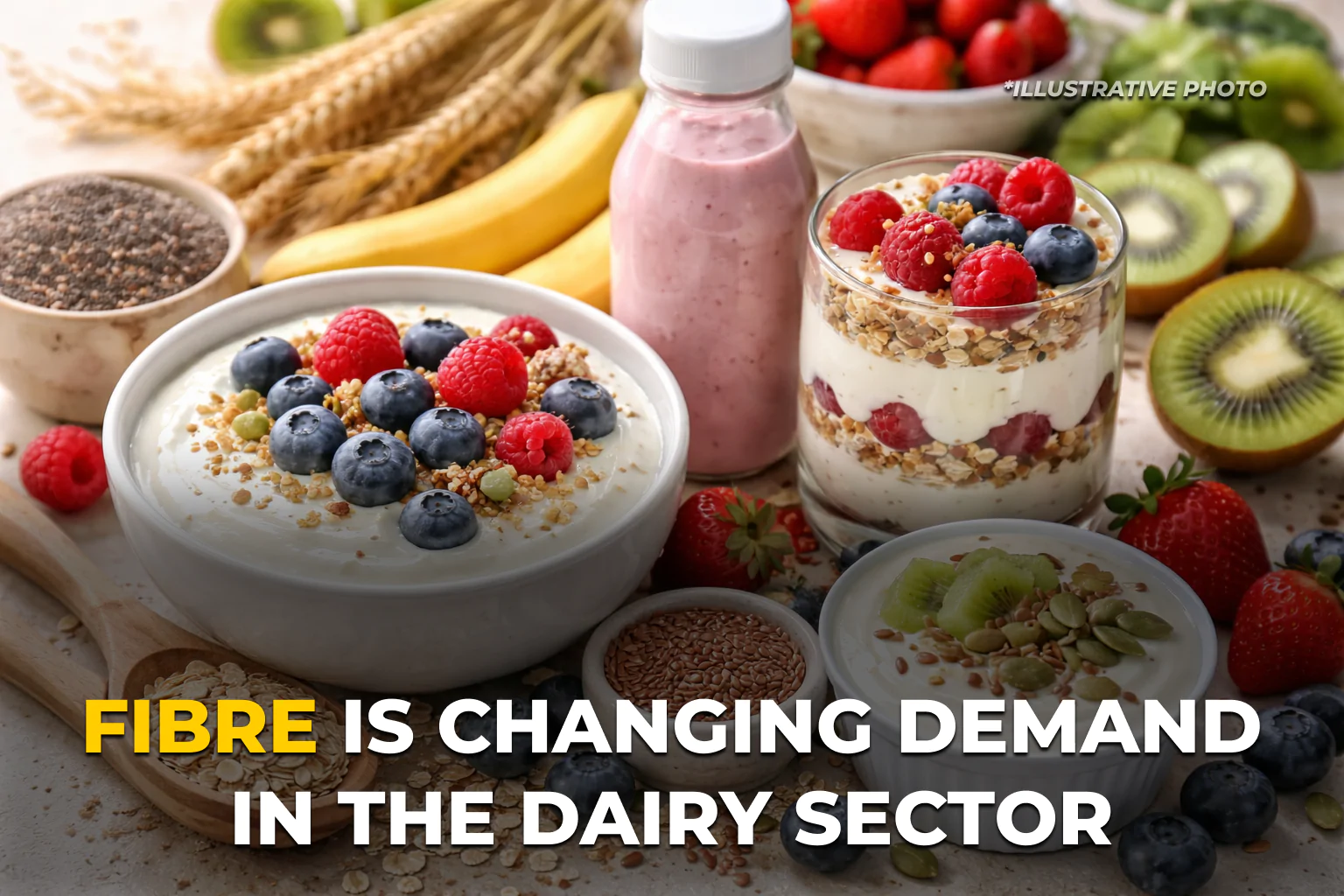
In the global dairy industry, demand is growing for functional products, where fibre, gut health and ‘clean’ labels are shaping new consumer trends. According to Dairy Reporter, Danone notes that nutrition is increasingly focused not only on health benefits but also on specific functional effects — from improving sleep to supporting the immune system.
Functional foods have become an integral part of the modern diet. According to Lumina Intelligence, ingredients such as vitamins, minerals, protein, fibre, probiotics and omega-3 have the greatest influence on consumer choice. At the same time, perceptions of functionality vary by region: in Asia, demand is driven by a cultural preference for such ingredients, whereas in Western countries, products designed to boost physical activity dominate, with high-protein dairy products performing particularly well.
Fibre as the new focus of dairy products
Although protein remains dominant, fibre is rapidly gaining ground. This is because most consumers are deficient in fibre and are actively seeking ways to improve their diet. Social media plays a significant role in popularising this trend, particularly through phenomena such as ‘Fibermaxxing’ and ‘GutTok’.
Christy Lee, Director of Nutrition and Scientific Affairs at Danone US, notes: “Consumers are hearing more than ever about gut health and fibre through to social media trends such as ‘Fibermaxxing’ and ‘GutTok’,” adding that “nearly seven in 10 consumers say they are actively trying to increase their fibre intake.”
At the same time, over 20% of consumers pay attention to the fibre content on labels, but their understanding of its role remains limited. Research shows that a significant proportion of consumers do not fully understand what prebiotic fibre is and how it affects health. This presents opportunities for dairy producers to improve their communication and make it simpler and more scientifically sound.
Expanding the functionality of dairy products
Attitudes towards fibre are gradually changing. Whereas it used to be associated primarily with digestion, consumers now link it to a wide range of benefits, including metabolic health, weight management and blood sugar control.
Christy Lee emphasises: “We’re finding that consumers are increasingly connecting fibre not just to digestion, but to broader benefits like metabolic health, immunity, and weight management, particularly through feelings of fullness and blood sugar stabilisation.”
She also adds: “Fibre helps to nourish a balanced gut microbiome, promoting microbial diversity and supporting effective digestion.”
Among more informed consumers, fibre is also associated with cardiovascular health, reduced inflammation, and potential benefits for the immune system and mood, although these effects are currently regarded as secondary.
Perceptions of functional products in Europe
In Southern and continental Europe, particularly in France and Italy, consumers tend to prefer minimally processed products and may be sceptical about functional foods. At the same time, even in these markets, the majority of consumers purchase products with added functional properties — around 60% in France and 63% in Italy.
That said, taste, texture and convenience remain the key factors influencing choice. Demand for on-the-go formats and snacks is growing, in line with the trend towards more compact yet nutritious meals.
A balance between health and taste
Dairy producers are striving to combine functionality with excellent sensory qualities. In particular, Danone is developing products that offer both nutritional value and an appealing taste.
The company notes that there is growing interest in products that combine several functional properties. For example, Activia Fiber contains probiotics alongside fibre, whilst Oikos Protein Shakes provide 30 g of protein and 5 g of prebiotic fibre, combining support for muscle health and digestion.
The ‘clean label’ trend
Another key factor in the development of the dairy industry is the trend towards simplicity in product composition. Around 70% of consumers prefer products with a short and clear list of ingredients.
Susan Zarife, Chief Research and Innovation Officer at Danone US and Canada, notes: “Consumers pay attention to the composition and functionality of ingredients when reading product labels… 70% of consumers prefer products with short, recognisable lists of ingredients.”
She also points out that consumers become less particular about a product’s appearance if it meets their expectations regarding quality and taste. In particular, the removal of artificial colourings did not affect the perception of the Light + Fit Key Lime Greek yoghurt.
Further development of functional dairy products
Further market growth is expected to be driven by the development of ingredients that support gut health, in particular prebiotics, probiotics, postbiotics and synbiotics.
Christy Lee notes: “We believe the future of nutrition lies in understanding and harnessing the collective power of biotics – prebiotics, probiotics, postbiotics and synbiotics – for gut health and a variety of other health benefits.”
She also adds that there is growing interest in prebiotic fibre and resistant starch, which support the microbiome and are in line with the general trend towards mindful eating.
Overall, further growth in the dairy sector is expected in the segment of products containing added fibre, natural ingredients and clear communication, which combine several functional benefits at once.
Source: Dairy Reporter