
Ultrafiltered dairy products demonstrate a combination of growth, margin, and alignment with healthy lifestyle trends. As reported by Teodora Lyubomirova in her article on Dairy Reporter, this segment is actively developing and attracting major players.
Ultrafiltered dairy offers a rare mix of growth, margin, and modern wellness appeal. Where is the category heading?
Major beverage companies recognized the opportunity early: despite its unglamorous image, ultrafiltered milk showed strong potential. With higher protein and lower sugar and lactose levels, it fits well into health-focused diets and fast-growing ready-to-drink (RTD) formats. As soft drink sales stagnated, dairy emerged as a potential growth alternative.
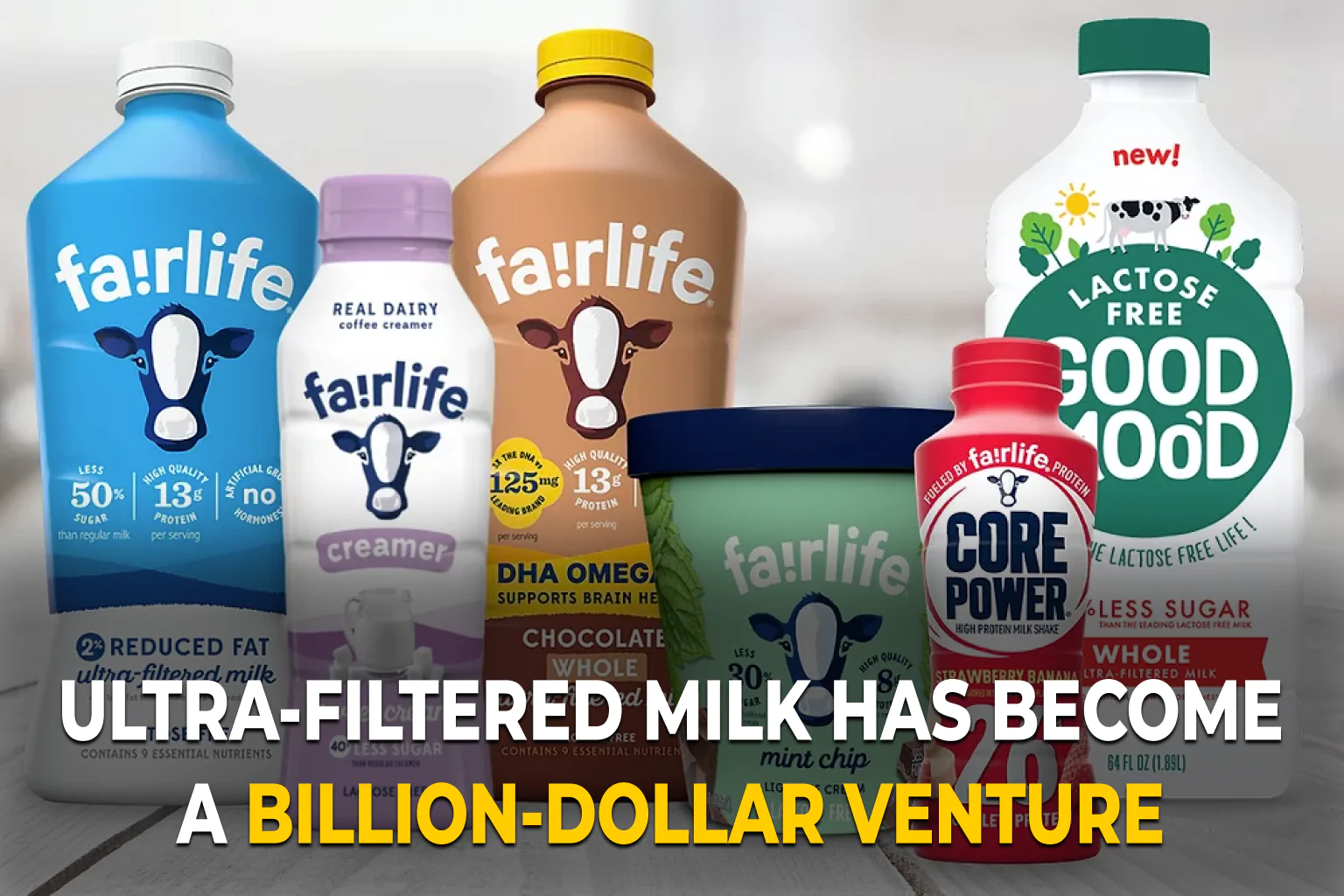
The Coca-Cola Company was among the first to act. In 2014, it partnered with Select Milk Producers to launch Fair Oaks Farms Brands, later evolving into Fairlife. Its flagship product, Core Power, became a leading high-protein sports drink within the ultrafiltered milk segment. By 2020, Coca-Cola acquired full ownership of Fairlife for nearly $1 billion.
Consumer demand for premium “clean label” dairy has supported consistent double-digit growth. However, competition is now intensifying, and the category is evolving rapidly.
Premium product with strong demand
Ultrafiltered milk stands out nutritionally: about 50% more protein, 50% less sugar, and no lactose. Although it represents only 7% of total milk sales, it continues to grow strongly—value sales rose 14.8% and volume 5.5% over the past year, according to Circana.
Growth in the U.S. is starting to moderate, but this reflects category maturation rather than decline. Fairlife still dominates (around 96% of value sales), while Darigold FIT has rapidly expanded, more than doubling sales year-over-year. New entrants such as Byrne Dairy, DairyPure Milk50, and Pioneer Pastures are also gaining traction.
The category mainly attracts higher-income consumers, millennials, and young families. Its premium pricing—e.g., Fairlife priced significantly above regular milk—creates both barriers and opportunities.
New formats and competitive pressure
While Fairlife leads, competitors are scaling up. Byrne Dairy focuses on local sourcing and is investing in bottling capacity. DairyPure Milk50, from Dairy Farmers of America, competes with a slightly lower price point. Pioneer Pastures emphasizes community-driven branding.
Private labels are also expanding quickly, with sales up 20% year-over-year. Retailers are investing in innovation, especially in high-protein and functional dairy products.
Health trends drive the category
Health and wellness remain the primary growth drivers. Filtration enhances milk without additives, aligning with consumer demand for fewer artificial ingredients.
Consumers are increasingly avoiding ultra-processed foods and seeking more protein, less sugar, and better nutritional profiles—partly influenced by trends such as GLP-1 usage. Ultrafiltered milk fits these needs: high protein, low sugar, lactose-free, and often with added calcium benefits.
The technology is also spreading to other categories, including yogurt (e.g., Too Good, Oikos Pro) and some cheeses.
Regular milk is also stabilizing
Beyond the premium segment, traditional liquid milk is seeing renewed interest after decades of decline in the U.S. Sales volumes stabilized in 2024–2025, supported by the same health trends.
Consumers are returning to dairy for its protein content and perceived health benefits, with whole milk leading the recovery. Updated dietary guidelines emphasizing protein and full-fat dairy further support this shift.
Overall, the sector is entering a dynamic phase. For companies targeting premium ultrafiltered dairy, there are significant opportunities for growth, innovation, and new product formats.
Source: Dairy Reporter