
Demand for premium protein is reshaping global dairy dynamics, with processors steering milk into cheese for stronger margins while expanding whey streams for high-value whey protein concentrate (WPC) and whey protein isolate (WPI), DairyReporter reports.
Surging demand for high-protein foods and drinks — from everyday yogurts and ready-to-drink (RTD) shakes to premium sports nutrition — has tightened supply, with some order books full months ahead.
Finding capacity without expanding plants
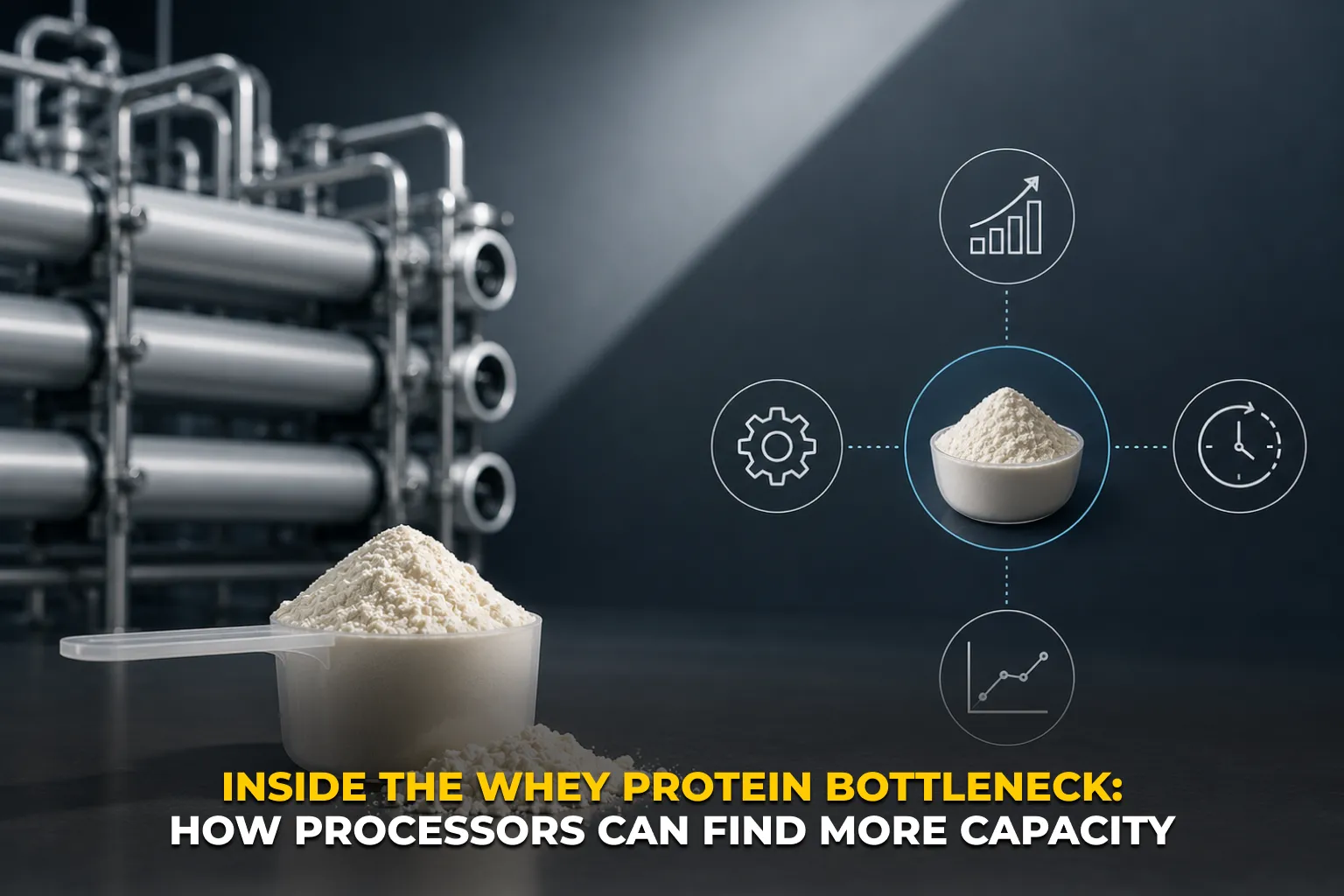
Expansion projects can take years to come online, but whey processors can squeeze more from existing membranes, clean-in-place (CIP) cycles, pasteurisers and dryers, says Rachel McGinness, RD&E program leader at Ecolab.
«Most customers are capacity-constrained, particularly at older facilities where membrane systems were installed years ago», she says.
Systems once run at 60% capacity now operate at full tilt, with limited surface area to filter and concentrate protein. Making WPC80 or WPI90 also needs evaporation, drying and pasteurisation, so time saved on membranes may simply shift the bottleneck downstream, with most plants running 20-plus hours a day.
CIP must therefore be treated as part of production, not downtime: «if we don’t clean well, we are not going to run well», McGinness notes, since membranes are hydraulic systems that must be cleaned once pressure builds.
Better cleaning has delivered savings of 15 to 45 minutes per CIP — hundreds of hours a year on constrained lines, which can be turned back into production, or even «an extra vat of cheese».
How AI and digital tools help
Monitoring and AI tools are already making a difference by replacing manual cleaning logs: «Digital insights and AI are making data from every CIP and production run visible», McGinness says, letting processors act ahead of time instead of combing through weeks of logs after production time is lost.
Adoption is uneven — some processors are eager, others still rely on manual logs — but for those already collecting data, adding AI functionality makes sense on a cost-to-benefit basis.
Whey processing cheat sheet
- look at each CIP individually and identify where time can be saved;
- shorten CIP turnaround where possible while maintaining cleaning effectiveness;
- improve membrane flux during production through better membrane care and optimisation;
- consider adding membrane loops to existing systems to expand capacity (requires hydraulic redesign);
- use digital monitoring and AI to spot pressure, flow or cleaning issues before production time is lost.
Source: DairyReporter