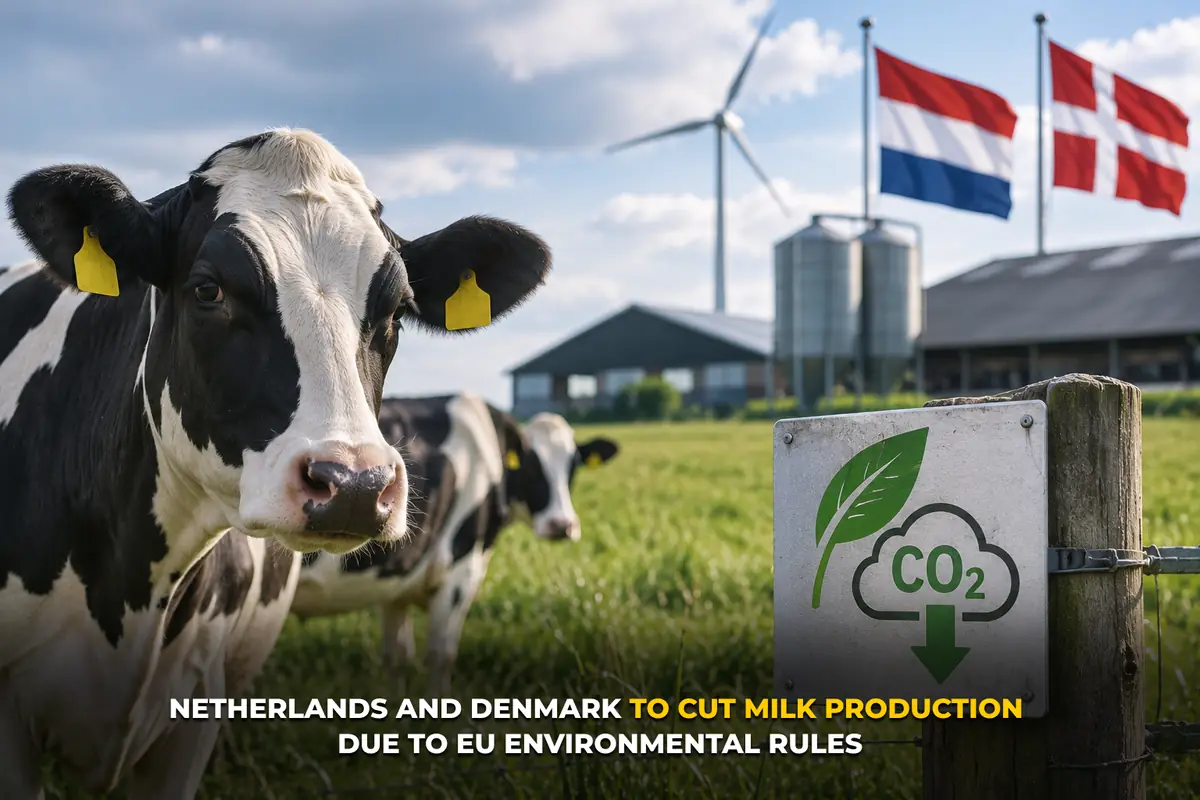
Tighter environmental restrictions and animal welfare requirements, along with shrinking margins since the start of 2026, may lead to dairy farm closures in the EU over the long term, according to the US Department of Agriculture’s Foreign Agricultural Service (FAS), The Dairy Site reports.
Key points:
- a Dutch compensation scheme is expected to remove around 64,000 cows;
- the new Dutch cabinet has proposed a EUR 20 billion production-limiting plan to 2035;
- Danish farmers will pay a carbon tax of about EUR 130 per cow per year;
- in Germany, strict environmental rules and animal welfare requirements are reducing cattle numbers.
Netherlands: loss of the nitrates derogation and a reduction scheme
In the Netherlands, the loss of an EU derogation allowing surplus manure to be spread on pastures, known as the «nitrates derogation» and tied to water quality rules, prompted dairy farmers to slaughter part of their herds.
In April 2026, the European Commission approved a Dutch subsidy programme that lets dairy farmers keep 10% to 20% fewer cows on the same area of grassland in exchange for compensation. The programme is expected to remove around 64,000 cows from the national herd.
On 26 June 2026, the new Dutch cabinet also proposed a EUR 20 billion policy to limit dairy production until 2035, aiming to reduce nitrogen emissions from agriculture and other sectors and restore nature.
The plan includes:
- new farm-level ammonia emission standards;
- a maximum of 2.6 livestock units per hectare for dairy farms by 2035;
- nitrogen-sensitive zones around Natura 2000 areas: 15 areas with one-kilometre zones and around 85 areas with 500-metre zones.
The proposed buffer zones could affect an estimated 4,000 livestock farmers, most of them dairy. The final impact remains unclear, as the plan needs approval from the Dutch Senate.
Denmark: a carbon tax on livestock
In Denmark, a government climate agreement passed on 18 November 2024 introduced an agricultural carbon tax and the conversion of 15% of farmland back into forest. Dairy and beef farmers will pay about EUR 130 per cow per year.
FAS said the legislation will likely lead to more intensive and larger-scale farming after 2027.
Germany: fewer cattle due to environmental rules
In Germany, strict environmental protection rules and greater participation in retailers’ animal welfare labelling programmes, which require more space per animal, are also contributing to declining cattle numbers.
Source: The Dairy Site