
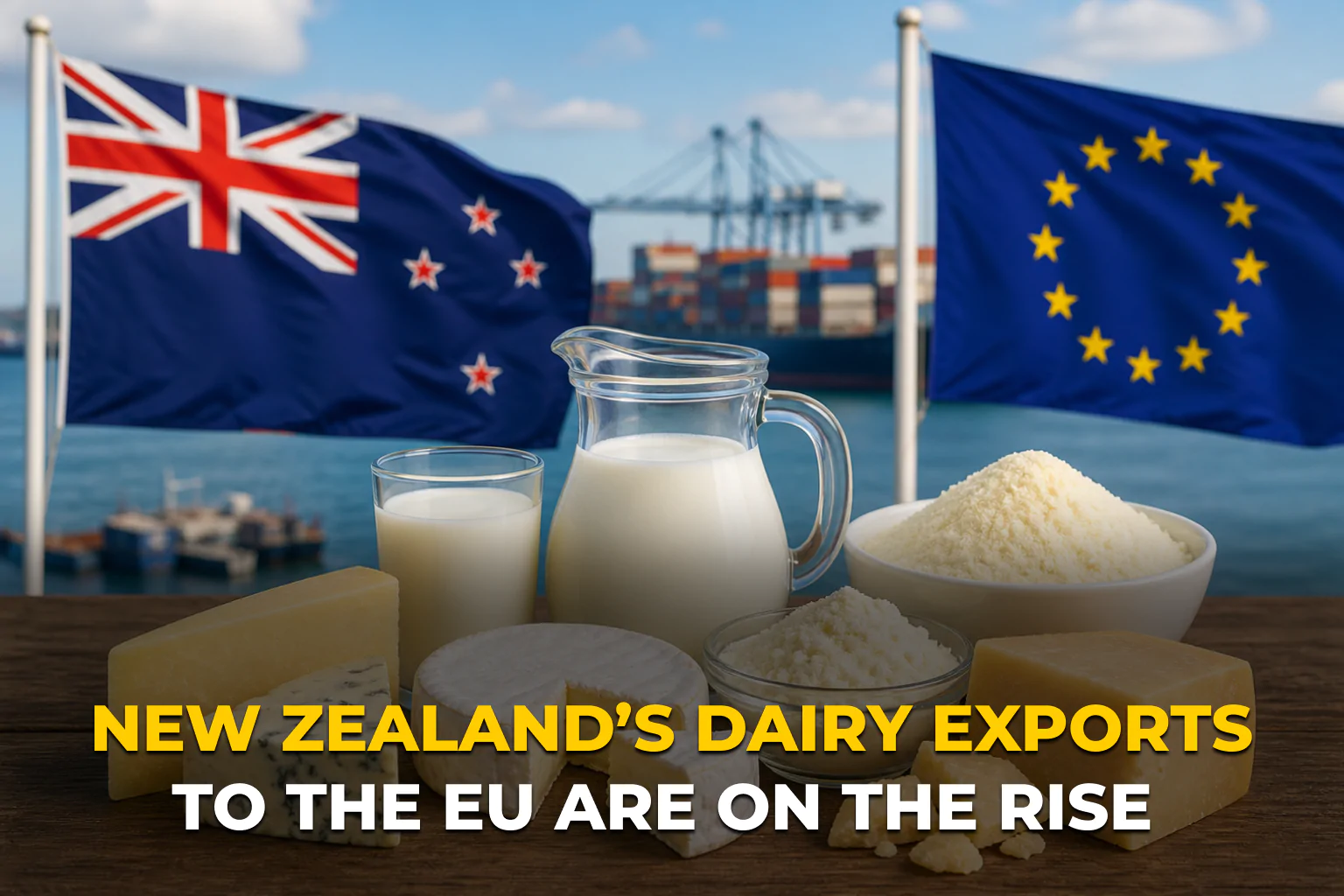
Following the launch of the free trade agreement between New Zealand and the EU, dairy exports have begun to rise gradually, opening up new opportunities for value-added products, according to the Rural News Group.
Exports of dairy products from New Zealand to the EU are growing under the free trade agreement, opening up new opportunities for the production of high-quality products, despite quotas and restrictions on competition.
The early growth in exports highlights both the opportunities and limitations of the free trade agreement between New Zealand and the EU for the dairy and agribusiness sectors.
New Zealand’s agri-food exports to the European Union are showing early growth under the Free Trade Agreement (FTA) between New Zealand and the EU, with the dairy industry leading the way in capitalising on the new opportunities. Preliminary trade data indicate a gradual increase in the volume and value of exports, reflecting improved market access following the agreement’s implementation.
Dairy exporters are benefiting from lower tariffs and expanded quotas, although market access remains regulated and will be phased in over time. These structural constraints mean that, whilst growth is evident, it is gradual rather than transformative, requiring exporters to engage in strategic planning to take full advantage of the agreement’s provisions.
Industry representatives emphasise that high-quality dairy products, including speciality cheeses and premium ingredients, have the best prospects for success in the European market. The Free Trade Agreement therefore encourages a shift towards value-added production, in line with global trends in the dairy industry, which focus on differentiation and margin optimisation.
At the same time, competition within the EU remains fierce, as local producers and established supply chains set high standards for quality, sustainability, and traceability. New Zealand exporters must meet these requirements whilst maintaining cost-effectiveness and a stable supply chain in order to secure a long-term market share.
Overall, the free trade agreement between New Zealand and the EU is becoming a strategic platform for export diversification and growth in the dairy sector. Although challenges remain, the agreement provides a foundation for expanding trade relations, strengthening New Zealand’s position in global dairy markets and stimulating innovation across the entire value chain.
Source: Rural News Group