
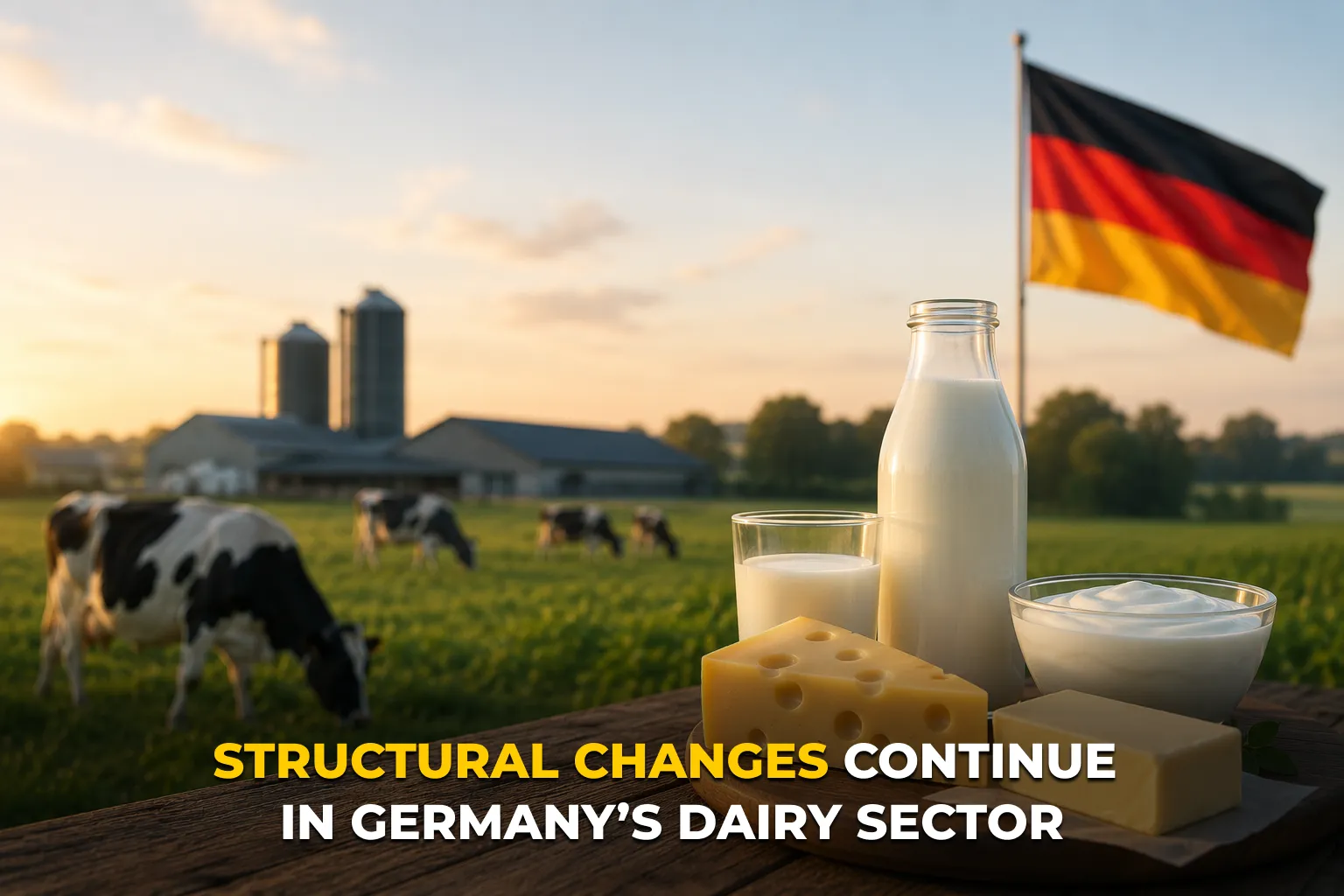
Germany’s dairy sector continues to undergo structural transformation as the number of dairy farms declines while average herd sizes increase. According to Moproweb, producers continue to face economic pressure from low farmgate milk prices and persistently high production costs.
Although the industry is becoming more consolidated, financial conditions remain challenging. At the same time, reports of a sharp decline in drinking milk consumption appear to be overstated. Nielsen data indicate only a slight decrease in demand, while production of higher value-added dairy products—including yogurt, quark, cream, butter and especially cheese—continues to grow.
Market conditions vary across dairy commodities. Butter prices remain under pressure, whereas dairy proteins are benefiting from strong global demand for high-protein products, making protein ingredients one of the strongest-performing market segments. Block cheese prices remain below last year’s levels but have recently stabilised.
Cheese continues to be the main driver of Germany’s dairy exports, while cheese imports are also increasing, reflecting solid domestic demand.
Globally, China is expected to play a smaller role as a dairy importer as expanding domestic milk production reduces its reliance on imports. Meanwhile, demand continues to grow in other regions, particularly Southeast Asia and the Middle East.
Looking ahead, market experts expect relatively stable conditions in the coming months. Rising global demand for dairy products, supported by population growth and the popularity of protein-rich foods, is being offset by slower milk production growth and weather-related supply constraints, including periods of extreme heat. As a result, supply and demand are expected to remain broadly balanced, supporting stable dairy prices.
Source: Moproweb