
In Germany, there is discussion about lowering food prices due to tax changes. According to BILD, the government is proposing to completely abolish VAT on basic foodstuffs.
The SPD’s economic wing, the ‘Seeheimer Kreis’, is proposing to abolish value added tax on fruit and vegetables.
Berlin — the cost of living is rising: consumer prices rose by 2.7% in March. This was due to high petrol and diesel prices. And experts fear that the fuel crisis will soon start to affect supermarket prices too.
The SPD wants to counter this — and make healthy foods cheaper by cutting taxes.
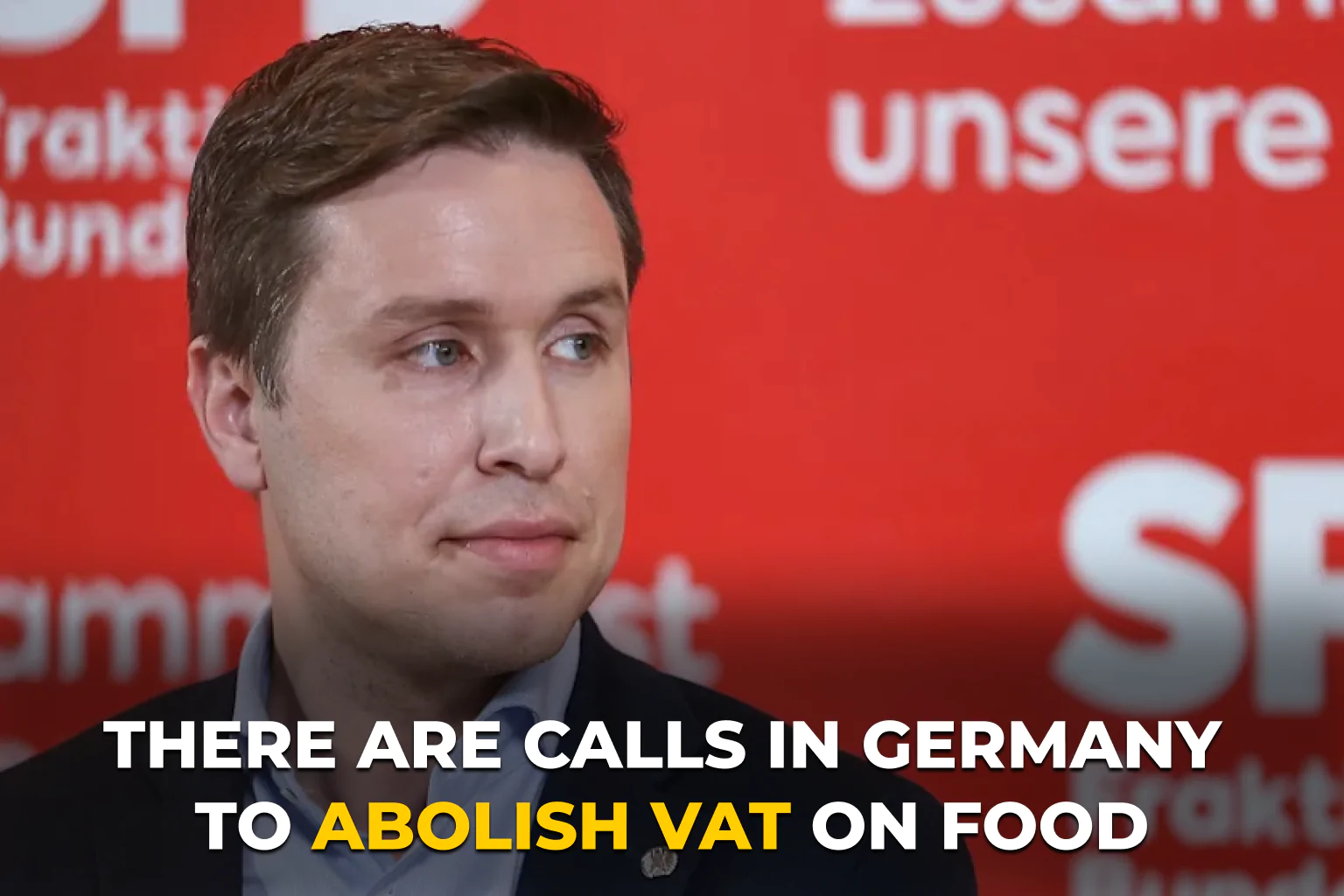
Esra Limbacher, head of the SPD’s influential economic think tank, the ‘Seeheimer Kreis’, has called for the complete abolition of VAT on healthy foods in a comment for BILD.
“Inflation is a poison for both our economy and every citizen. We need to rein in inflation for ordinary people in our country,” said Limbacher.
German policy cannot control global oil prices.
“But we can ensure that rising energy and food prices do not hit Germans’ wallets too hard.”
His key proposal:
‘VAT on healthy foods should be reduced to zero. After all, whether a child can eat healthily should not depend on their parents’ financial situation.’
Chocolate and crisps will remain expensive
For Limbacher, it is clear which products should become cheaper and which should not. The reduction in VAT to 0% should apply to fruit and vegetables, dairy products, meat, bread, pasta, rice, eggs and water, but not to chocolate, crisps or cola.
The VAT rate on basic foodstuffs, such as bread, fruit and vegetables, as well as meat and dairy products, is 7% in Germany. Beverages and processed foods, including fruit juices, are generally subject to a 19% VAT rate.
The economist Esra Limbacher is the chair of the ‘Seeheimer Kreis’, an association of conservative SPD members of the Bundestag.
Against the backdrop of the cost-of-living crisis, the governing parties are stepping up pressure on CDU Chancellor Friedrich Merz (70) and SPD Finance Minister Lars Klingbeil.
Earlier, Jens Spahn, leader of the CDU parliamentary group, also called for a tax cut in an interview with *Welt*: “As part of a comprehensive package, I can certainly envisage reducing VAT on basic foodstuffs to zero.”
What does this mean for shoppers?
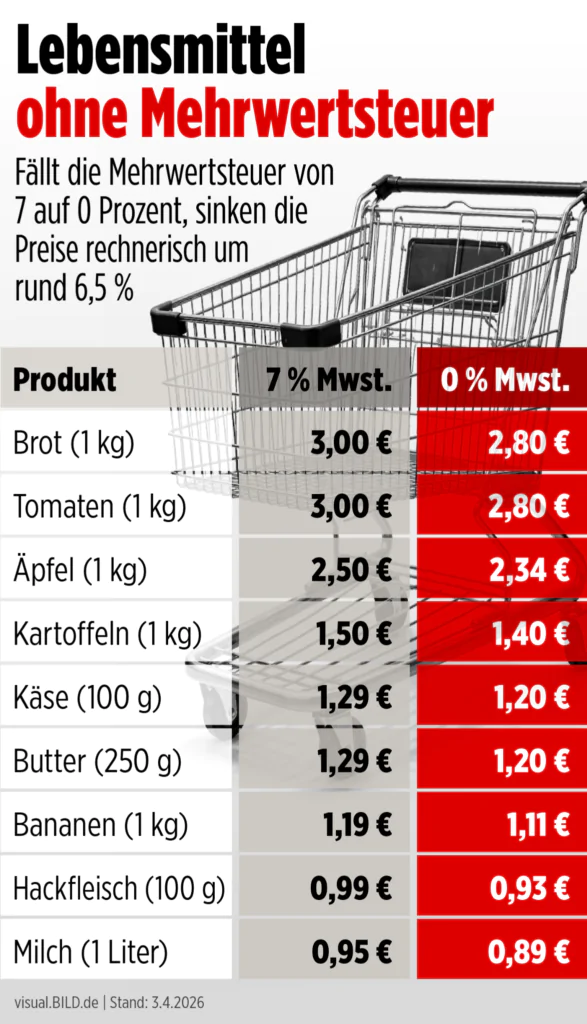
A litre of milk would then cost, for example, 89 cents instead of 95 cents. A pack of butter (250 g) would cost €1.20 instead of €1.29.
Depending on what they buy, consumers could save a few euros. According to consumer organisations, food prices have risen by more than 30% since 2020.
Source: BILD