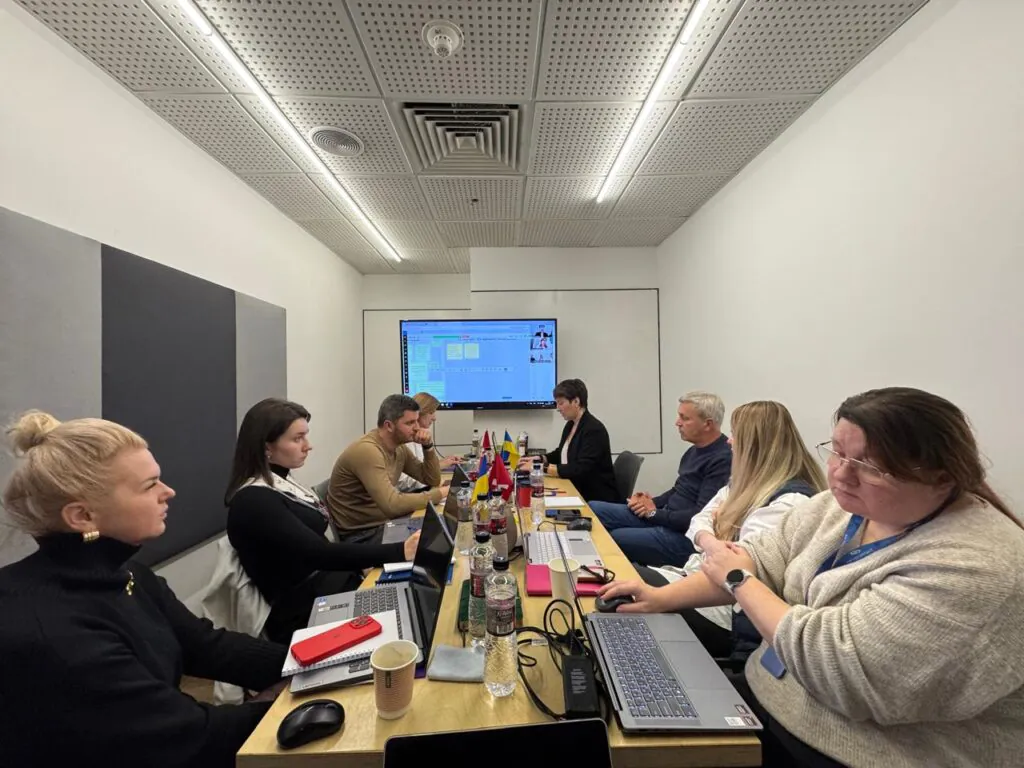

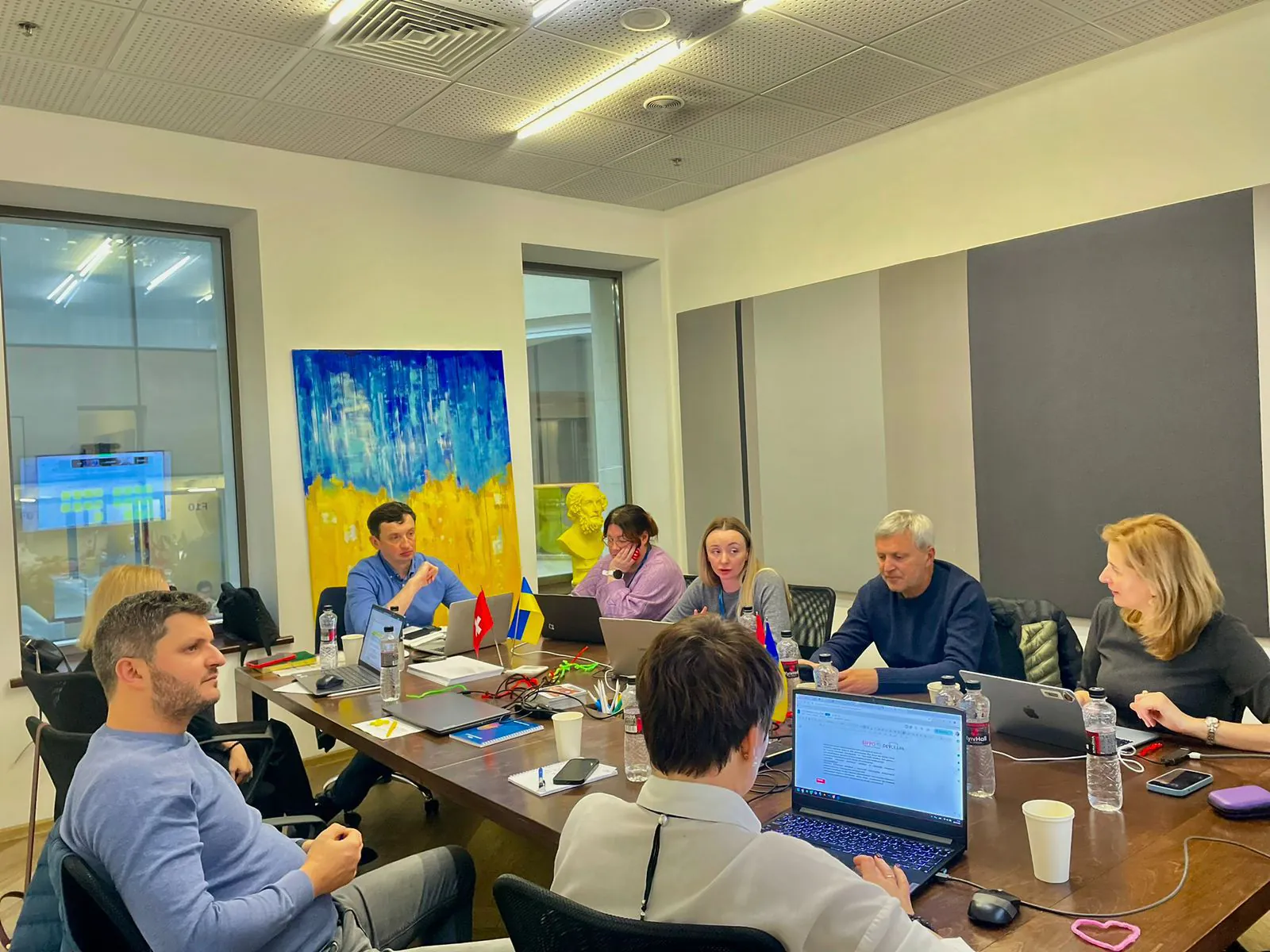
As part of its expanded partnership with the Swiss Import Promotion Programme SIPPO Ukraine, the Executive Directorate of the Union of Dairy Enterprises of Ukraine (UDEU), as a potential programme partner, completed a two day intensive training on the Organisational Capacity Assessment (OCA).
During the training an organisational audit was conducted across five key areas of organisational capacity: • Service Delivery. How to design and deliver services that meet the real needs of exporters, from consulting to supporting entry into new markets.
• Institutional Strengthening. Building strategic vision, systematic planning, clear procedures and transparency so the association can work as a professional and reliable partner.
• Monitoring and Results Measurement (MRM). Developing skills in setting goals, creating performance indicators, collecting and analysing data to ensure UDEU services bring tangible benefits to members.
• Networking and Collaboration. Building partnerships at local, national and international levels to exchange experience, attract investment and open new markets.
• Digitalisation and Sustainability. Using modern digital tools for communication and services, and integrating sustainability, environmental and ESG principles that are becoming a requirement on European markets.
Why this matters now for Ukraine’s dairy sector
1. Ukraine is moving toward the EU. Standards are rising and requirements are becoming stricter
EU integration opens markets, but it also requires alignment with EU rules. This applies to state institutions, businesses and industry associations. In Europe, BSOs are highly professional structures with clear procedures, analytics, services and transparency that meet international standards. For Ukrainian companies to enter the EU market without barriers, the sector needs an association working at the same level of maturity and competence.
2. Exports are becoming the main driver of sector growth
During the war, Ukraine’s agri food sector operates under pressure. Logistics costs rise, financing is harder to access, and domestic demand is shrinking. Export is no longer just one possible direction, it becomes the main path to scaling a business. Entering foreign markets is now a strategic goal for producers of any size.
The state and donors focus their support on companies ready for export, providing certification programmes, market opening support, grants and trade missions.
3. Business needs a strong data driven institution
Global competition has moved far beyond “who produces more”. Markets shift, requirements change and information volumes are huge. Companies without strong data risk losing their position.
The sector therefore needs an institution that collects reliable market information, analyses trends, risks and opportunities, develops evidence based industry positions and speaks to international partners through reports and indicators.
This makes the sector more convincing, protected from manipulation and able to influence policy and investment decisions.
4. Competition for international funding and partnerships is increasing
Although international support for Ukraine remains high, competition for resources is growing. Donors are changing their approach: they want to work with organisations that deliver results, have transparent governance and can implement projects quickly.
This creates new rules where associations have an advantage if they:
• have a clear organisational model;
• work according to international good governance standards;
• can prepare strong applications and pass competitive selection confidently;
• demonstrate measurable impact rather than just activity;
• can show progress in numbers, cases and results.
International partners want to see their funding turn into real change in the sector, so associations with strong analytics, structure and a capable team get far more opportunities.
5. ESG standards and sustainability: the new reality of European markets
ESG requirements are already embedded in EU regulations, and within the next five years compliance will become mandatory for exporters. Requirements include reducing carbon footprint, sustainable production standards, supply chain transparency and adherence to social and environmental norms. Companies that do not adapt will lose competitiveness in Europe.
By strengthening this area, UDEU can help its members understand new requirements, prepare for standards and carry out the transformations needed for export.
“Participation in the SIPPO programme for organisational capacity assessment is not only a training stage for UDEU. It is a strategic turning point that defines a new quality of work for business associations in Ukraine.
In European practice, strong sectoral associations play a key role in shaping export policy, promoting sector interests and helping companies access international markets. For our team, this is not just an internal reform. It is a real step toward strengthening Ukraine’s entire dairy sector. It gives us tools to build long term competitiveness, and we are already moving in this direction”, noted UDEU Executive Director Arsen Didur.