
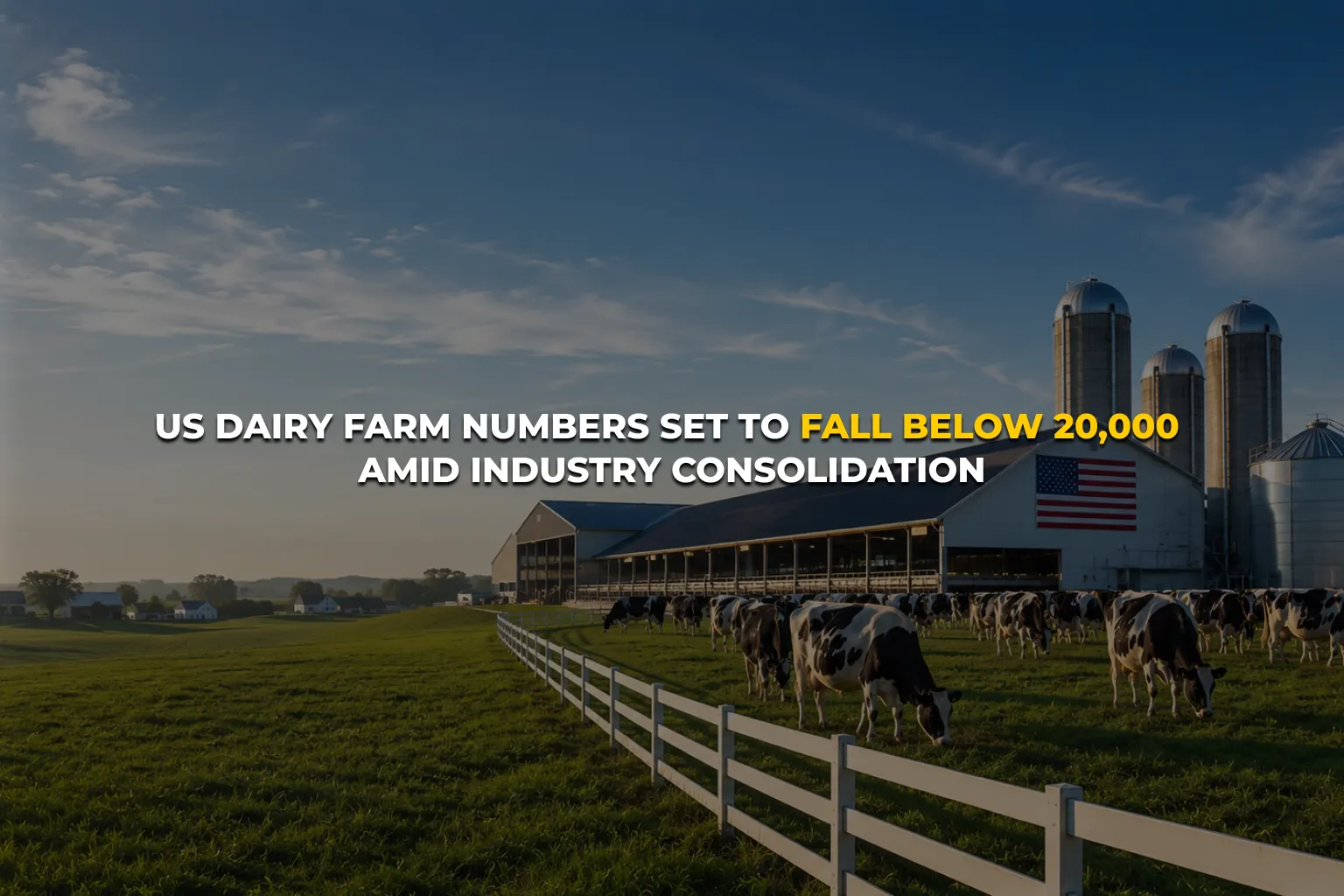
The US dairy sector is heading towards having fewer than 20,000 dairy farms by the end of the decade, driven by consolidation and economies of scale.
The US dairy sector is heading towards fewer than 20,000 dairy farms by the end of the decade, driven by consolidation and economies of scale, according to a report from agricultural forecasting company Terrain, DairyReporter reports. The US market has declined by around 5% a year since 1992, losing over 100,000 farms. The USDA’s 2022 Census of Agriculture showed that half of US dairy farms had fewer than 100 cows yet made up just 4% of milk sales, while farms with 2,500 or more cows were only 4% of farms but 45% of sales.
Fewer farms does not mean less milk
The US dairy industry produced more than 231.7 billion pounds of milk (about 105.1 billion kg) in 2025 — 54% more than in 1992, despite 190,238 fewer cows on 107,900 fewer farms. The «shifting landscape» brings new risks and opportunities: farms that keep operating are larger, having driven consolidation to achieve economies of scale.
Economies of scale — and market implications
Larger farms can generally produce milk at a lower per-unit cost, Terrain says, citing the USDA Economic Research Service’s cost-frontier model, which found a 1% rise in milk output raised costs by less than 1%. But large farms can be less responsive to near-term price signals, so as production concentrates among fewer, larger farms, total US milk supply is likely to be less sensitive to price movements and margin pressure.
«By the end of the decade, I expect there to be fewer than 20,000 dairy farms in the US», said Terrain senior dairy analyst Ben Laine, warning that «aging farmers and high cattle prices could accelerate exits» in the near term and that producers «will need to prepare to adapt».
Source: DairyReporter