
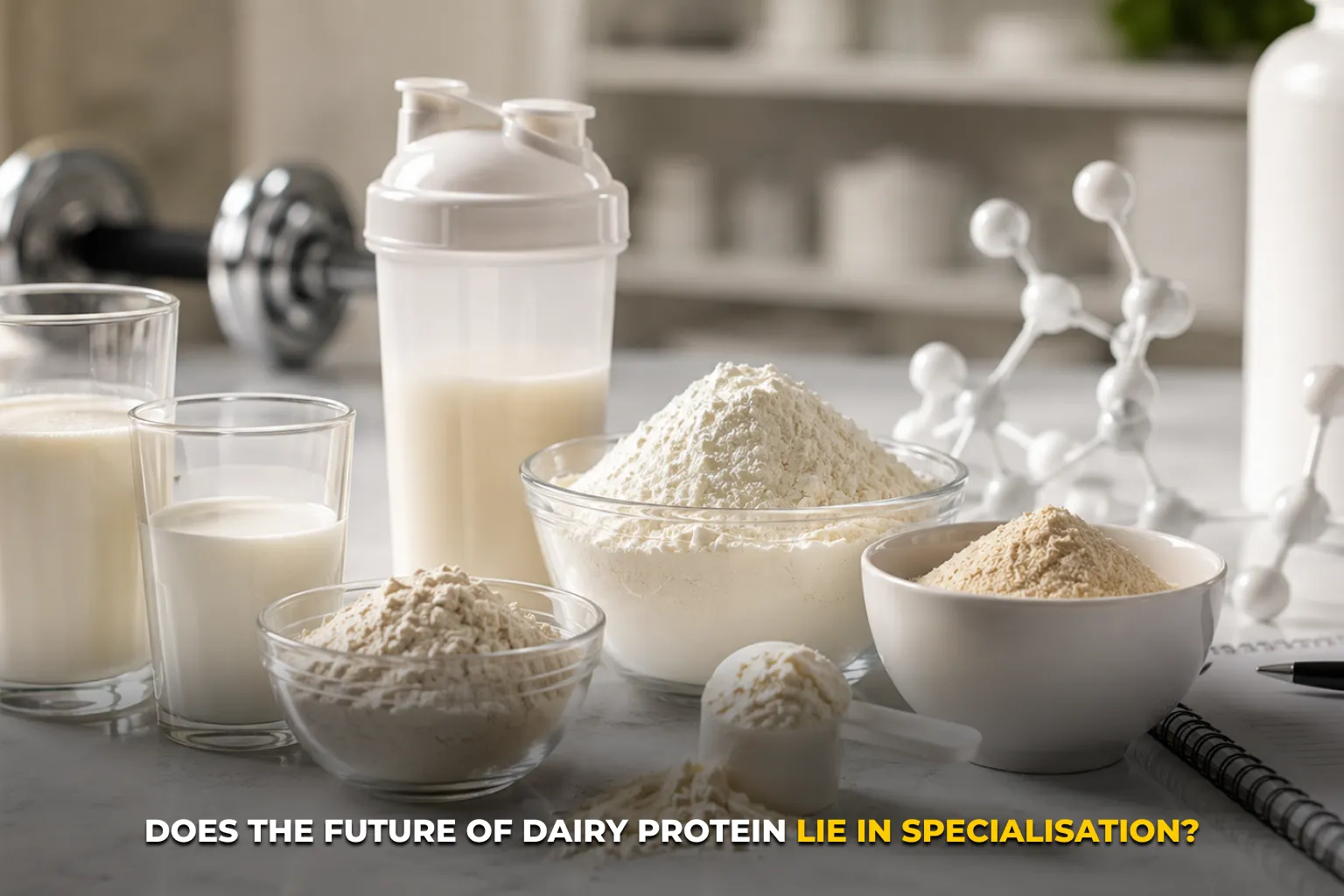
As protein expands beyond sports nutrition into everyday foods, having tailored dairy proteins designed for different health outcomes is key.
The once-distinct segments of sports and broader nutrition are blurring, demanding clearer product positioning, FrieslandCampina says, DairyReporter reports.
«Protein was once primarily associated with sports nutrition, but today it is being adopted across many other categories and has become a foundational component of nutritional formulations», said senior scientist Jean Nyakayiru at Growth Asia Summit 2026, adding that manufacturers should weigh protein quality, digestion and functionality.
Why whey and casein matter
Whey contains more essential amino acids than collagen.
«These are the key drivers of muscle protein synthesis», Nyakayiru noted.
While whey is often the «gold standard», casein also has very high quality; whey’s edge comes from producing the strongest muscle-protein-synthesis (MPS) stimulation in the first 3.5 hours, while calcium caseinate releases amino acids more gradually over up to six hours.
Over a six-hour window both produced similar MPS, so manufacturers should match proteins to specific occasions — fast whey for immediate post-exercise recovery, slower casein for sustained support.
Dose, format and the future
Researchers are also probing dose and pattern: conventional thinking capped effective MPS stimulation at about 20–25g, but recent research challenges this.
A follow-up study examines three ways of consuming 100g of protein, splitting it into four 25g calcium-caseinate servings (hypothesised to be most effective; results due next year).
Sodium caseinate, though similar in amino-acid profile to calcium caseinate, digests faster and behaves more like whey.
FrieslandCampina Ingredients is also studying a fermented whey solution with prebiotic galacto-oligosaccharides (GOS) and lactic-acid-bacteria cultures.
«The future of protein is smarter, not simply more protein», Nyakayiru concluded — «delivering the right protein in the right format matters».
How the main dairy proteins differ
- Whey protein: fast digestion; strongest early MPS stimulation via rapid amino-acid release.
- Calcium caseinate: slow digestion; gradual amino-acid release, sustaining MPS over a longer period.
- Sodium caseinate: faster than calcium caseinate; similar amino-acid profile but digests more quickly, closer to whey.
Source: DairyReporter