
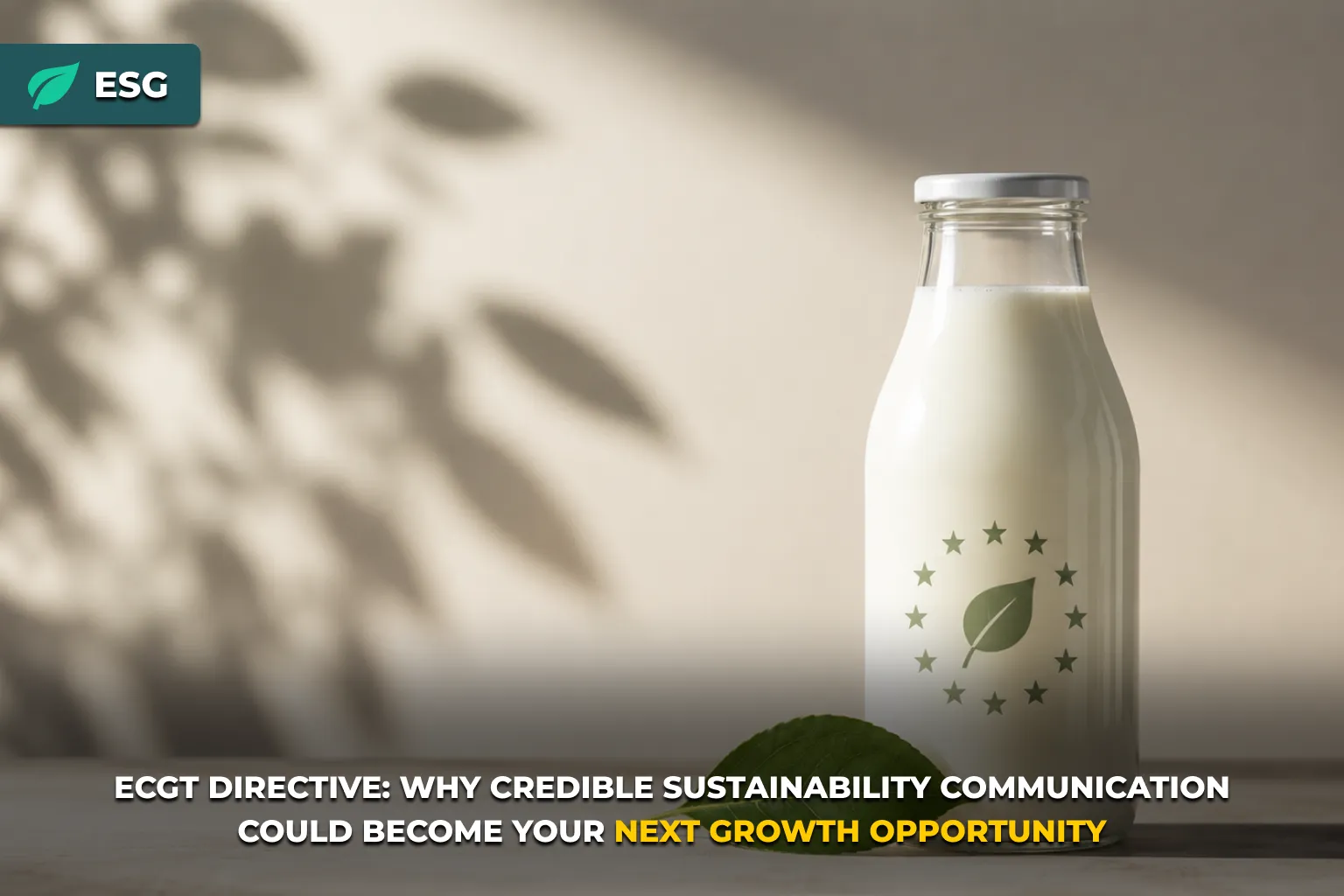
The EU’s new rules on environmental claims raise the bar for brands — but also offer a chance to build trust and stand out. The food sector, including dairy, is in the spotlight.
The EU’s Empowering Consumers for the Green Transition (ECGT or Empco) Directive introduces stricter requirements for environmental claims, sustainability labels and consumer communications — and for food and beverage brands (dairy among the most claims-reliant) it is an opportunity to build trust and turn credible communication into competitive advantage, write Carbon Trust’s Vivien McEwen and Nina Brennecke for FoodBev.
Who is affected, and why food is in the spotlight
ECGT takes effect on 27 September 2026, aiming to help consumers make informed decisions by tackling misleading claims and improving transparency.
It applies to all organisations communicating to EU consumers, wherever based — covering not just packaging but websites, product pages, advertising and promotions (B2B is currently out of scope).
Food and beverage is especially exposed: products are bought frequently, packaging is a primary communication channel, and brands rely heavily on environmental claims, labels and certifications — making the sector a focus for tackling greenwashing.
Trust as advantage and four actions
Consumers increasingly demand proof, not promises, seeking carbon-footprint labels and switching away from silent brands.
ECGT should create a market with fewer but more trusted claims. Amazon’s Climate Pledge Friendly programme has been linked to stronger sales across categories.
The authors recommend four actions:
- Set up a cross-sector working group
set up a cross-functional working group (marketing, legal, sales, procurement, sustainability);
- Review existing sustainability claims
review existing claims across packaging, websites, ads and social — including claims implied by imagery, green colours and self-made labels;
- Assess the evidence behind each claim
assess the evidence behind each claim with robust data and recognised methodologies;
- Evaluate sustainability labels and verification
evaluate labels and verification, using independently verified footprints and third-party assurance.
Acting early strengthens both regulatory readiness and consumer trust.
About the authors
Vivien McEwen is carbon footprint label programme manager and Nina Brennecke is agriculture, food and beverage client manager at the Carbon Trust, which helps businesses measure and reduce their carbon footprint.
Source: FoodBev