
Demand for minimally processed products with a thick texture and a clear label is growing — and the Yagotynske brand is actively expanding its thermostatic (set-style) range, combining traditional culturing with industrial quality standards.
Consumers are increasingly demanding of dairy products, seeking not just attractive packaging or moderate calories but minimally processed, natural products with a thick texture and a clear label.
In response, the Yagotynske brand keeps expanding its thermostatic (set-style) range, Milk Alliance reports.
Set-style vs vat-style culturing
The key difference is where the culturing happens:
- In the vat (reservoir) method, the product is cultured in large tanks and then filled into packaging, which partly disrupts the structure of the cultured curd.
- In the thermostatic (set-style) method, the milk-or-cream-and-culture mix is filled directly into the consumer cup and then cultured in special thermostatic chambers — the product sets right in the pack the shopper sees on the shelf.
Because the curd stays undisturbed, the product gains a special density, a glossy surface and a delicate, velvety texture — with no artificial thickeners or stabilisers.
The range, clean label and a new consumption culture
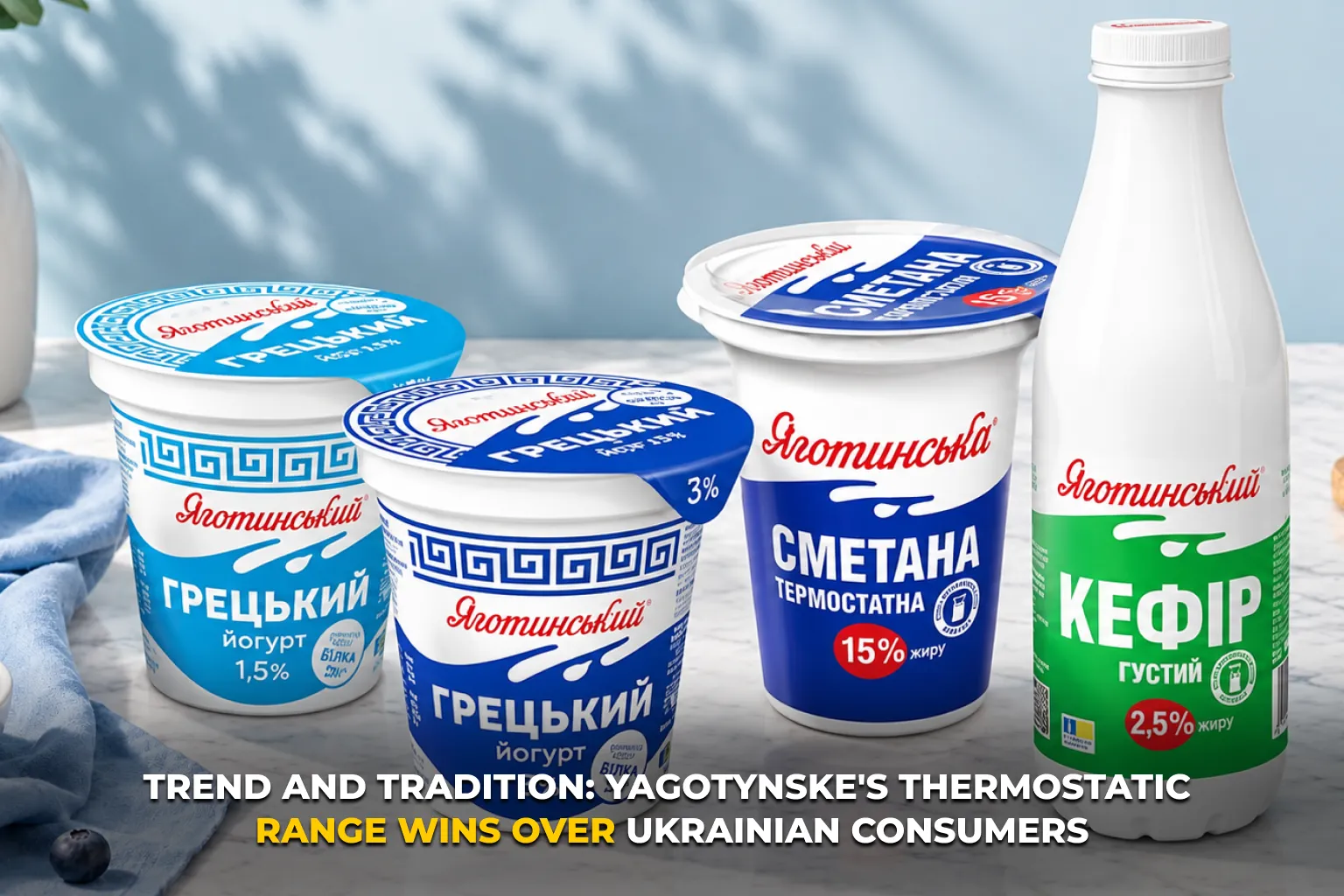
Yagotynske offers a broad thermostatic range: thermostatic sour cream (15% fat), ideal for borshch, varenyky, pancakes and homemade sauces. Thick kefir (2.5% fat), with a firm, undisturbed curd that can be eaten with a spoon. Greek yogurt (3% and, newly, 1.5% fat), one of the market’s most dynamic segments thanks to its high protein.
The growing demand matches the global «clean label» trend — a simple, familiar ingredient list.
Thermostatic yogurts, kefir and sour cream are also shaping a new consumption culture: no longer just a dessert or snack, but versatile base ingredients for healthy eating, with twice as much protein as milk, for example.
The range is available in national and regional retail chains across Ukraine.
Source: Milk Alliance