
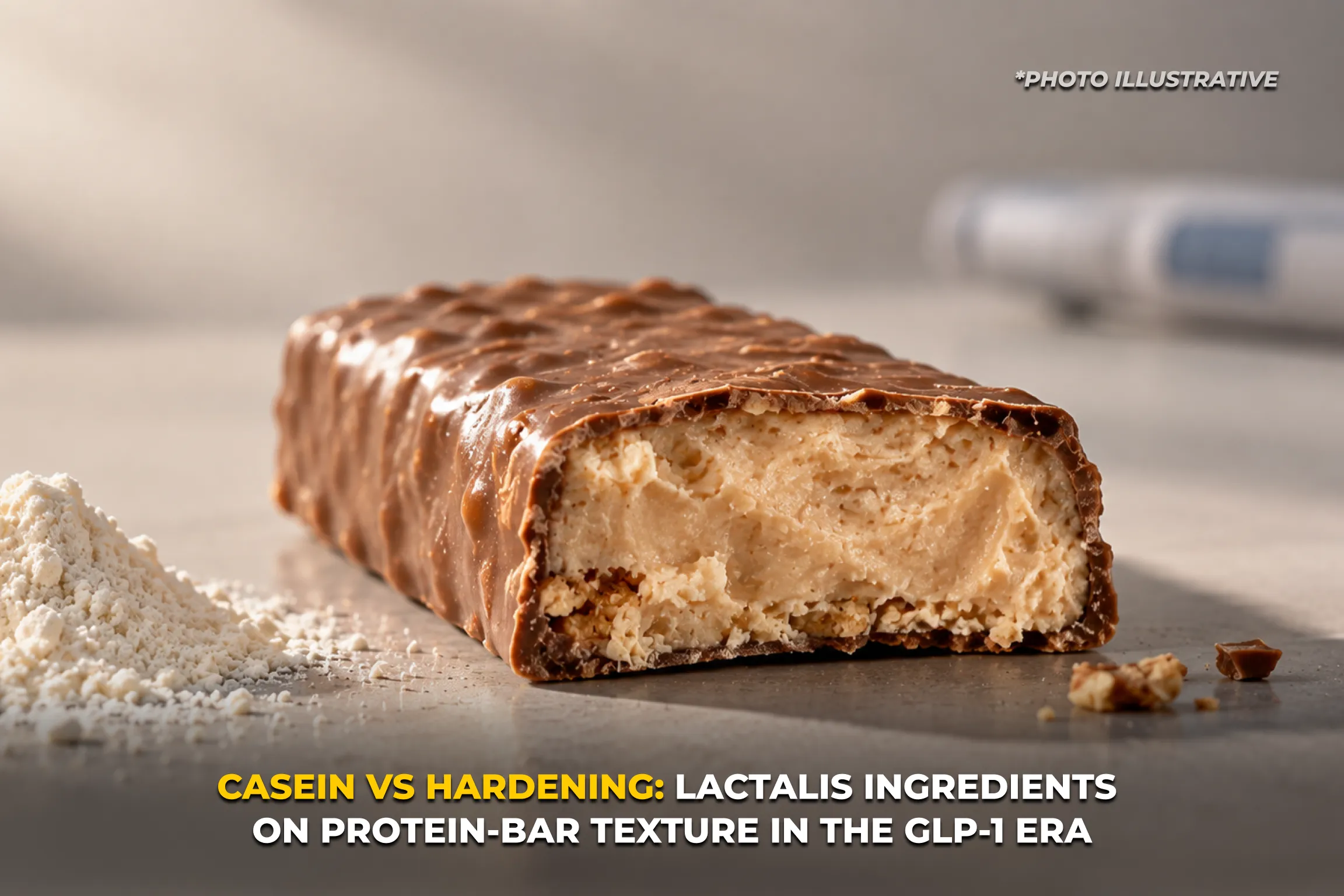
As weight-loss drugs drive demand for high-protein bars that don’t harden on the shelf, Lactalis Ingredients bets on casein.
Dairy protein supplier Lactalis Ingredients says the protein-bar market is growing fast across North America, Europe and Asia — yet very high-protein formats still tend to turn hard and crumbly before shelf life ends. The answer, it argues, lies in protein choice, and it singles out casein as the ingredient that keeps a high-protein bar soft on the shelf, Nutrition Insight reports.

Ahead of Lactalis Ingredients’ 22 September 2026 webinar, „Texture challenges in high protein bars: Understanding the benefits of casein“ (3:00 PM CEST), Nutrition Insight spoke with product manager Coralie Pallet and application engineer Stephie Ursinus about the science and trends behind high-protein bar innovation.
Pallet says GLP-1 (glucagon-like peptide-1 receptor agonist) medications are changing what goes into a bar more than how many sell. Consumers on the drugs eat less but seek more nutritious, satiety-boosting food — demands bars already meet through convenience and nutrient density.
„As a result, we are seeing growing demand for bars with higher protein and fiber content, lower sugar levels, and, in some cases, formats better suited to smaller portions,“ she says. „More broadly, GLP-1 is accelerating existing trends such as satiety, weight management, and functional nutrition.“
The task, she adds, is keeping products aligned with those shifting expectations.
Why bars harden
Ursinus flags bar hardening as a key challenge with two causes: water migration and protein aggregation. Water migration is the trigger — moving water between the protein and syrup phases rearranges the structure, though it does not harden the bar alone. Hardening comes from aggregation, which that water movement and other storage changes promote.
„Formulators can reduce water migration by selecting proteins and syrups with similar water activities, thereby minimizing the water activity gradient between the two phases,“ Ursinus says. „The larger the gradient, the greater the water migration and the resulting structural rearrangements.“
Aggregation can be limited indirectly, by slowing water movement, and directly, by choosing proteins less prone to clumping and strong-network formation — and caseins, she notes, have a low tendency to aggregate.
Casein stays softest
In Lactalis Ingredients’ protein-bar model, caseins were lined up against whey, caseinate and plant proteins, Ursinus reports — and casein ran softer than the rest.
„In our protein bar model, casein-based systems consistently remained softer throughout storage than whey-based systems,“ she explains. „In fact, our caseins produced the softest bars of all the proteins evaluated and were the only ones showing minimal texture evolution over time.“
Whey did the opposite. „Whey-based systems showed the greatest increase in hardness during storage,“ she says — whey proteins are naturally gel-forming and rapidly build strong, structured networks, producing the hardest bars and the largest texture changes in the study. Blends landed in between, depending on ratio.
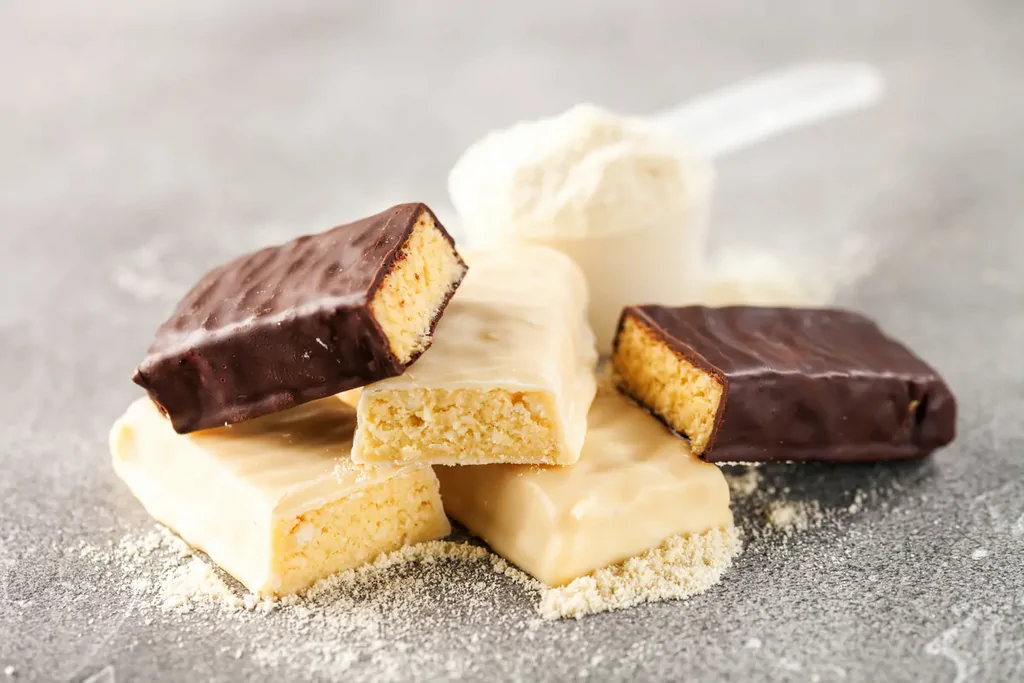
The push for more protein also hits a practical ceiling that shows up on the line before the mouth.
„At very high protein levels, the first challenge is often processability,“ she says. „The dough can become very firm, difficult to process and, in some cases, even brittle if there is not enough syrup or if the syrup system is not able to adequately hold the matrix,“ leaving bars that are excessively hard, hard to handle or prone to crumbling.
Lactalis Ingredients, she says, can match the protein system to the formulation and tune the blend for processability, texture and stability, with syrup-selection guidance.
Beyond dairy proteins
Plant proteins are the category’s other shift. Lactalis Ingredients tested the main ones used in bars; they delivered acceptable textures alone or in blends and hardened less than whey and caseinate systems, but more than casein-based bars.
„In our experience, the main challenges with plant proteins are not necessarily texture-related,“ Ursinus says — they more often relate to nutritional quality, generally less favorable than that of dairy proteins, a distinctive flavor profile and, for some sources, a tendency toward darker, brownish colors that consumers may or may not appreciate.
Source: Nutrition Insight