
From personalised nutrition to GLP-1-friendly foods, gut health is entering a new era.
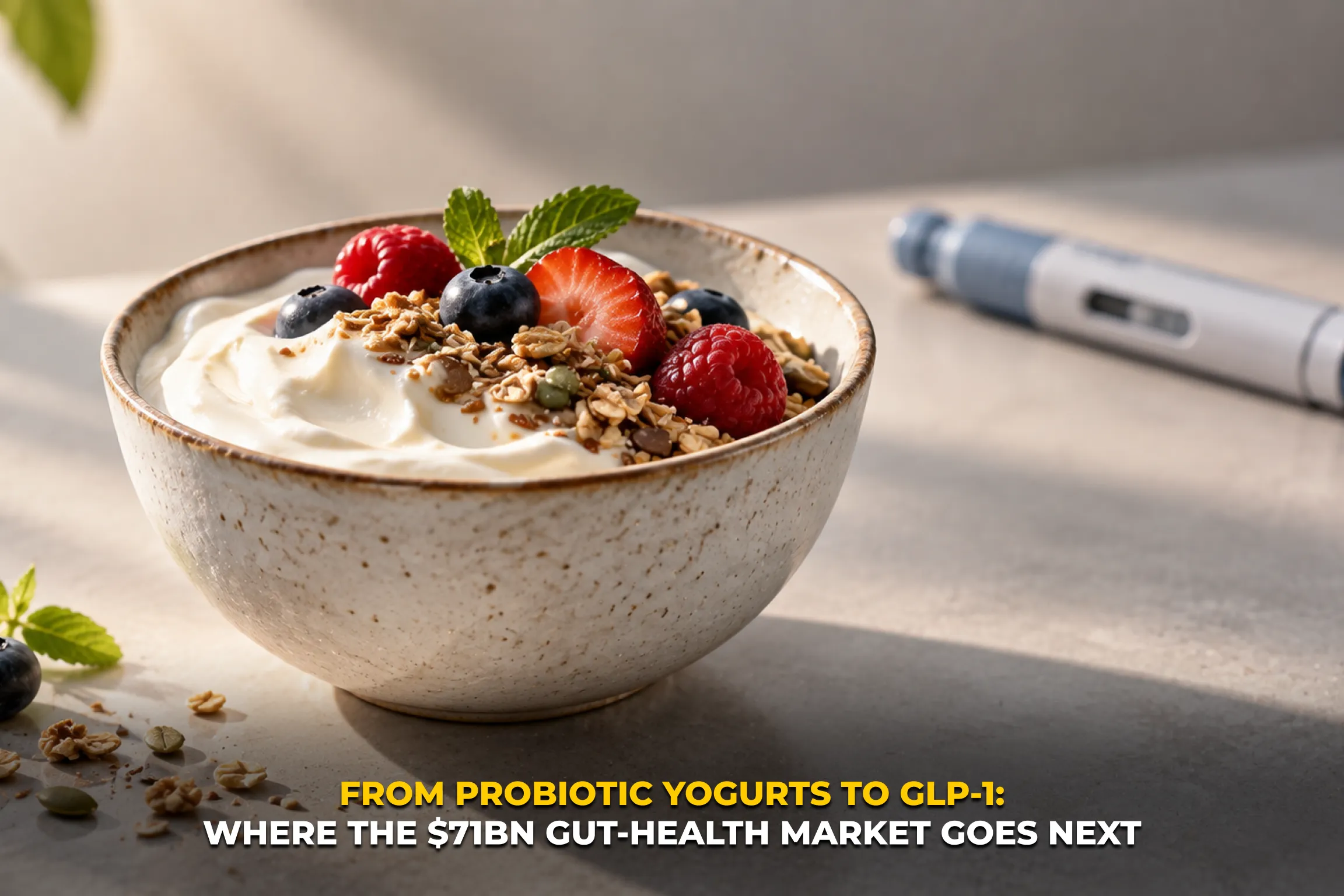
Gut health has come a long way since probiotic yogurts first hit shelves in the mid-1980s. Once rarely discussed and little understood, it is now one of food and beverage’s most exciting categories — worth a hefty $71.3bn (Fortune Business Insights). And if ZOE’s global director of nutrition, Dr Federica Amati, is right, it is only getting started, FoodNavigator reports.
Gut health gets personal
One of the biggest shifts on the horizon is personalisation. For years, advice was built on broad population guidelines, but new research shows people can respond very differently to the same foods, moving the focus toward personalised nutrition — a prospect Dr Amati calls „closer than most people think“.
Population guidance will not vanish, though. It will become the foundation on which personalised recommendations are built, with technology tailoring it to individual needs.
Smart supermarkets
For manufacturers, one of the most promising opportunities lies at the point of purchase.
As consumers gain access to richer health data via apps, wearables and diagnostic tools, retailers could increasingly deliver tailored product recommendations. A shopper with coeliac disease could be steered to gluten-free options. Someone managing high blood pressure toward low-salt, -sugar and -fat products.
The challenge is integrating health and food data accurately, trustworthily and accessibly, while consumers keep control over how their data is used. But technology alone will not shape the future — the ingredients and products on offer must also evolve with microbiome science.
Fibre needs a makeover
One of the biggest missed opportunities is fibre itself — not for lack of awareness, but because manufacturers have fixated on adding small amounts of a single fibre just to qualify for a claim, Dr Amati says.
The microbiome thrives on variety, so a smarter approach would prioritise fibre diversity across a wider range of plant fibres rather than leaning heavily on chicory inulin or resistant starch.
And some ingredients seem to have been forgotten entirely.
Polyphenol power
If fibre is finally getting its due, polyphenols remain nutrition’s overlooked hero.
Found in berries, extra virgin olive oil, dark chocolate and nuts, they are linked to benefits for the gut microbiome, yet consumer awareness is strikingly low and the commercial narrative almost non-existent, Amati says.
Part of the reason is regulatory: manufacturers can make relatively few polyphenol claims, dulling their marketing appeal versus familiar nutrients like protein or fibre.
As microbiome science advances, polyphenols could become major players — and they are not alone. Fermented foods are enjoying a resurgence on rising interest in natural, microbiome-friendly products.
Fermentation grows up
Fermented foods are booming — kimchi, sauerkraut, kefir and other traditional ferments are spreading across supermarket shelves worldwide, driven by interest in gut health, natural foods and functional nutrition.
But growth alone is not enough: many products flag their fermented status, yet not all carry meaningful levels of live microorganisms by the time they reach consumers, and others lack robust evidence linking their specific products to measurable outcomes.
Dr Amati believes much work remains to ensure fermented foods deliver genuine functional benefits rather than trading on trendy claims.
Realising the category’s potential will require stronger scientific substantiation — moving beyond broad gut-health references to research on how particular strains, fermentation processes and consumption patterns affect human wellbeing. And that is not the only challenge.
GLP-1s and gut health
One of the biggest forces set to reshape the sector has little to do with the microbiome itself: GLP-1 (glucagon-like peptide-1) weight-loss medications are changing how people eat.
As user numbers keep growing, a new nutritional challenge emerges — people on GLP-1s often eat much less but still need adequate protein, fibre, vitamins and minerals, while many face gastrointestinal side-effects such as nausea, constipation and indigestion.
That is a huge opportunity: tomorrow’s gut-friendly products may need to be smaller, more nutrient-dense and easier on digestion, helping consumers stay nutritionally adequate without discomfort.
The future of gut health
Gut health is fast evolving from a wellness trend into the cornerstone of personalised nutrition, and the enabling technology is moving just as quickly — beyond smartwatches and calorie counters.
Dr Amati points to emerging multi-analyte biosensors that continuously measure glucose, lipids, hormones and inflammation markers; paired with AI, they could deliver highly personalised, real-time recommendations based on a person’s own biology rather than population averages.
Further ahead lies the „digital twin“ — a personal health model built from years of biological and behavioural data that could predict outcomes and flag risks before they emerge, though it raises questions of privacy, ownership and data security.
What is clear is that the future will not hinge on a single superfood, probiotic strain or miracle supplement, but on the convergence of microbiome science, personalised nutrition, AI, preventative medicine and smarter food design.
For industry, it is a fundamental shift — from simply making tasty products to developing foods and drinks that measurably contribute to long-term health.
Source: FoodNavigator