
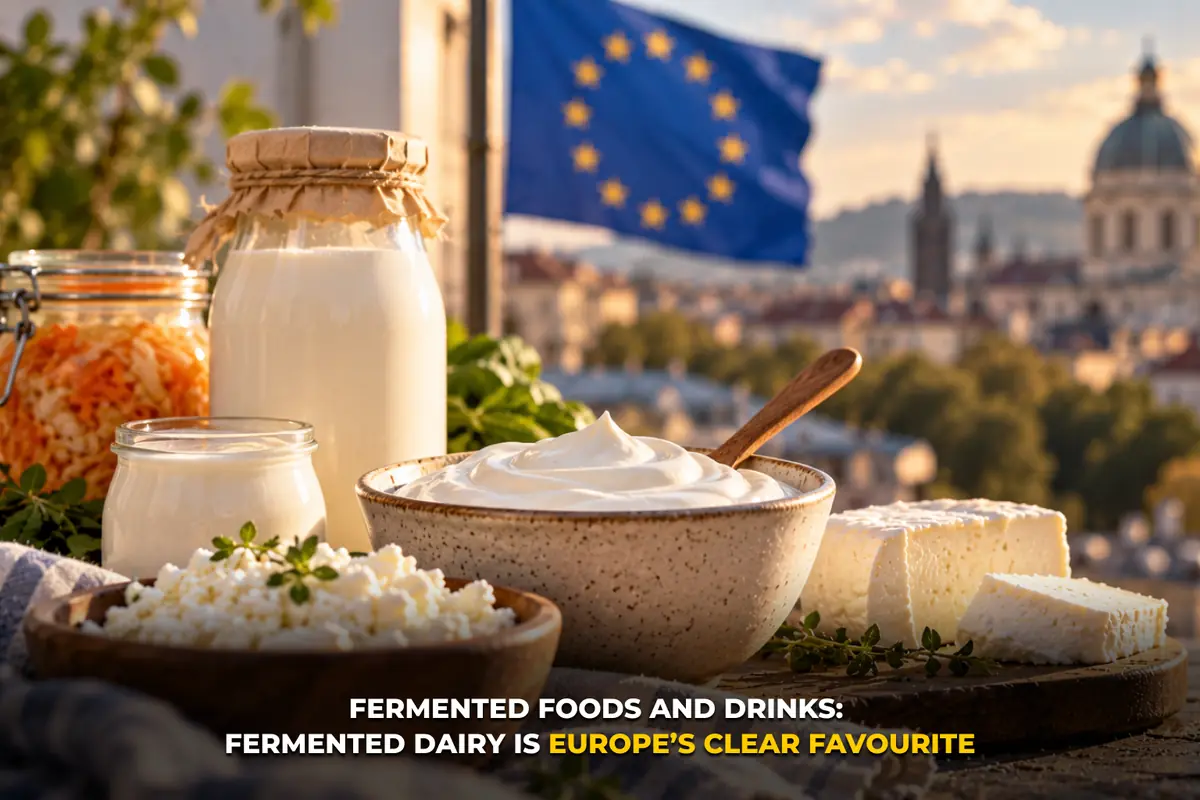
A new study has mapped the prevalence and intake of fermented foods across 53 European countries, finding that more than 94% of Europeans consume fermented dairy, DairyReporter reports.
Key points:
- fermented dairy products are consumed by more than 94% of Europeans and show the highest habitual intake;
- coffee and fermented cereals are the next most widely consumed fermented categories in Europe;
- plant-based fermented alternatives enjoy relatively high awareness but remain low-volume purchases;
- regional preferences vary significantly for fermented vegetables, meat products, alcoholic drinks and non-alcoholic beverages;
- the findings highlight opportunities for brands to tailor fermented food innovation to local tastes and habits.
A large-scale study
A major new study in the British Journal of Nutrition has mapped the prevalence and intake of fermented foods and drinks across European regions, covering categories such as dairy, plant-based meat and dairy alternatives, chocolate and non-alcoholic beverages.
It surveyed 12,646 adults in 53 countries across four regions (Northern, Southern, Western and Central-Eastern Europe). Intake across 15 fermented food categories was estimated from frequency and portion-size data using a Fermented Food Frequency Questionnaire developed by the authors to classify and define fermented foods.
Showing that some products are far more prevalent and accepted than others, the data can help manufacturers understand regional preferences and untapped markets.
Fermented foods have existed for centuries, the study notes, but have «attracted renewed scientific and public health interest due to their potential nutritional and health benefits».
These benefits are «attributed to functional compounds produced during microbial fermentation, such as organic acids, bioactive peptides, bacteriocins, exopolysaccharides, amino acid derivatives and vitamins», the authors say.
«These foods… can enhance nutrient bioavailability, support gut and metabolic health and mental health. Emerging evidence also suggests that fermented foods may contribute to gut microbiome diversity, immune modulation and metabolic regulation, although mechanistic insights and clinical validation remain limited».
Fermented dairy is a hit
The categories covered were plant-based meat and/or dairy alternatives; fermented dairy; fermented pulses and legumes; fermented meat and/or fish; fermented vegetables; fermented cereals; chocolate; fermented non-alcoholic beverages; vinegar; coffee; fermented tea; cocoa beverages; beer or cider; and wine and strong spirits.
A key finding was that fermented dairy products such as yoghurt, fermented milk and cheese are hugely popular and the most widely consumed. Their prevalence was near-universal (94.1% to 95.6%), with intake of 66.7 g to 80.1 g a day, and it was the only category with no regional variation.
«Near-universal consumer prevalence of fermented dairy, combined with moderate intake, suggests habitual consumption in small, regular portions, consistent with dairy’s integration into daily European meals», the authors conclude.
They add that «labelling information, particularly sugar or sweetener type, protein source and lactose-related claims, could play a key role in shaping consumer acceptance of fermented dairy products» — something manufacturers should note.
Cereals and coffee are runners-up
Coffee and fermented cereals ranked next for both prevalence and intake (consumed by 78.4–84.1% and 89.9–95.9% respectively). Coffee intake was moderate across all regions, as was cereal intake in Northern, Southern and Western Europe.
Chocolate was eaten weekly by more than 90% of participants and showed the highest intake among consumers, reaching 138.8 g a week in Western and Central-Eastern Europe compared with 76 g in Northern Europe. Cocoa drink consumption was consistent across regions.
Fermented vegetables and legumes, by contrast, showed low intake. They were widely consumed only in Western Europe (80.5%), and moderately elsewhere (59.4–67.6%).
Fermented meat and fish products showed moderate intake and regional differences, with moderate prevalence in Southern Europe (62.5%) and higher levels elsewhere, from 75.5% in Western Europe to 83.2% in Central and Eastern Europe.
Plant-based alternatives: known but rarely eaten
Several food groups combined high prevalence with low relative intake, most notably plant-based alternatives — a point for manufacturers to note. Consumers accept them but do not eat them in large volumes: they were consumed by up to 72.8% of people in Western Europe, but intake was negligible.
The contrast between dairy (high prevalence, moderate intake) and plant-based alternatives (high prevalence, minimal intake) in Western Europe «likely reflects occasional or trial-based consumption rather than dietary integration, possibly due to documented sensory barriers and the relatively nascent market position of these products», the authors say.
Fermented non-alcoholic beverages had low prevalence but relatively high weekly intake among those who drank them, with the lowest prevalence in Southern Europe. Wine intake was highest in Western Europe, double that of Central and Eastern Europe.
Key takeaways
For manufacturers, the conclusion is key: «These findings align with recent evidence that consumer perception and preference for fermented foods are driven by intrinsic product characteristics, alongside biological, psychological, situational and sociocultural factors». Understanding these factors opens up opportunities.
The authors suggest that future mapping could also examine the effects of fermented foods on local populations’ microbiomes, deepening understanding of their benefits and supporting region-specific dietary guidance to boost intake.
Source: DairyReporter