
Functional drinks for gut health are gaining popularity, but differing labelling approaches are causing confusion in the market. According to DairyReporter, the same products may be marketed differently depending on national regulations.
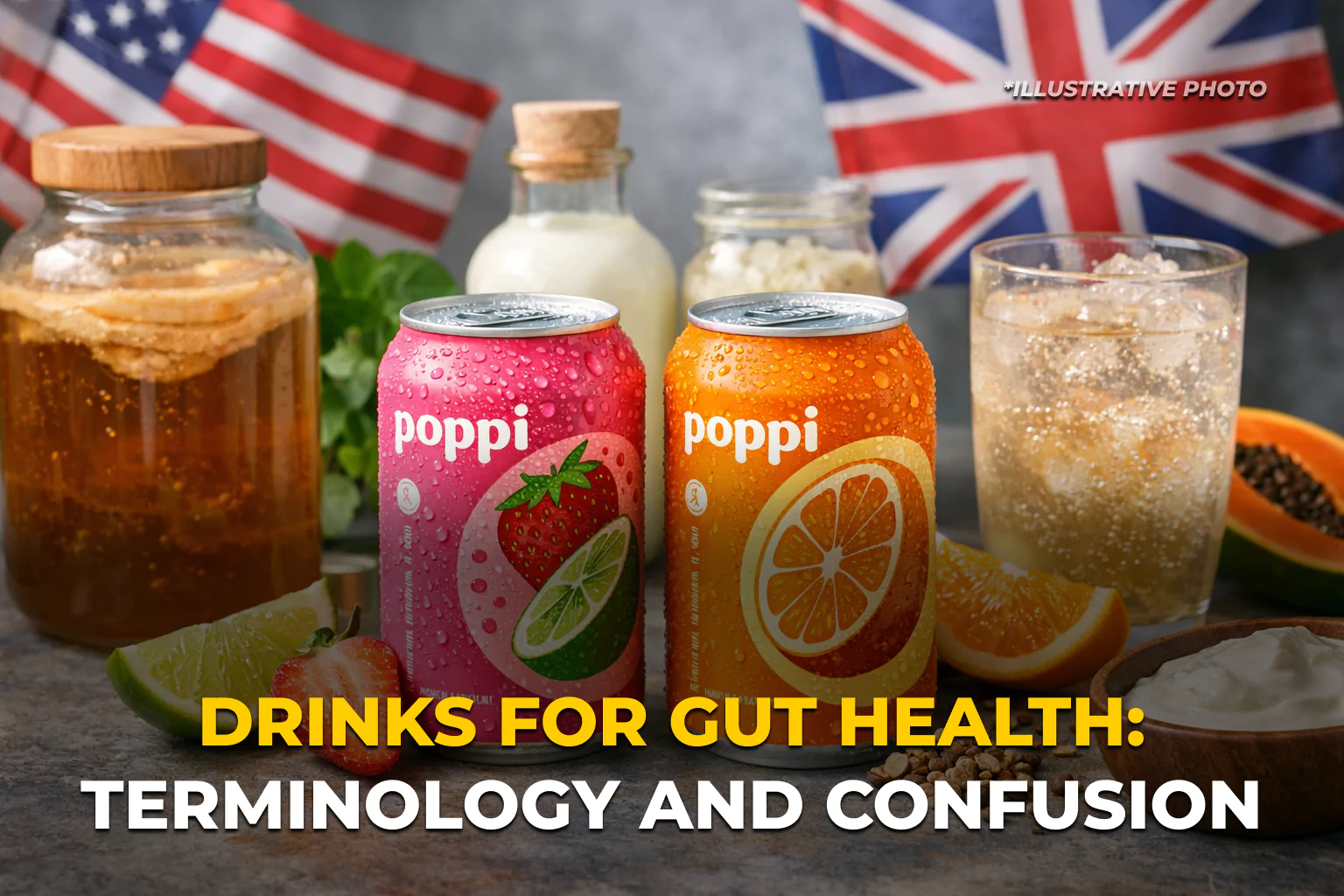
Poppi, a fizzy drink for gut health, is marketed as ‘prebiotic’ in the US, but as ‘high in fibre’ in the UK. What’s going on?
Poppi, a drink designed to promote gut health, was launched on the UK market in February, marketed as a ‘high-fibre’ drink.
But one word was conspicuously missing: ‘prebiotic’.
The drinks are identical in both countries: Poppi contains 3 g of fibre per can. But the regulations differ.
“We do not make a prebiotic claim for Poppi in the UK due to local regulations,” explained a company spokesperson in response to a question.
“The launch of Poppi in the UK is deliberately focused on positioning it as a fizzy drink with a rich flavour and a refreshing effect, which is high in fibre, low in sugar and calories, and made from real fruit juice.”
Fact-checking
Kristy Coleman, co-founder and legal advisor at the UK-based company AK Collective, notes that the regulation of terms such as ‘prebiotic’ or ‘postbiotic’ varies significantly from market to market.
“The UK is very tightly regulated on what you can and can’t say about a product,” she said.
‘The US is very different in terms of regulation, and that varies from state to state.’
In the UK, for example, there is a list of 250 permitted health claims, and brands are restricted to using only these specific phrases.
The term ‘fibre’ is well received by consumers, but there are rules here too (to be labelled a ‘source of fibre’, a product must contain at least 3 g of fibre per 100 g; to be ‘high in fibre’, it must contain 6 g per 100 g).
There is no fully standardised regulation in this area within the EU: each country has its own specific circumstances.
That is why Coleman’s main piece of advice is to always consult local experts before entering a new market.
Which terms do consumers understand?
But it’s not just about regulation. Hip Pop launched its range of ‘gut-friendly’ drinks in 2021, which ‘contain live cultures and a quarter of the recommended daily intake of fibre’.
However, whilst functionality is a key advantage, co-founder Emma Thackray points out that the brand’s messaging ultimately focuses on taste and practicality.
“We’re all about making delicious fizzy pop that’s refreshing and real, taste first, always: then with additional benefits,” she explained.
Although the terms ‘prebiotic’, ‘probiotic’ and ‘postbiotic’ are important to those who follow a healthy lifestyle, they are not clear to the average consumer, she adds.
The American brands Olipop and Poppi didn’t get bogged down in the scientific details; instead, they focused on simplicity and user-friendliness — and achieved considerable success.
Ultimately, the message that will help such drinks capture the mass market may be based not on science, but on taste, enjoyment and emotion — the very foundations of the fizzy drinks category for decades.
Source: Dairy Reporter