
Demand for ‘clean label’ products and healthier ingredients is reshaping approaches to the development of food and dairy products. According to The National PROVISIONER, ADM has identified the key drivers of recipe reformulation for 2025–2026.
Key areas of change in formulations
According to the company, the key drivers of this transformation are consumer demand, regulatory changes and the impact of GLP-1 agonists, which alter eating behaviour.
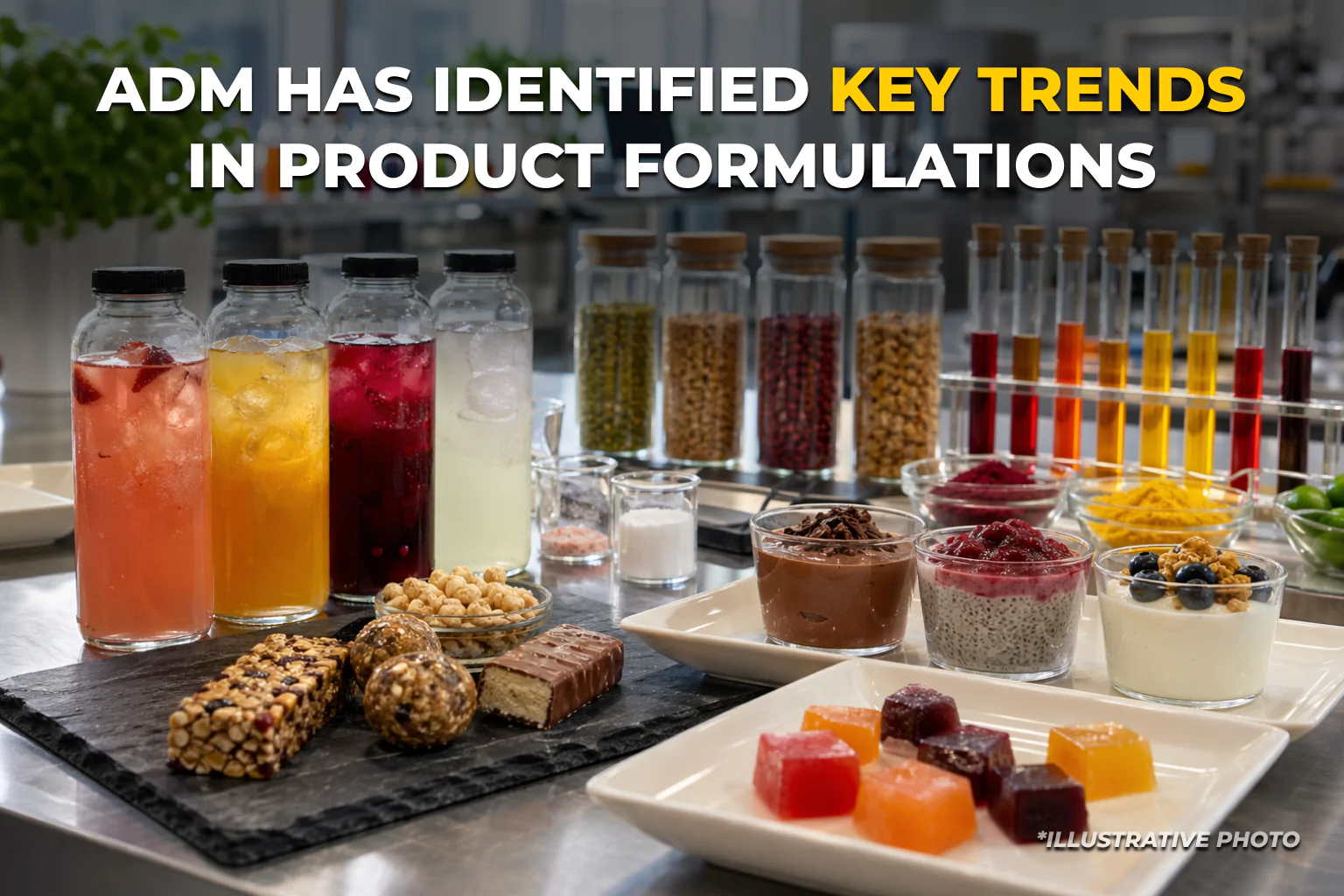
ADM identifies five key areas of reformulation:
- reduction in sugar
- reduced in sodium
- increased protein content
- fat optimization
- ‘clean label’
The company uses these principles as a basis for adapting ingredients and flavour profiles across various product categories.
Challenges regarding flavour and texture
Despite growing demand for healthier formulations, removing or replacing ingredients such as salt and sugar presents challenges for manufacturers.
In particular, this affects:
- flavour
- texture
- structure
- sensation in the mouth
During trials at its facility in Erlanger (Kentucky), the company demonstrated how reformulation alters the sensory perception of products and how customising ingredients helps to minimise these effects.
Demand for reduced salt and sugar
Reducing sodium intake is a key priority, as Americans consume on average 50% more salt than recommended. At the same time, sodium plays an important role in food products — it affects flavour, moisture content, shelf life and the stability of the recipe.
Another key trend is the reduction of sugar. According to the company, 8 out of 10 consumers are keen to cut down on their sugar intake, which is forcing manufacturers not only to find alternatives to sugar but also to rebalance the flavour profile.
Protein and functional ingredients
Protein remains a key driver of innovation in food products, including dairy products. According to ADM’s estimates, 32% of new products contain protein and feature health claims.
At the same time, the market is gradually shifting its focus from the quantity of protein to its quality.
‘Clean label’ and natural ingredients
Demand for ‘clean label’ products continues to grow, although there is no clear definition of the term. At ADM, it is interpreted as the use of ingredients that are clear to the consumer.
According to the Innova Trends Survey 2025:
- 37% of consumers in the US avoid artificial colourings
- 61% are willing to compromise on a product’s appearance in favour of natural ingredients
At the same time, the stability of supply and the availability of raw materials for natural dyes remain key challenges.
Investment in innovation and manufacturing
ADM continues to invest in the development of ingredients and technologies. In 2025, the company allocated $15 million to expand its innovation centre in Erlanger, and in January 2026 announced a further investment of $26 million.
It is expected that this will:
- increase the efficiency of raw material processing by 40%
- expand production capacity
- to enhance the automation and digitalisation of processes
The company notes that these investments are aimed at improving supply stability and developing natural flavour and colour solutions.
Source: The National PROVISIONER