

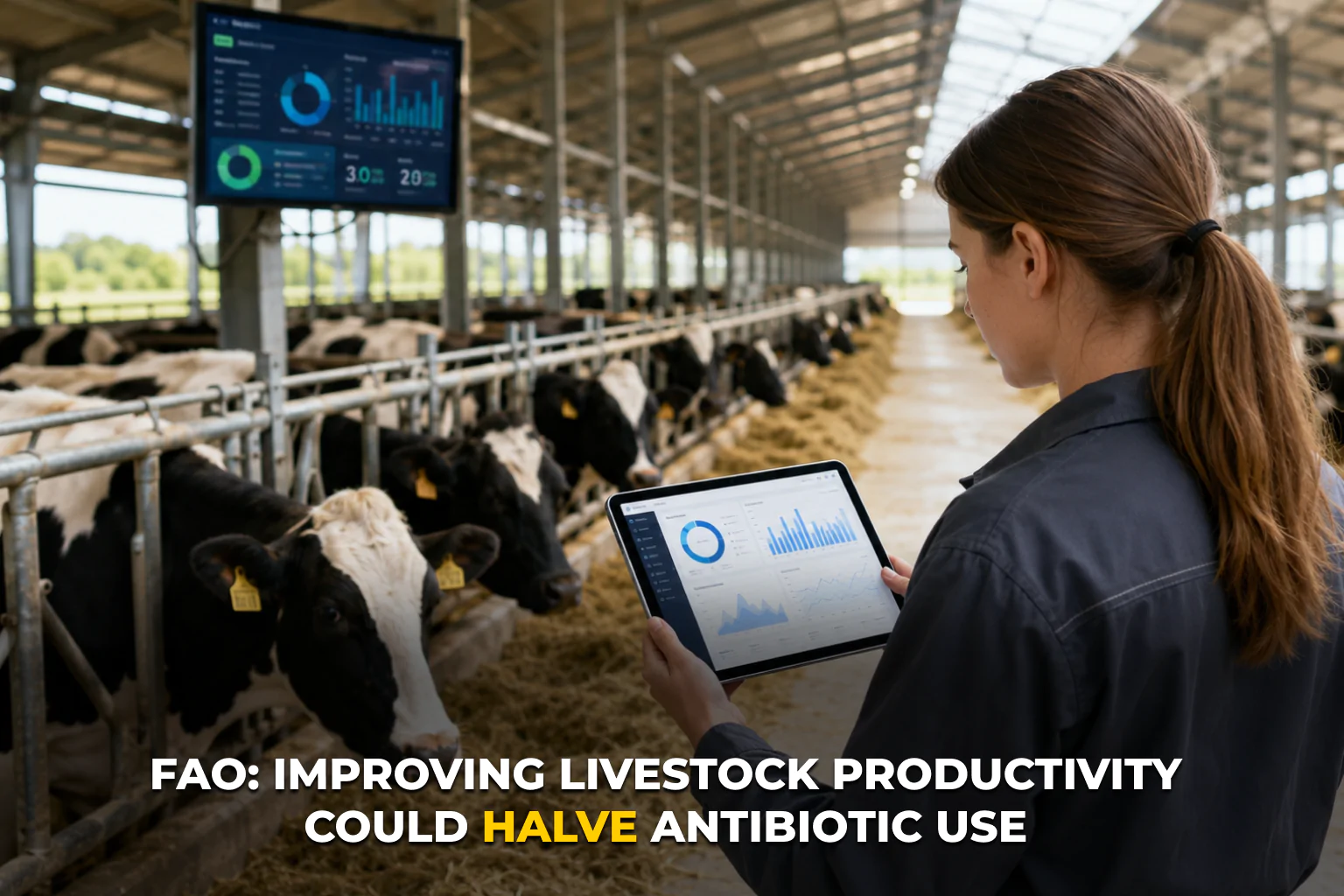
A new FAO-led study warns that without intervention, global antibiotic use in livestock will rise nearly 30% by 2040 to over 143,000 tonnes annually. As AgNavigator reports, targeted productivity gains could cut that figure by up to 57%, to around 62,000 tonnes.
The findings, published in Nature Communications, come as the 2024 UN General Assembly declaration calls for significant cuts in antimicrobial use across agrifood systems by 2030. For livestock producers, the challenge is twofold: expand output while reducing antibiotic dependence. FAO has launched its RENOFARM initiative to support this transition through farm management improvements, policy guidance, and technology adoption.
The fight against AMR is becoming a major innovation frontier. Startups PhageLab and Proteon Pharmaceuticals are developing pathogen-specific bacteriophage therapies; Animab is working on monoclonal antibodies for livestock infection prevention. Advanced Animal Diagnostics enables precise treatment decisions to reduce blanket antibiotic use. DSM-Firmenich, Chr. Hansen (Novonesis) and Lallemand Animal Nutrition are scaling eubiotics — probiotics and microbiome-based solutions — to reduce disease risk at the herd level.
Major players Zoetis, Elanco, Merck Animal Health, and Boehringer Ingelheim are shifting toward prevention-led strategies with vaccines, biosecurity, and precision health tools. Venture funding is accelerating into phage therapies, antibody platforms, and real-time monitoring systems.
The FAO study also introduces a new Livestock Biomass Conversion (LBC) method to improve the accuracy of antibiotic use estimates across production systems. The broader message: improving productivity is no longer just an economic goal — it is now central to reducing antibiotic use and meeting global sustainability targets.
Source: AgNavigator