
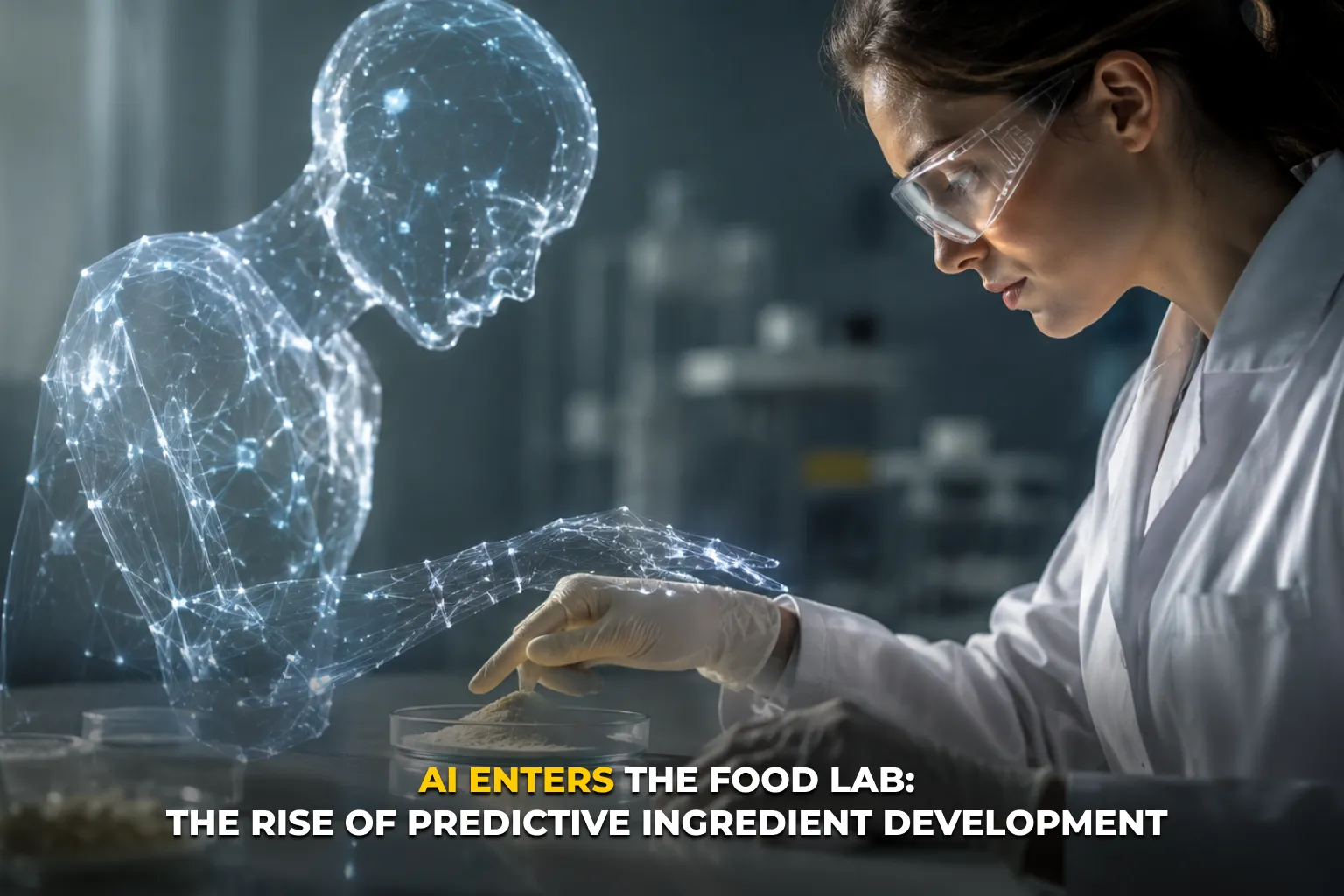
Artificial intelligence (AI) has moved beyond brainstorming into the working infrastructure of food and beverage innovation, with ingredient suppliers, product developers and major brands using specialised systems to organise research, model formulations, predict ingredient behaviour, interpret consumer signals and reduce physical trials before commercialisation, Food Ingredients First reports.
Before reaching the bench, developers can use AI to eliminate dead ends, compare competing constraints and decide which formulations are worth testing — but the technology is helping food scientists, not replacing them.
From question to experiment, and formulation intelligence
Early-stage research is among the most accessible uses.
Mattson’s MattsonIQ gives food professionals structured, industry-specific answers rather than generic search results — AI as a «24/7 thought partner», says chief AI officer Steve Gundrum.
Ingredion’s Ask Ingredion applies this to ingredient selection, asking about application, processing and functionality before presenting options, though «no problem is solved by AI alone in this space», notes Ingredion’s Chris Regan.
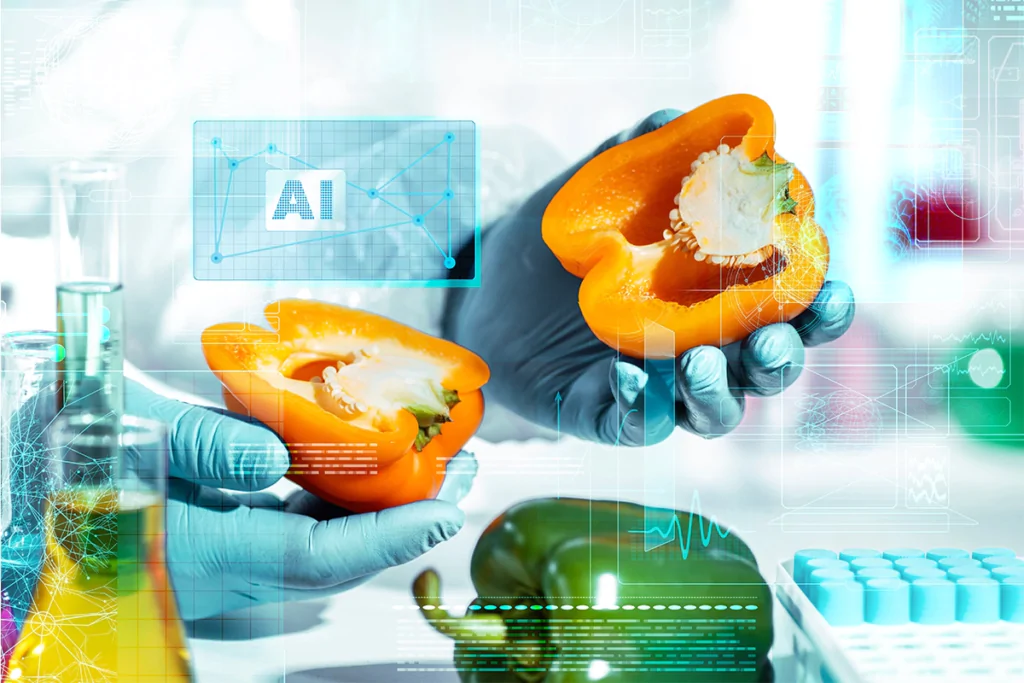
TraceGains’ Formula AI lets scientists generate candidate formulas and preserve the reasoning behind changes, accounting for cost, nutrition, allergens, sourcing, claims, regulation and functionality The aim is «not just producing a recipe» but explaining the formulation logic, says John Thorpe.
Corbion’s Symone Kok sums it up: «This does not replace deep scientific expertise — it amplifies it.»
Taste, texture and functionality remain decisive
Alternative proteins show both the promise and the difficulty.
Food System Innovations’ Food Intelligence Lab combines trained sensory-panel results with instrumental measurements (texture profile analysis, pH, shear tests, molecular composition) to predict how closely sustainable proteins match animal benchmarks.
In early tests on two plant-based dairy categories, expert-guided optimisation improved sensory satisfaction over one week, though sensory panels remain central, says ML director Anna Thomas.
A True Nexus–Pasqal quantum-computing project aims to predict how proteins gel, bind water, emulsify, foam and thicken — functionality being «one of the most critical frontiers in food innovation», says True Nexus CEO Dominik Grabinski.
Beyond the lab — and the trust test
AI also links development to sustainability and safety: Corbion models microbial growth to assess Listeria risk before problems arise, while IFF estimates the carbon impact of flavour formulations.

Unilever used digital simulation to halve development time for a Knorr paste and to improve how products surface in AI-generated recommendations.
«AI is changing discoverability by raising the bar on how we show up», says Unilever Foods’ Olivia Kirby.
But verification matters: Food Alert warns of AI-fabricated food complaints, and «the barrier to creating a highly convincing food image has plummeted», says technical director Annabel Kyle.
The strongest systems will combine proprietary, food-specific data with explainable recommendations, physical validation and experienced judgement — generating a recipe is the easy part.
Source: Food Ingredients First