
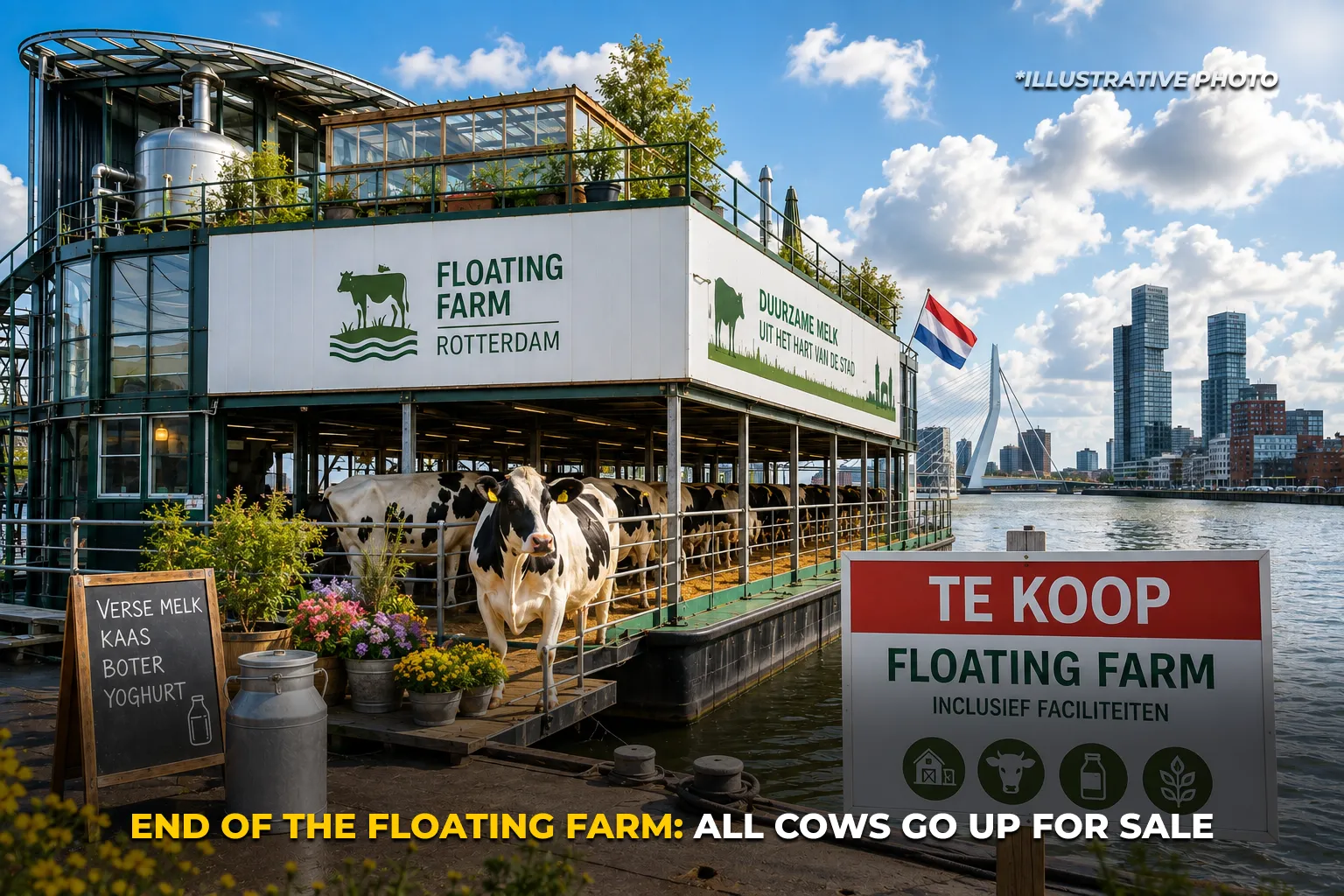
Rotterdam’s floating farm was meant to be a symbol of urban milk production, but after seven years its owners must sell all 28 cows, TopAgrar reports.
The floating farm in Rotterdam’s Merwehaven harbour currently keeps 28 dairy cows that can wander onto the quay; their milk and cheese are sold at the on-site shop and in selected supermarkets.
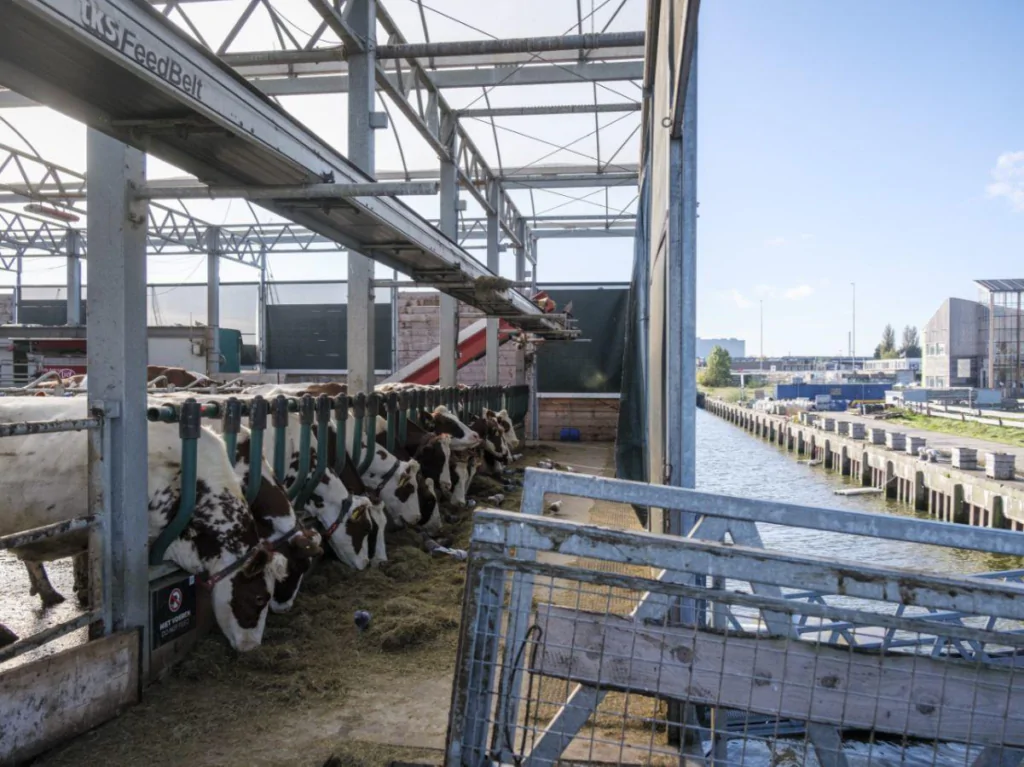
Built by Floating Farms and launched in the port in 2019, the barn was designed to hold 34 cows and to make farming possible in cities short of space for livestock.
Citing Dutch newspaper De Havenloods, TopAgrar reports the owners must sell the entire herd before the next inspection on 18 August, with the animals moving to another farm.
“The cows will go to a good, animal-friendly farm,” co-owner Minke van Wingerden said, noting they work with a trusted cattle trader.
Why the herd has no future here
Two factors ended the dairy operation. The Rotterdam permit runs only to 1 February 2028, and the site is earmarked for future housing.
More pressing, an inspection found the barn’s rubber floor lacked the required certification: the previous certified floor was too uneven for the manure-removal robot, so the owners replaced it with one that worked for the robot but never passed certification.
Redoing the whole floor would cost tens of thousands of euros — money the owners consider unjustified given they must leave by 2028.
What comes next
The complex is already up for sale, and the owners are weighing a move to another waterside spot in or near Rotterdam — most likely without cattle.
“As for milk production, the scope to expand cow farming in the Netherlands is now exhausted,” van Wingerden said.
They still back urban food production, and are considering herbs, vegetables, mushrooms and even harvesting drinking water from air humidity.
A farm that drew Clarkson’s eye
Jeremy Clarkson and Kaleb Cooper of “Clarkson’s Farm” visited during a tour of unusual European farming ideas, featuring the farm in season 5, and Clarkson praised co-founder Peter van Wingerden’s engineering approach in his Sunday Times column.
The farm employs eight people and hosts dozens of visiting groups each month. Its aim — producing food close to consumers with climate-adapted methods — now hinges on finding a new location and business model.
Source: TopAgrar