

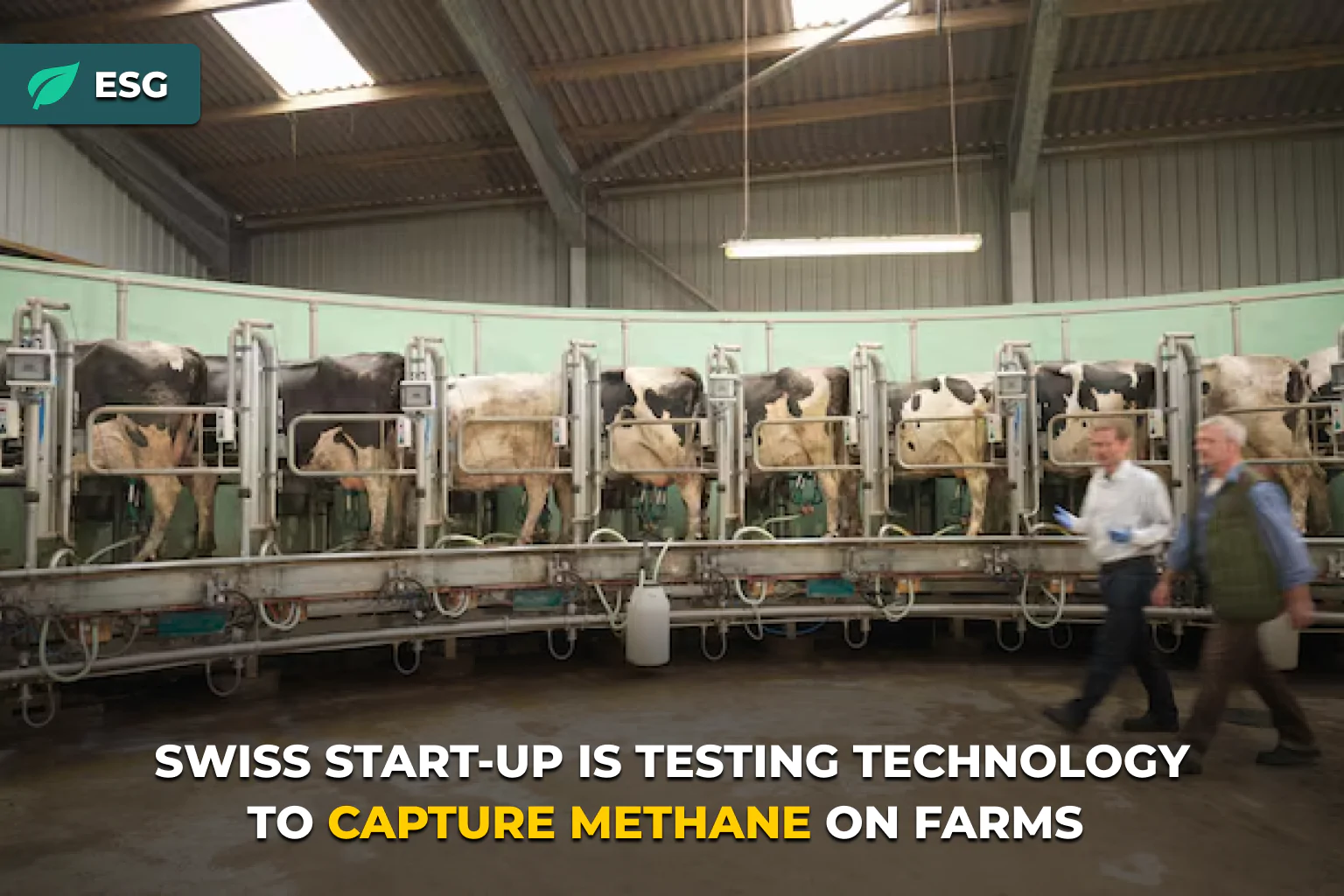
The Swiss climate start-up Sixteen44 is moving from laboratory research to practical trials of its technology for reducing methane emissions. According to AgNavigator, the company plans to install its first operational system on a farm in Switzerland to test its effectiveness under real-world conditions.
The pilot project aims to demonstrate that the technology can operate without interfering with animal husbandry or feeding practices. The system will use a special oxidation process that removes methane from the air in livestock housing.
According to William Ramsay, co-founder of Sixteen44, this is a crucial step in demonstrating the technology’s viability in real-world farming conditions.
“Deploying our first field unit is a critical milestone in proving our point-source technology,” said co-founder William Ramsay. “By demonstrating that we can eliminate these emissions on-site with minimal energy and zero disruption to daily farm operations, we show a clear path toward reducing methane emissions.”
Methane produced during the digestion of cattle remains one of the biggest climate challenges facing the livestock industry. According to scientists’ estimates, over a 20-year period, its impact on global warming is approximately 80 times greater than that of carbon dioxide. At the same time, due to its low concentration in the atmosphere, this gas is difficult to capture effectively using traditional methods.

Sixteen44 has developed its own technology specifically to deal with this type of emissions. The system operates at low temperatures and is designed to purify air with low concentrations of methane. Rather than capturing the gas, the plant converts it into water vapour and CO₂, which, according to the company’s estimates, reduces its environmental impact by 97%.
“Livestock emissions represent the exact type of dilute, non-flammable methane that current industrial solutions cannot touch,” said Ramsay.
The company notes that the technology has the potential to be used to reduce a significant proportion of global methane emissions, which have so far been virtually impossible to control effectively. In the future, there are also plans to use it at landfill sites and coal mines.
During field trials, the main focus will be on testing the system’s effectiveness under real-world conditions and independently verifying the results. To this end, methane concentrations at the reactor’s inlet and outlet will be continuously measured using built-in analysers and checked by independent auditors.
The company focuses primarily on indoor dairy farms and other livestock facilities equipped with ventilation systems through which air can be channelled into the reactors. According to the developers, a typical farm will require just one or two centralised modular units.
“This point-source approach scales by targeting indoor dairy barns and confined livestock housing rather than open pastures,” Ramsay emphasised.
Sixteen44 plans to base its business model partly on carbon credits and partnerships with farm owners. The company believes that the irreversible nature of the methane destruction process makes such projects attractive to the carbon finance market.
Founded in 2025, the company has set itself the goal of eliminating one million tonnes of methane by 2035. The success of the first field trial will be a significant step towards scaling up the technology and implementing it in the livestock sector.
Source: AgNavigator