
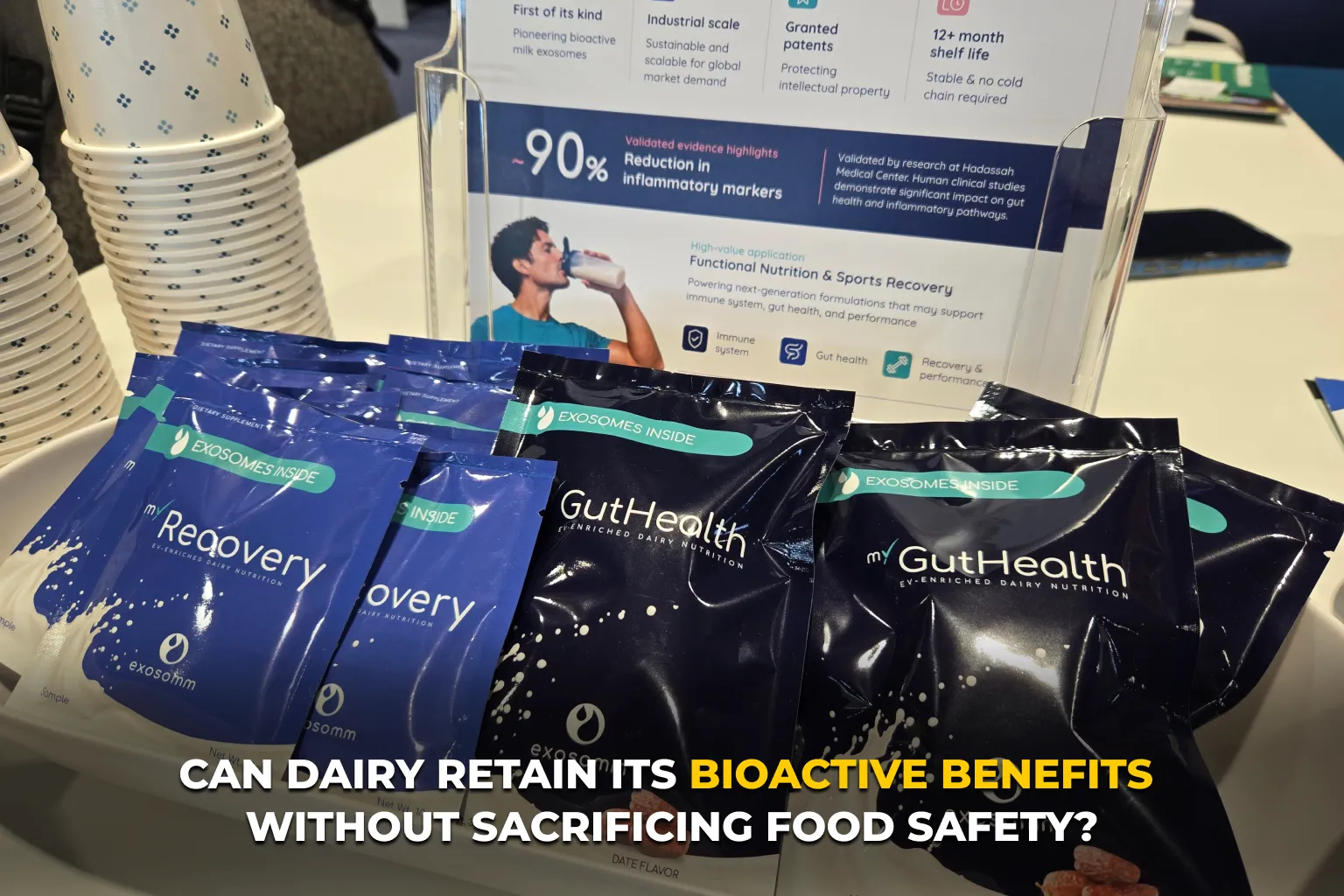
By preserving naturally occurring milk exosomes that conventional processing often destroys, biotech startup Exosomm says it can help manufacturers deliver clinically relevant bioactive benefits without trading away food safety, shelf life or scalability, DairyReporter reports.
For decades, makers have sacrificed dairy’s full functional value for the food safety and shelf life they need. Exosomm says it has found a way to keep both — through a proprietary process that preserves milk exosomes without synthetic additives or chemical modification, delivered as a commercially viable, science-backed enriched whey protein powder.
“Exosomes are tiny particles found in many liquids, even in your body, and they are nature’s oldest and most sophisticated communication system,” CEO Rachelle Neumann said, likening them to “the DHL between the cells” — one cell packages what it needs, ships it to another, and downstream pathways fire once the cargo is released.
Human breast milk offers one example, its exosomes carrying microRNAs thought to matter for infant development. Exosomm found cow milk carries exosomes too, and its own research showed they eased inflammatory bowel disease inflammation, improved glucose tolerance and helped prevent pancreatic and liver damage.
Milk exosomes can survive digestion and interact with the body in ways ordinary ingredients cannot, the company says, carrying bioactive signals tied to gut health, immunity and inflammation. They travel via extracellular vesicles absorbed by epithelial cells in the gut, where the exosomes release their cargo, said CTO Efrat Davash Riesenfeld.
“Their cargo is all sorts of things: proteins, bioactives, microRNAs, active lipids, and each has a different effect,” she said — including a therapeutic, anti-inflammatory effect on colitis shown in published research, and a tightening of the gut barrier that reduces leakiness and bleeding in people with Crohn’s and colitis.
The biggest obstacle is preserving exosomes
Exosomes are fragile, and modern food-safety processing destroys them, so consumers gain little from them through ordinary milk or yogurt, Neumann said. Exosomm’s answer is a whey protein concentrate enriched with bioactive, preserved exosomes.
The company recovers the exosomes from cheesemaking whey that would otherwise hold limited value — a sustainable new revenue stream for dairy producers. It then makes a standardized powder with a one-year shelf life, ready to formulate into bars, drink mixes and more.
“This is a premium product… the novelty and the mechanism of action,” Neumann said. “This is not just another ingredient” alongside existing postbiotics or prebiotics.
From scientific promise to commercial reality
Exosomm is pursuing GRAS (Generally Recognized As Safe) status and already holds a regulatory consultant’s opinion letter stating it can commercialize the ingredient because it is ultimately “only milk.” It has large-scale manufacturing and supply capacity for global markets and is open to partnering — especially in the US — via a joint venture or by licensing the technology.
Whether milk exosomes become a mainstream functional ingredient will hinge on regulatory progress, commercial adoption and further clinical validation. Either way, the approach reflects a wider shift in functional nutrition — from adding ever more ingredients to preserving the biological activity already present in nature. If Exosomm can deliver at scale, makers may no longer have to choose between food safety and functionality.
Source: DairyReporter