
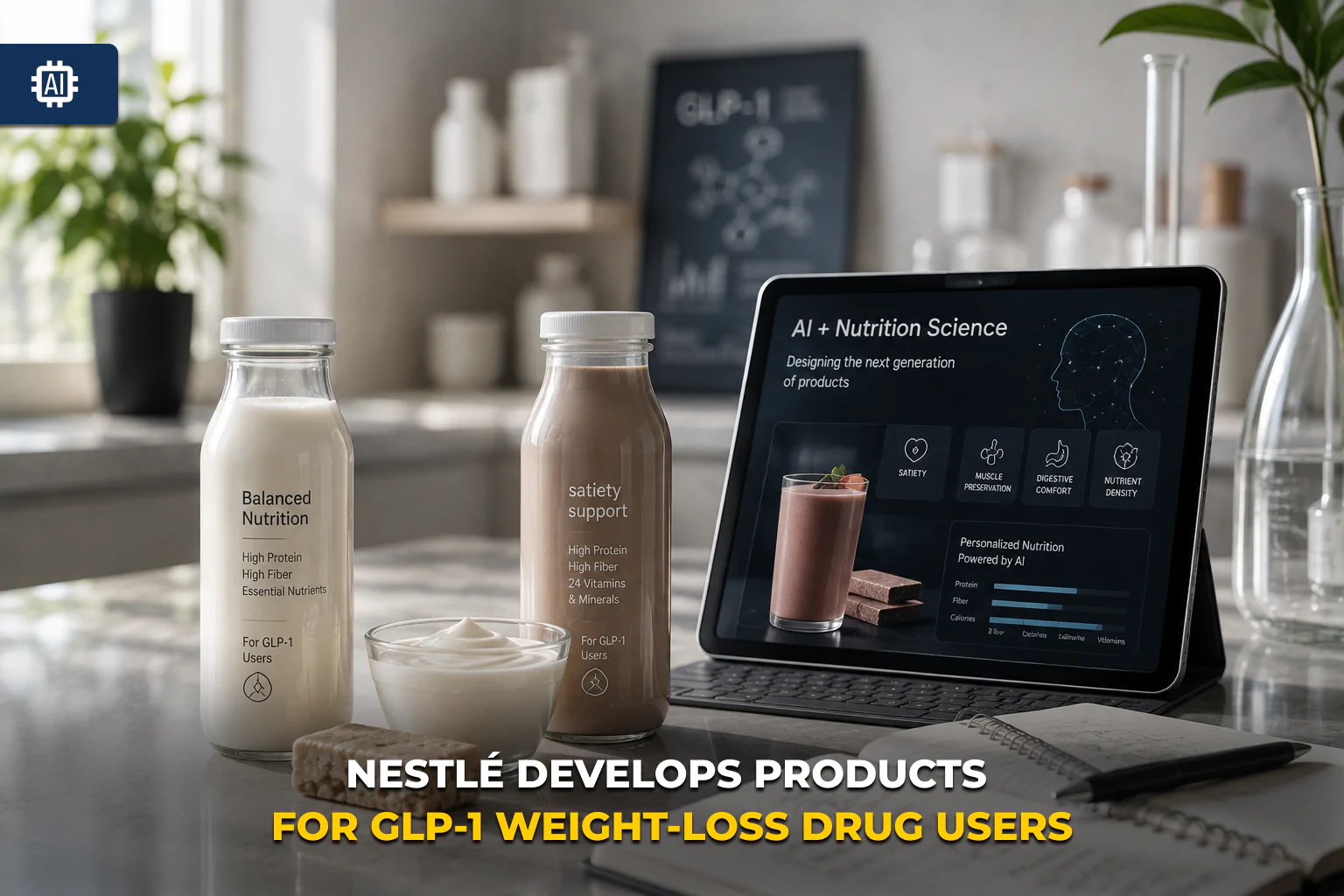
Nestlé is seeking to turn the rise of GLP-1 (glucagon-like peptide-1 receptor agonist) weight-loss drugs from a threat into an opportunity, using artificial intelligence (AI) and nutritional science to develop products for the millions of consumers taking medicines such as Ozempic and Wegovy, ESM Magazine reports, citing Reuters.
The rapid uptake of drugs from Novo Nordisk and Eli Lilly has raised investor fears that appetite-suppressing medicines could permanently depress demand for packaged foods, snacks and beverages. Nestlé’s view is that the same drugs are creating a new market for products designed to address the side effects of rapid weight loss. According to Boston Consulting Group, around 16 million Americans are currently taking GLP-1 medicines, a figure expected to rise sharply by the end of the decade. The market is led by Eli Lilly’s Mounjaro and Zepbound and Novo Nordisk’s Wegovy and Ozempic.
“We are well positioned with the portfolio. It’s a huge opportunity for our company,” said Nestlé chief technology officer Stefan Palzer.
Tackling side effects
Presentation materials shared with Reuters outline the side effects associated with rapid weight loss — including muscle loss and loss of facial fat, commonly called “Ozempic face” — and the areas where Nestlé believes its products can help. Scientists at the company are processing large volumes of clinical research via AI to identify nutrient combinations that may support muscle health, hydration and overall nutritional intake.
Nestlé has already added collagen protein to products under its Vital Proteins brand to address concerns around skin, hair and nail health during rapid weight loss.
“A big part of weight loss is that people lose lean muscle mass,” Palzer said. “We found a combination of two micronutrients which we industrialized that stimulate the growth of muscle tissue. On one hand you provide protein, on the other hand you stimulate the muscle tissue to grow back faster.”
Nestlé has also patented combinations of proprietary ingredients aimed at reducing hunger in consumers who often experience increased appetite after discontinuing GLP-1 treatment. Launched products include Boost Advanced Nutrition Shake in the US, marketed as containing 35 grams of protein to support muscle health during weight loss, and a higher-protein version of Milo malt drink — Milo PRO High Protein — introduced in Asia and Australia.
AI as recipe book
AI plays a growing role across Nestlé’s product development process. The company has built internal systems to analyse scientific literature, simulate consumer behaviour, spot emerging trends and help product developers work with a database of roughly 120,000 recipes. One such tool, an internal platform called Food Genie, helps predict how recipes might perform and identifies opportunities for reformulation.
“You can imagine if you’re a small company you have only a thousand recipes. It’s very difficult to model and predict recipes using AI. AI needs data,” Palzer said.
Nestlé is also testing AI-driven consumer simulations to predict shopper responses to new products and health claims before launch, and uses AI to monitor social media for lasting trends.
“You see noise around certain topics and then you can conclude whether that’s a lasting trend or not. Increasingly AI will get into this field,” Palzer added.
Not everyone is convinced
Some nutrition experts question whether specialised products offer meaningful advantages over ordinary food. Amanda Avery, associate professor in nutrition and dietetics at the University of Nottingham, noted that meat, fish, eggs, dairy products, beans, nuts and pulses remain relatively affordable protein sources, and cautioned against a reflexive turn to costlier new products carrying the same nutrients. She nonetheless acknowledged that products marketed specifically to GLP-1 users are likely to find buyers.
“Sadly, we are quite influenced by marketing. Nestlé will have done their research,” she said.
Source: ESM Magazine