
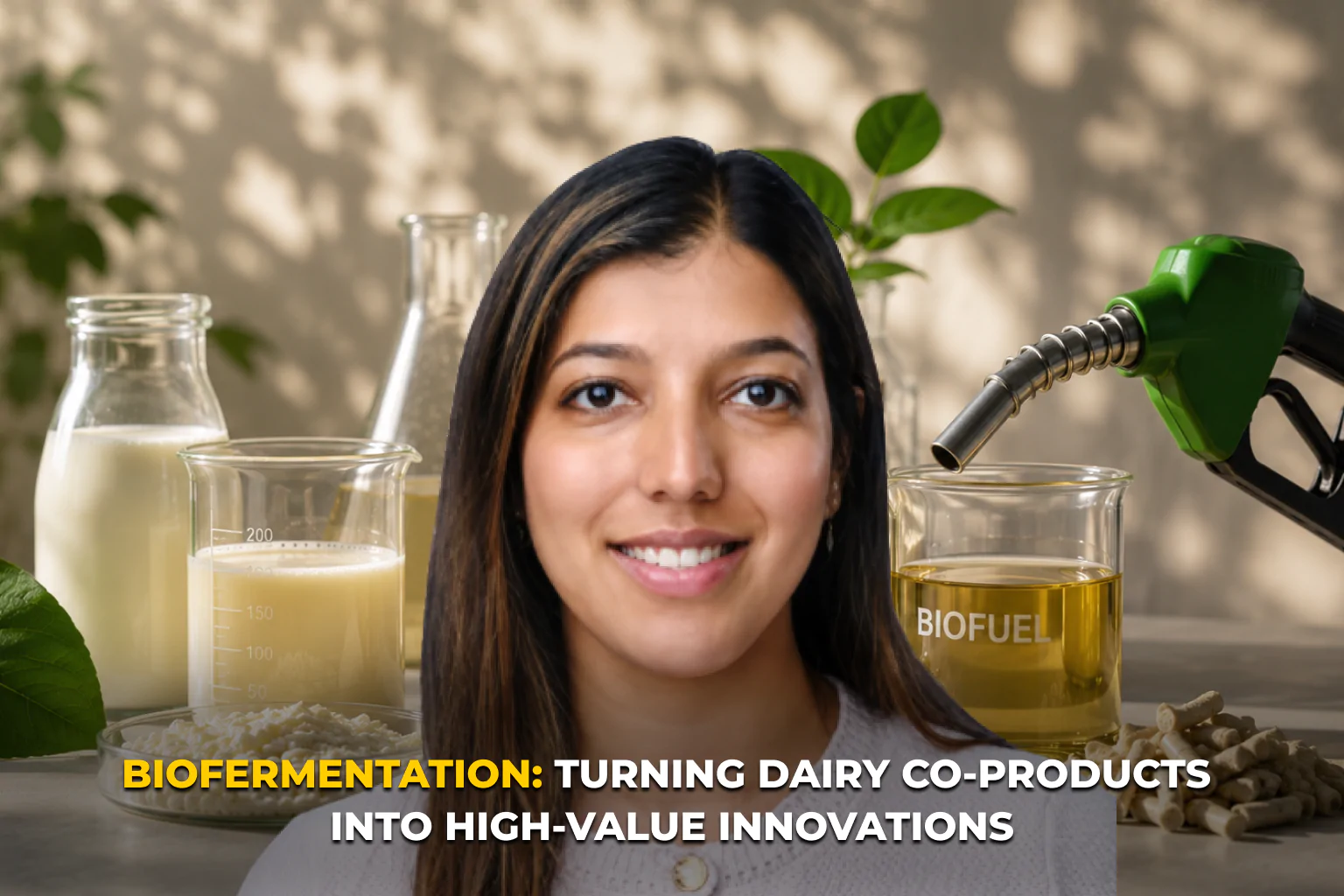
The dairy industry has long been a model of efficiency, evolving from simple milk processing to a wide range of functional ingredients — but this progress generates large volumes of low-value co-products such as whey permeate and acid whey, which biofermentation can turn into high-value products, writes Pratishtha Verma of the Center for Dairy Research for Dairy Foods.
From waste stream to resource
Processors have mastered fractionation, creating whey protein concentrates (WPC), isolates (WPI) and other specialized ingredients — but cheese, Greek yogurt and protein fractionation also generate whey permeate, acid whey and other streams.
Historically sent to animal feed or costly disposal, these lactose- and mineral-rich streams are now seen as untapped resources. For every kilogram of cheese, nearly nine liters of whey are generated, posing sustainability concerns if discarded untreated.
Biofermentation — using microorganisms to convert sugars into new molecules — makes them ideal fermentation substrates, using lactose-positive yeasts such as Kluyveromyces marxianus, enzymatic hydrolysis of lactose, or microbial consortia; being sanitary and food-grade, they need less pretreatment than agricultural residues.
A diverse spectrum of products
Pathways are remarkably diverse: polyhydroxyalkanoates (PHAs) — biodegradable plastics for films, coatings and packaging; organic acids (lactic, citric, acetic), with lactic acid a precursor for polylactic acid (PLA); ethanol from whey, extending to craft spirits and even sustainable aviation fuel; single-cell protein (SCP) for feed, aquaculture and potentially human nutrition; and microbial oils from oleaginous yeasts, which can store up to 70% of their biomass as lipids and be upgraded into biodiesel or jet-range hydrocarbons — an early-stage but promising low-carbon pathway.
Scale-up, challenges and outlook
US research centers and companies are investing in infrastructure: the Center for Dairy Research (CDR) in Wisconsin installed a 400-liter fermentation system. Cost gaps are significant — a 100-liter bioreactor may cost tens of thousands of dollars, a 1,000-liter several hundred thousand, and full-scale plants millions. Experts stress integrating membrane fractionation with fermentation and planning downstream separations early, as purification often dominates costs.
Challenges remain: feedstock variability, lactose-hydrolysis costs, downstream processing exceeding half of total expenses, regulatory compliance (including GRAS status) and market acceptance. Still, co-products are no longer just waste but strategic resources for the bioeconomy — the future of dairy is not limited to milk and traditional products.
About the author
Pratishtha Verma is a Dairy Ingredients and Applications Scientist at the Center for Dairy Research, University of Wisconsin–Madison, with more than five years of experience supporting the dairy industry and an active IFT member. More on the author’s page.
Source: Dairy Foods