
The EU’s Packaging and Packaging Waste Regulation (PPWR) has been enforceable from 12 August. The regulation, which entered into force in February last year, is now applicable. For any food manufacturer that operates in the EU and works with packaging, a familiarity with this legislation is essential, Dairy Reporter reports. What do manufacturers need to know?
1. It is a regulation, not a directive — but uniformity should not be assumed
The PPWR is a regulation, not a directive. In EU law, a directive sets goals for Member States to meet through their own legislation. The PPWR was preceded by, and replaces, the Packaging and Packaging Waste Directive (PPWD). A regulation leaves fewer details up to the Member States.
“PPWR applies directly across all EU Member States, creating a far more harmonised framework than the previous Packaging and Packaging Waste Directive,” said Naomi Carlin, packaging consultant at waste management company Biffa.
But the PPWR is not entirely uniform.
The regulation still leaves some room for Member States to maintain or adopt national measures, explains Manon Ombredane, director of environment, health and safety practice at law firm Squire Patton Boggs — especially in the area of extended producer responsibility (EPR), where competent authorities within Member States will lay out EPR requirements. Member States also retain flexibility on compostable packaging and waste collection systems, Carlin adds.
Enforcement of rules and issuance of penalties remains a national competence.
“As a result, while the substantive rules will be more harmonised, businesses should not expect a completely identical compliance or enforcement landscape across the EU,” Ombredane said.
2. Brand owners are often responsible for compliance
When packaging is placed on the market, manufacturers must include Declarations of Conformity (DoC) to outline compliance with the PPWR. Responsibility for this DoC lies with the manufacturer — but under the PPWR’s definition, that is not necessarily the company physically creating the packaging.
The manufacturer is often the brand owner or the packaging decision-maker, says Carlin. Therefore it is they who are responsible for compliance, not necessarily the company physically producing the food or packaging.
“If your name or trademark appears on the packaging, you are probably considered the manufacturer under the PPWR, even if you neither manufacture the packaging itself nor package the food product,” said Ombredane.
It is important for manufacturers to know who is responsible for what when it comes to compliance.
“Incorrect assumptions can create compliance gaps, unnecessary duplication and confusion over who is responsible for the documentation needed to demonstrate conformity,” said Erkam Narinç, senior policy and regulatory affairs manager at renewable materials company Stora Enso.
3. PFAS limits must be complied with
PFAS, colloquially known as “forever chemicals”, are one of the most enduring controversies in the food industry. Often found in food packaging, they have been linked to increased cancer risk, thyroid disease, liver damage and fertility issues. From 12 August, PPWR limits on PFAS in food contact packaging apply:
- 50 parts per million (ppm) for polymeric PFAS;
- 250 parts per billion (ppb) for the sum total of non-polymeric PFAS detected;
- 25 ppb for any individual type of non-polymeric PFAS detected by targeted PFAS analysis.
Non-polymeric PFAS is smaller than polymeric PFAS, more reactive and considered more harmful, according to the University of Rhode Island.
Compliance with these limits involves the whole supply chain working together, says Carlin. Suppliers must provide and maintain technical evidence to demonstrate conformity; the manufacturer — often the brand owner — is responsible for bringing this information together and issuing a DoC.
A harmonised testing approach for PFAS is currently being developed and will be released at a future date.
Several potential issues exist for compliance, says Ombredane. Limits currently apply to the packaging unit as a whole, including inks, adhesives and coatings, and they apply regardless of whether PFAS is present intentionally or unintentionally.

Food manufacturers who are most directly responsible for compliance — typically the brand owner or packaging decision-maker — often have limited visibility over all components used in complex packaging structures. Notably, the PPWR’s rules on PFAS explicitly apply to food contact packaging, rather than packaging in general.
4. Recycling rules will get more stringent
Recycling is central to the PPWR. From 2030, packaging will be expected to be designed for recycling by standards harmonised across the whole of the EU. Packaging will be assessed against recyclability performance grades — the higher the percentage of recyclability, the better the grade.
Packaging under 70% recyclability is considered technically non-recyclable. These grades are expected to influence market access and EPR fees paid by producers, says Roger Wright, waste strategy and packaging manager at Biffa.
At the same time, packaging across Europe will move towards common sorting labels to help consumers identify materials and correctly dispose of packaging. Packaging will include standardised labels detailing how it should be sorted, and corresponding labels will also appear on waste collection containers.
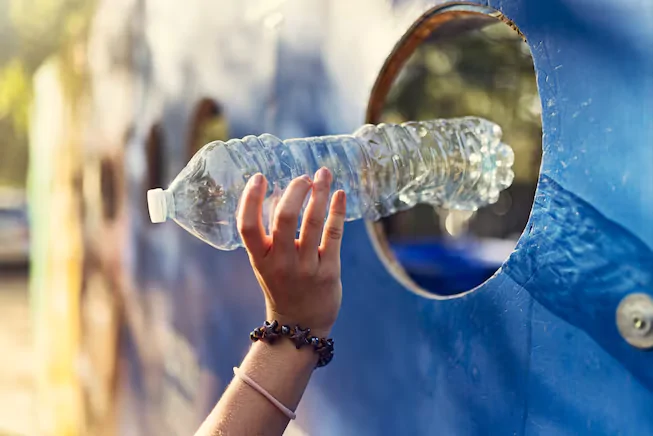
The final guidance is expected to be released in autumn this year, says Wright. Systems like this already exist across Europe, but the aim is to harmonise them.
“While people may not notice immediate changes, PPWR is intended to drive significant improvements over time,” Wright said.
At the moment, recycling systems and capabilities vary widely between Member States. Mandatory packaging and waste-container labelling introduced by PPWR may improve collection, sorting and recycling performance across Europe. A change in recycling infrastructure is one of the legislators’ objectives, says Ombredane.
“The PPWR introduces requirements covering the entire life cycle of packaging, from design through collection and recycling. By linking packaging design requirements with recycling performance and waste management obligations, the Regulation aims to make packaging more circular and to drive further investment in recycling infrastructure across Europe,” Ombredane said.
5. The regulation may cost industry, but it is estimated to save more
Implementation could be costly. Deloitte predicts that implementing reuse schemes, deposit return systems (DRS), and certifying packaging recyclability and recycled content could cost business €5.9bn. Nevertheless, the European Commission’s economic modelling predicts that in the long run the regulation could result in economic savings of €47.2bn, or €100 for every EU citizen.
One particularly costly aspect of compliance will be obtaining compliance data, says Ombredane. Many PPWR obligations rely on data, but it is difficult to obtain robust and reliable data from the complex packaging supply chain.
6. Some elements of the regulation are yet to apply
12 August is only the beginning. Many major aspects of the PPWR will only become applicable at a later date:
- Standards on designing packaging for recycling will be enforceable from 2030, and expanded in 2035 and 2038.
- Deposit return schemes (DRS) for single-use plastic bottles and metal beverage containers must be in place by 2029, unless an exemption applies.
- Some elements do not apply until 2040 — including minimum requirements for recycled content recovered from post-consumer plastic waste, which are raised in 2040.
And these are only the tip of the iceberg.
“From 2030 onwards, many of the most significant packaging design requirements take effect, including recyclability and recyclability performance grades, minimum recycled content in plastic packaging, packaging minimisation requirements, restrictions on certain packaging formats, reuse targets and the requirement for packaging to be recyclable at scale,” Wright said.
The PPWR aims to harmonise European packaging law across its 27 Member States. The process will be long, complex and potentially very costly — but in the end, at least according to the EU, it will be worth it.
Source: Dairy Reporter