

Farmers and gardeners in Germany will have to complete plant-protection training less often, and a series of reporting duties in the agri-food sphere will be dropped, under a bureaucracy-reduction bill adopted by the government, Raiffeisen reports.
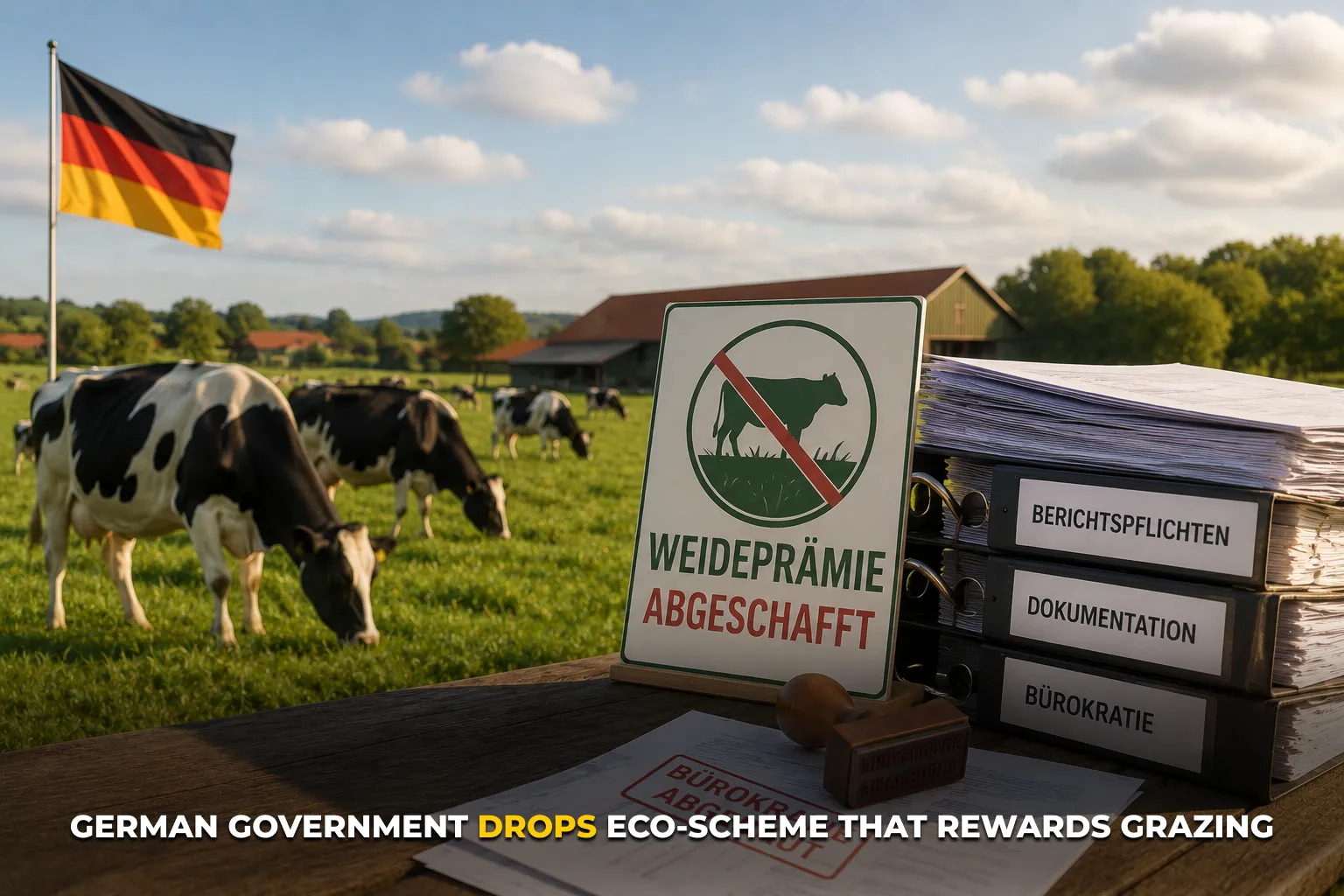
This follows from a bureaucracy-reduction bill (Bürokratierückbau) that the federal government adopted on Wednesday, 15 July, at its second “relief cabinet” (Entlastungskabinett). To avoid administrative effort, the government also plans to scrap an originally envisaged new eco-scheme (Öko-Regelung) under the EU Common Agricultural Policy (GAP) carrying a grazing premium (Weideprämie) — a move that had already triggered strong protest among some politicians and parts of the farming sector.
Agriculture Minister Alois Rainer nonetheless sees himself on course: the bureaucracy-reduction law, the CSU politician said, gives farms “more time for what matters”. Under the bill, the measures should relieve the economy by €12m a year, with further bureaucracy-reduction laws to follow.
Reporting duties reduced
Under the bill, the mandatory training for the plant-protection competence certificate (Sachkundenachweis) will be required only every six years instead of three. In the food and feed code (LFGB), reporting duties that go beyond EU-law requirements will be scrapped, and it will become easier for small businesses to submit electronic proofs. The federal veterinary regulation will also ease the administrative procedures for the approbation of vets and the recognition of foreign qualifications, while a change to the animal by-products disposal act means horse cremation will only require notification, with the permit requirement removed. A change to the consumer-cannabis act will drop the separate reporting duty for industrial-hemp cultivation where it is already stated in the GAP application.
Farmers’ union expects further steps
The German Farmers’ Association (DBV) welcomed the cabinet decision as “first steps” but expects further bureaucracy-reduction measures. “The bill sets the right impulse with its measures, as it at least addresses in some places the burdens and bureaucratic hurdles of our farmers,” said DBV secretary-general Stefanie Sabet, adding that further and more comprehensive relief must follow “as quickly as possible” and that cutting bureaucracy should be understood as a “permanent process”.
Source: Raiffeisen