
The popularity of GLP-1 medications for weight management is changing consumers’ eating habits and driving demand for foods with high nutritional value. According to Nutrition Insight, consumers are increasingly opting for high-protein, high-fibre and functional foods in convenient formats.
The growing popularity of GLP-1 therapy is prompting the food industry to rethink its approach to product development. Consumers, who are starting to eat less, are increasingly focusing not on calorie content but on the nutritional value of food, its protein and fibre content, and the overall functionality of products.
Nutrition Insight spoke to representatives from Ingredion, Fonterra and Carbery about how GLP-1 agonists are driving innovation in the food and dairy sectors.
“GLP-1s aren’t just changing how individuals eat, they’re reshaping how consumers look at nutrient density of what they consume,” says Nina Gest, Senior Manager of Global Market Insights at Ingredion.
According to her, when reducing food intake, the main criterion for choosing foods is their nutritional density. This applies in particular to protein for maintaining muscle mass, fibre for digestive health, and a low sugar content to avoid energy fluctuations.
“The risk isn’t under-eating, it’s under-nourishing,” emphasises Guest.
She adds that due to a reduced appetite, particularly in the morning, consumers may be falling short on protein, fibre, and other essential nutrients. This is precisely why there is a growing emphasis on affordable everyday foods that enable people to maintain a balanced diet even when eating small portions.
Fonterra’s lead nutritionist, Jacqueline van Schaik, notes that GLP-1s merely reinforce the global trend away from calorie counting towards assessing the quality of one’s diet.
“Consumers are increasingly looking for foods that help them feel satisfied, support muscle maintenance, and are easy to tolerate, often in smaller, more convenient formats,” she says.
At the same time, the expert warns that alongside the positive effects, there are also risks. A reduction in overall food intake may make it difficult to ensure the body receives sufficient protein and micronutrients, and muscle loss is becoming an increasingly significant problem for GLP-1 users.
According to van Schaik, this highlights the importance not simply of reducing calorie intake, but of the quality of one’s diet. She believes that foods rich in complete proteins, vitamins and minerals, which are easy to consume in small portions, can play an important role alongside drug therapy.
Fiona Rawlinson of Carbery expresses a similar view. She notes that GLP-1 are changing consumers’ eating habits, leading them to opt for higher-quality, more nutritious alternatives over foods high in fat and sugar.
“It’s not just protein gaps; it’s vitamins, minerals, fiber, healthy fats, and the quality of the entire diet,” she emphasises.
Rawlinson believes that the quality of protein is particularly important. At Carbery, they are convinced that whey protein can play a significant role in maintaining muscle mass and managing weight whilst using GLP-1.
“Not all protein is equal — and complete proteins like whey, containing all essential amino acids and the full branched-chain amino acid profile, offer a unique triple‑action benefit,” she explains.
According to her, whey protein helps to preserve muscle mass and maintain a healthy weight after stopping GLP-1 therapy, and also helps to control appetite and blood glucose levels.
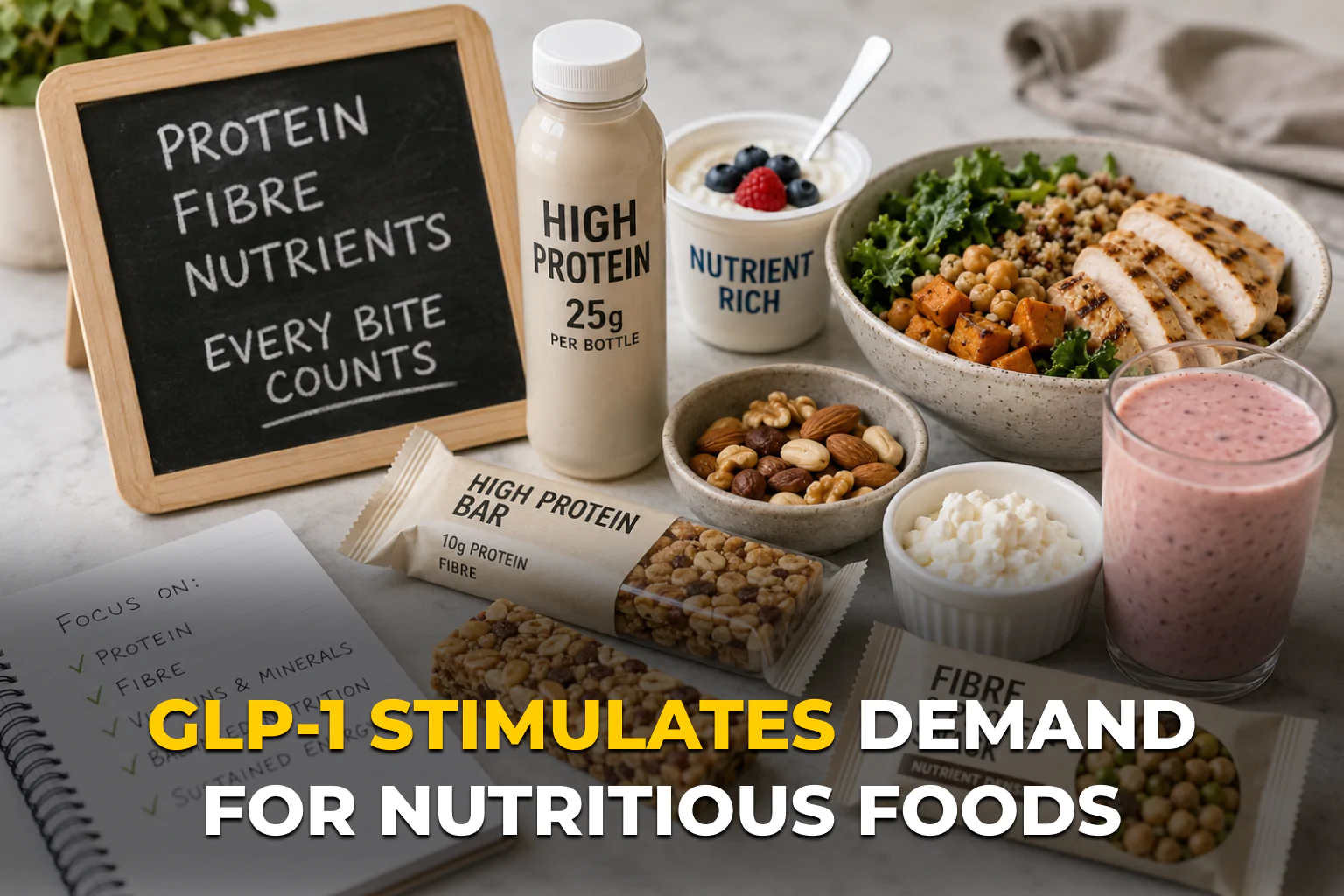
Experts also believe that GLP-1 is changing the very approach to product development. There will be growing demand for compact formats — high-protein bars, ready-to-drink beverages, functional snacks and products with high nutritional density.
“When you eat less, every bite has to count,” emphasises Rawlinson. “The quality of food is becoming the new standard.”
However, manufacturers are currently avoiding any direct mention of GLP-1 on the packaging. As van Schaik points out, companies are opting for neutral phrases such as ‘high in protein’, ‘nutrient-rich’ or ‘balanced nutrition’.
Ingredion also points out that GLP-1 users are not a homogeneous group, but that taste, texture, and convenience remain important to all of them.
“As intake decreases, enjoyment becomes even more important — every bite needs to deliver both satisfaction and nutritional purpose,” says Nina Guest.
According to her, the most successful products will be those that combine nutritional value, convenience, and sensory pleasure without excessive calories or large portions.
Source: Nutrition Insight