
Danone’s Silk is extending its high-protein platform across dairy-adjacent and functional beverage categories, betting that complete plant protein, fibre and familiar formats can attract mainstream consumers. Kallie Goodwin, plant-based food and beverage lead at Danone USA, explains how nutrition-led innovation and retailer insights are helping the brand compete with traditional dairy, Food Ingredients First reports.
From alternative to functional platform
With protein now beyond sports nutrition and plant-based buying no longer limited to vegans, Danone USA is repositioning Silk from a dairy alternative into a broader functional nutrition platform.
«Danone sees a significant opportunity for plant-based products at the intersection of two converging trends», Goodwin says — functional, nutrient-dense benefits and rising protein demand.
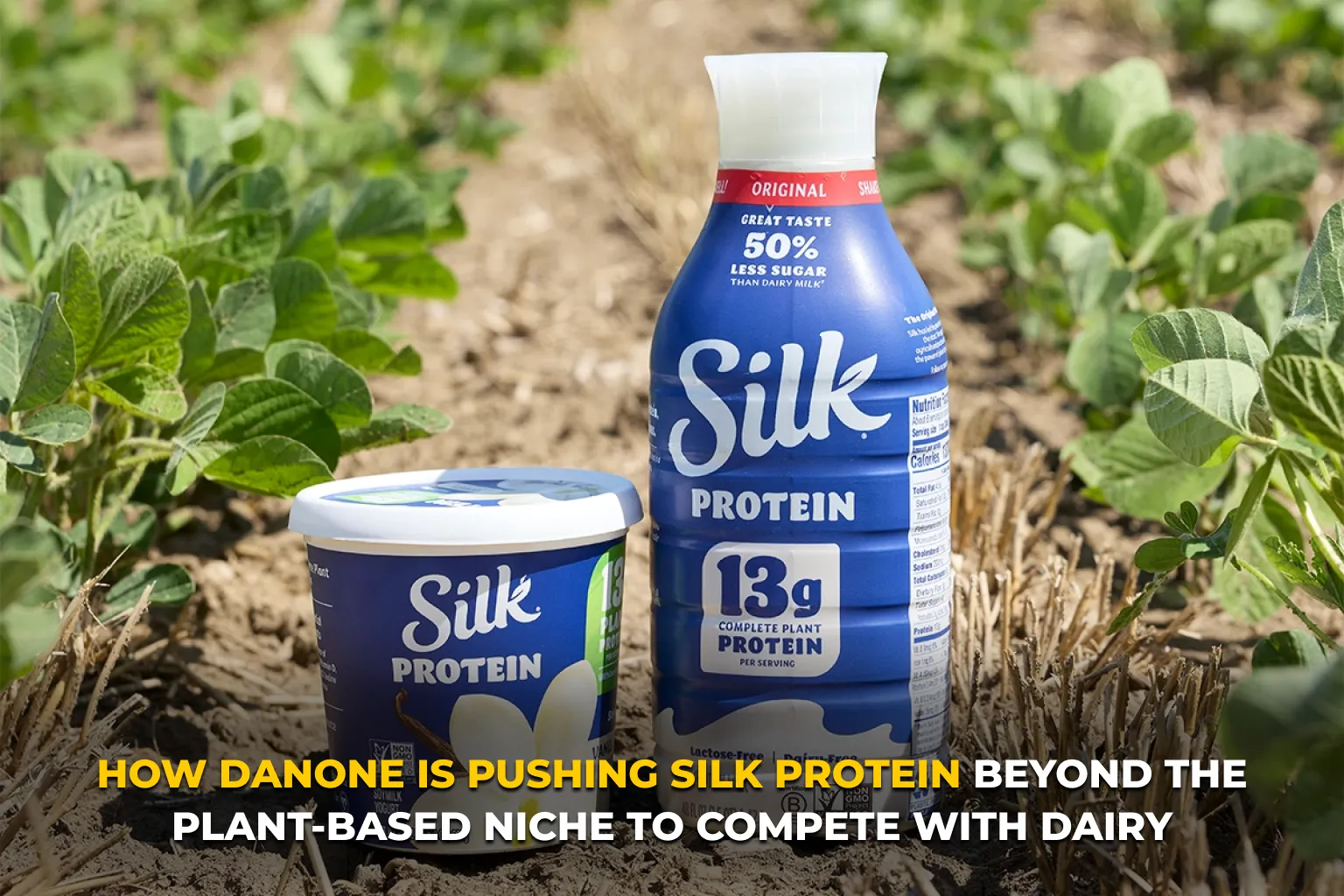
Silk Protein Milk (launched January 2026) delivers 13g of complete plant protein, 3g of fibre and 50% less sugar than regular dairy milk — described as the highest-protein refrigerated plant-based milk on US shelves. New Silk Protein Shakes reach 30g of protein per serving with 5g of fibre, while Silk Protein Yogurt offers at least 12g of protein, 4g of fibre and five nutrients (calcium, vitamin D, B12, iodine, phosphorus).
Goodwin cites data that 70% of Americans are trying to eat more protein, while plant sources make up only about a third of intake — aligning with Innova’s number-one 2026 trend, «Powerhouse Protein».
Competing inside the dairy set
Rather than separating plant-based from dairy, Danone competes in the same retail environment.
«When Silk first entered grocery stores decades ago, it was the first plant-based brand to place soy milk alongside dairy on a national scale», Goodwin says, adding that «half of consumers switching to Silk Protein are coming from dairy».
The platform also bundles protein with fibre, lower sugar and micronutrients — Innova ranks fibre the second-most accepted functional ingredient after protein. Danone’s sales teams use retailer-specific and shopper data to optimise assortment, shelf placement and in-store activation.
Taste remains the gatekeeper
Nutrition creates permission to buy, but taste drives repeat purchase — Innova finds 50% of consumers want better-tasting plant-based products.
«As the number-one plant-based beverage brand recommended by registered dietitians, Silk is uniquely positioned to help define the next chapter for the category», Goodwin says, expecting innovation to move from imitation toward distinct nutritional value.
Danone’s planned €1 billion (US$1.14 billion) acquisition of Huel further underscores its shift toward mainstream functional nutrition and high-protein, convenient formats.
Source: Food Ingredients First