
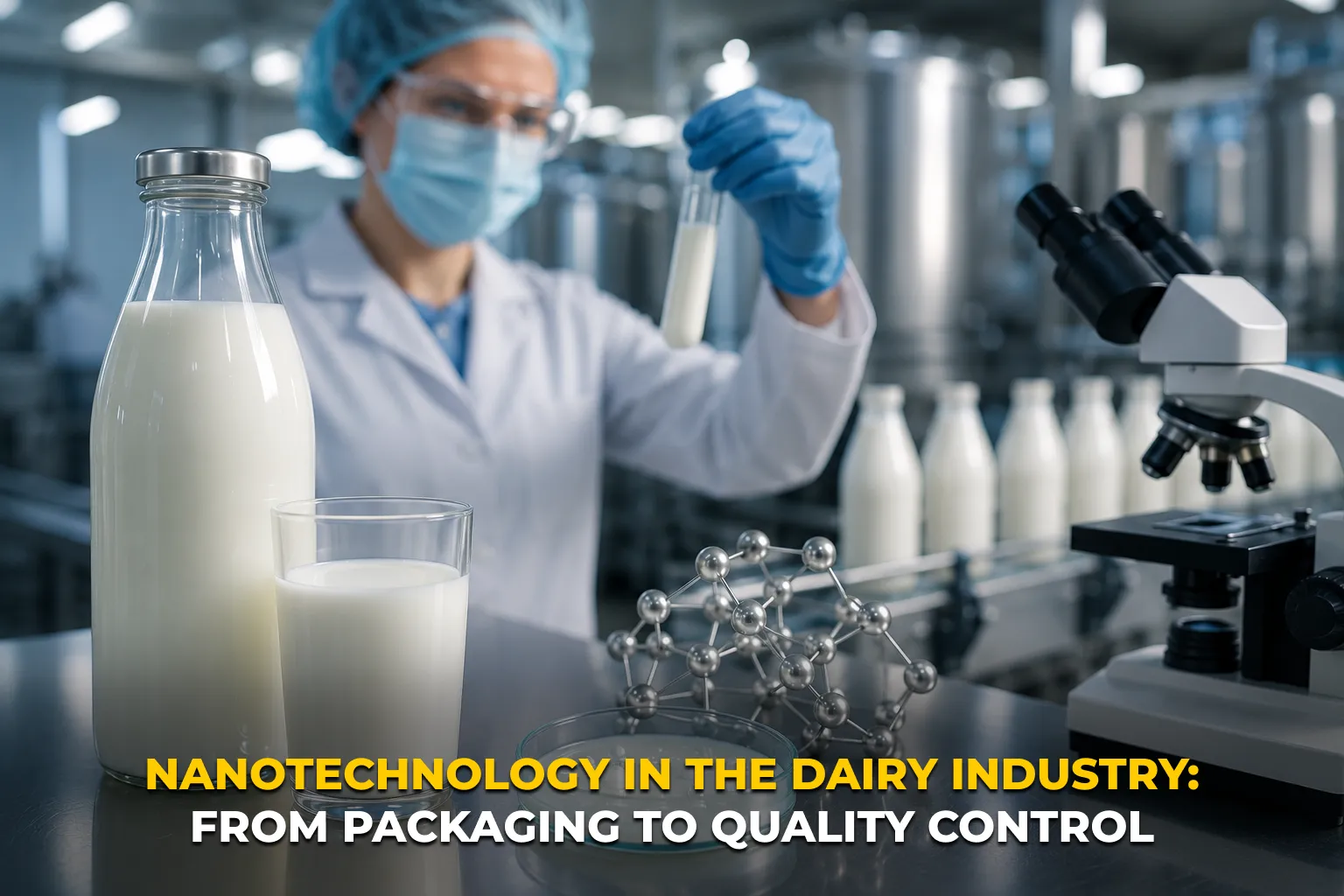
Dairy — one of the oldest branches of the food industry — is being transformed by nanotechnology, which operates at the level of individual molecules and atoms and is entering the sector from smart packaging that extends freshness to advanced quality-monitoring systems, writes Dr Patrycja Malinowska for Forum Mleczarskie.
Nano-based solutions can improve food safety, cut losses and boost efficiency; «nanofood» covers foods containing nanoparticles (for texture, stability or nutrition) or made using nano solutions in production, packaging or storage — though safety questions require detailed research and regulation. It is applied mainly in three areas: dairy processing, packaging, and safety and quality control.
Dairy processing
Nanoencapsulation protects and controls the release of sensitive substances — stabilising fat-soluble vitamins (A, D, E, K) added to UHT milk, yogurts or dairy drinks, and boosting the survival of probiotic cultures (Lactobacillus, Bifidobacterium) in fermented products.
Nanoemulsions create fine fat-water systems that evenly distribute bioactives (omega-3, aromas) and improve mouthfeel in reduced-fat products, while nanoliposomes enrich products with calcium, bioactive peptides or vitamins.
Nanofibres (from whey proteins or polysaccharides) can improve the texture of cheese, yogurt and desserts, and nanotubes are being explored as carriers.
«Nanoceuticals» — nano-designed bioactives — deliver vitamin D, calcium, omega-3, peptides or probiotics in enriched dairy while masking off-notes such as bitter peptides.
Packaging, safety and quality control
In packaging, nanosensors detect chemical and biological changes (biogenic amines, ammonia, CO2, pH) and signal spoilage via colour change; edible nanocoatings of biopolymers (casein, whey proteins, alginates) act as semi-permeable barriers on ripened and curd cheeses, and active packaging with silver, zinc oxide or titanium dioxide nanoparticles inhibits microbes and can reduce traditional preservatives, supporting «clean label».
For safety, nanosensors (gold, silver, quantum dots with antibodies) rapidly detect Listeria, Salmonella or E. coli, allergens (β-lactoglobulin, casein) and toxins; antimicrobial nanocoatings prevent biofilm on production lines; and nanotechnology aids mastitis prevention and treatment through targeted drug delivery and early-detection sensors.
EU use is governed by Regulation 1169/2011 and EFSA rules, with Novel Food approval required for new nanomaterials.
About the author
Dr Patrycja Malinowska is a food-technology researcher; this feature was prepared for Forum Mleczarskie Biznes 3/2026 (64).
Source: Forum Mleczarskie