
The 2026/27 season starts with 131.2 million kg of milksolids in August, as markets balance protein demand against El Niño risks
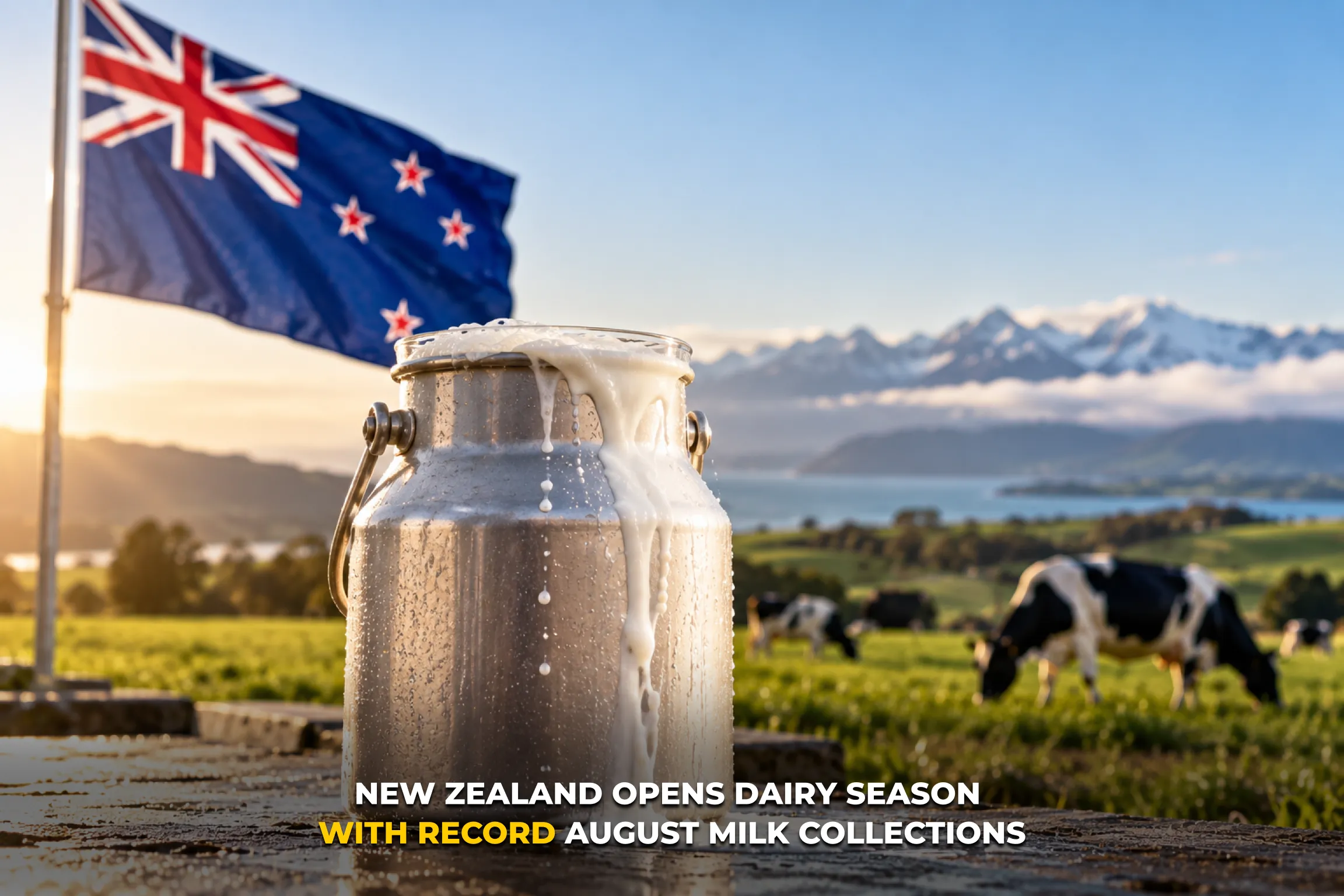
New Zealand has opened its 2026/27 season with record August milk collections of 131.2 million kilograms of milksolids (kgMS), eDairy News reports.
Key points:
- August collections hit a record 131.2 million kgMS, up 3.3% on the same month last season;
- season-to-date collections are 4.3% ahead of last year’s pace;
- skim milk powder on Global Dairy Trade (GDT) rose 4.3% to US$3,847 per tonne, its highest since July 2022;
- Chinese imports of anhydrous milk fat jumped 78% and butter 119%, while overall dairy imports fell 14.7%;
- a dry El Niño could quickly erode the current volume surplus.
Surging early-spring pasture growth has lifted New Zealand milk collections to record highs, while global markets navigate a two-speed trade in proteins and fats.
A record start to the season
According to Cristina Alvarado, head of the Dairy Data & Insights team at NZX, August collections were 3.3% above the same month last season, and season-to-date volumes are tracking 4.3% ahead of last year.
The early flush reflects favourable spring calving and sustained pasture growth in key regions.
But the surge in raw milk comes as international markets sit in a finely balanced equilibrium: robust protein demand against downward pressure on milkfats and mounting uncertainty over a possible severe El Niño.
El Niño risk for pastures
Holding this trajectory into the summer peak will depend on regional weather. Abundant winter rain and mild early-spring temperatures supported strong pasture cover in Waikato, Taranaki and Canterbury, but meteorologists warn that an intensifying El Niño could bring prolonged dry spells to eastern and northern production areas.
In New Zealand’s pastoral, rotational-grazing model, mid-summer moisture deficits quickly cut daily dry-matter intake, pushing farmers to tap silage reserves, buy palm kernel expeller (PKE) or cull earlier to protect cow condition.
In a severe drought the current surplus could disappear quickly, moving processors from managing peak capacity back to strict volume rationing.
Global supply and Chinese demand
The record sits alongside expanding global supply. August production rose 1.7% in the United States, 2.2% in Argentina and 1.8% in Uruguay, with positive deliveries in Western Europe and Australia.
China is the outlier, with domestic milk output down 2.9% amid herd rationalisation.
Its import picture is mixed: total dairy imports fell 14.7% year on year in August on sharp double-digit drops in whole milk powder (WMP) and skim milk powder (SMP), yet imports of anhydrous milk fat (AMF) leapt 78% and butter 119%. Imported functional fats remain vital for China’s bakery and foodservice sectors even as domestic processing covers more baseline fluid milk and powder needs.
A two-speed market at GDT
The result is a pronounced two-speed market at GDT auctions.
Trading up to Event 413 confirmed a widening gap between proteins and fats: the GDT index rose 1.2%, led by a 4.3% jump in SMP to an average of US$3,847 per tonne, the platform’s highest since July 2022, with WMP up 1.2%. Cheddar fell 3.7% and mozzarella 3.9%, while milkfat faced headwinds from growing supply.
Resilient protein demand in Southeast Asia, where New Zealand SMP export volumes grew 68% in August, has given drying plants a revenue floor, offsetting margin pressure in commodity fats.
Farm finances and the outlook
At farm level, record early-season milksolids and resilient protein prices give a vital boost to New Zealand balance sheets after consecutive seasons of high costs, elevated debt-service rates and environmental compliance spending: strong volumes in the higher-paying spring months bring in operating cash.
Cooperative leaders and independent suppliers remain wary about the second half of the season. If summer pasture growth deteriorates under El Niño, lower milk flows could tighten export availability and lift global benchmarks, whereas a long spell of favourable weather would keep supply liquid and prices near current levels.
Balancing stocking rates, securing feed buffers and watching GDT price discovery will be essential for pastoral farmers protecting margins through 2026/27.
Source: eDairy News