

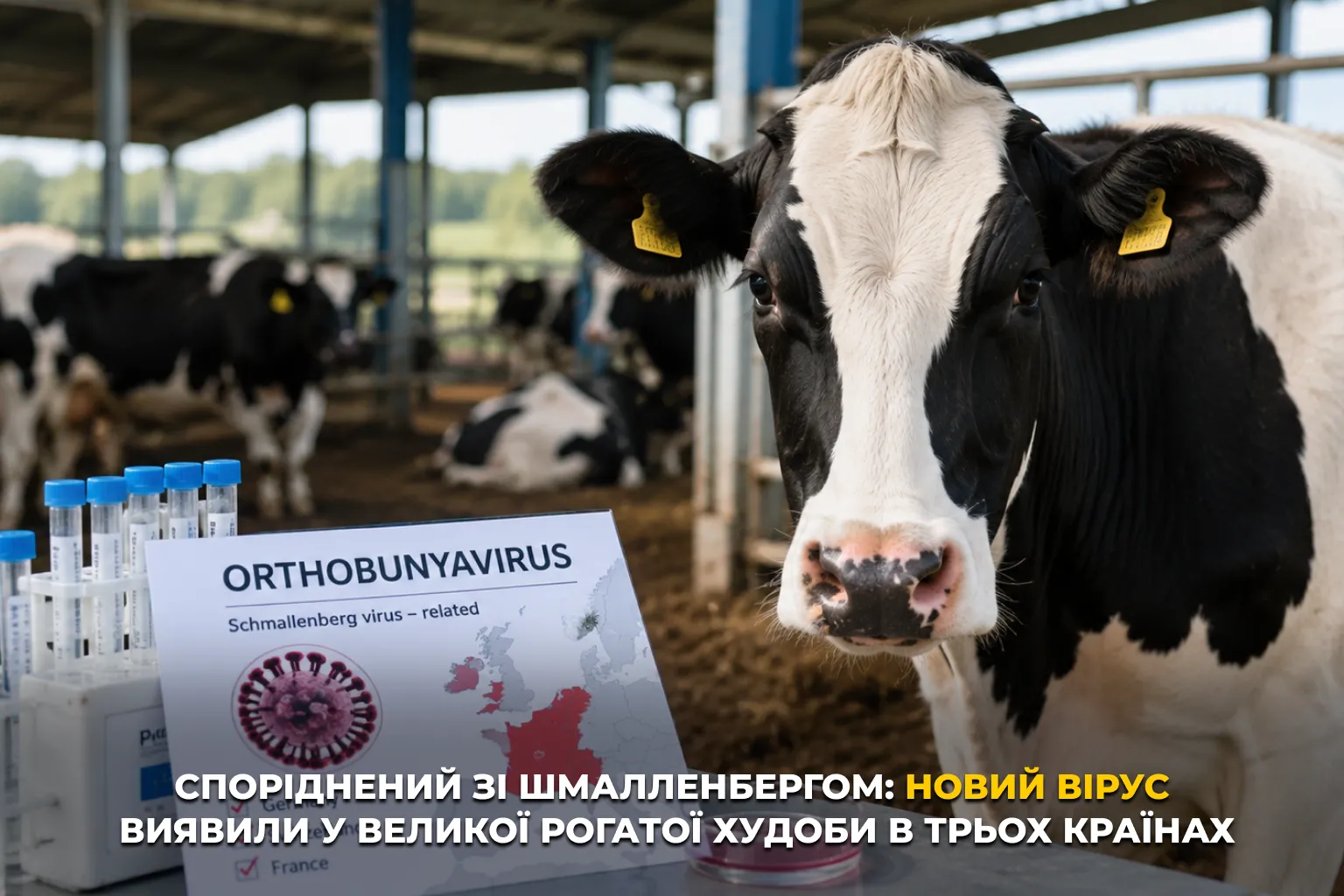
A new type of virus related to Schmallenberg virus has been detected in cattle in southern Germany and Switzerland, and German and Swiss authorities report it has also been identified in animals in France, raising concerns over further spread, Dairy Global reports.
The virus is a new variant of Orthobunyavirus — the group that includes Schmallenberg virus — which often affects ruminants such as cattle and sheep and is transmitted by biting midges.
Fever, diarrhoea and reduced milk yield
Germany’s Friedrich-Loeffler-Institut (FLI) reports that animals infected with the new strain show symptoms such as fever and diarrhoea, and in some dairy cows milk production has dropped significantly — observed in multiple herds since July.

Swiss authorities recently reported a new disease in cattle with similar signs, resembling Schmallenberg and bluetongue but testing negative for both. The Swiss institute IVI has confirmed the pathogen is the same new virus found in southern Germany.
Potential impact on unborn offspring
The FLI’s main concern is that the new virus, like Schmallenberg, could be transmitted to unborn calves or lambs.
With Schmallenberg, infection during pregnancy can cause miscarriages, stillbirths and severe congenital deformities, though it is not yet known whether the new virus can do the same.
With Germany’s biting-midge season running from July to late November, the FLI is considering further, potentially rapid spread and will research its spread rate, affected species and consequences in the coming weeks.
Heatwaves could worsen symptoms
The Swiss laboratory IVI suggests current heatwaves may be contributing to symptom severity. While unproven in the current infections, high-yielding dairy cows in particular can be severely affected by heat stress and may therefore be more susceptible to disease.
Both German and Swiss authorities have stated the virus has also been detected in animals in France.
Source: Dairy Global