
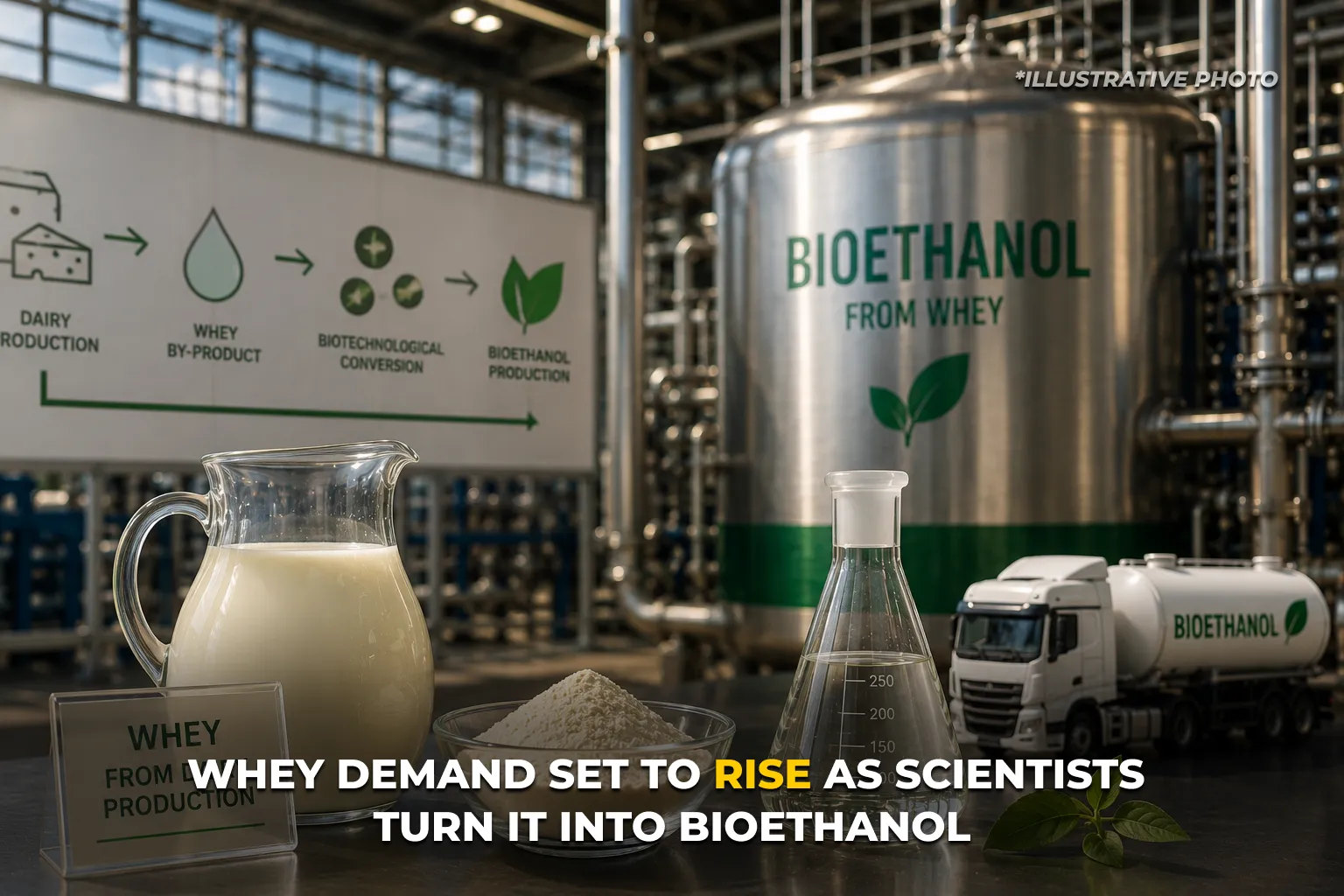
Researchers have developed a new way to convert whey into bioethanol — potentially opening a valuable new market for a dairy byproduct whose demand is already soaring, DairyReporter reports.
Whey has become a prized commodity in recent years, with a protein-demand boom pushing prices up fivefold to more than €25,000 a tonne since 2023 — and the new method could pile even more pressure on supplies of the cheesemaking byproduct.
Now a fresh source of demand may be emerging: researchers at the UK’s Heriot-Watt University have teamed up with start-up Take Root Bio to turn whey into bioethanol for vehicles and home heating. Take Root Bio began by studying how to grow food in space — where nothing can be wasted — and now applies the same thinking to problems on Earth.
Does whey have other purposes?
Founder Kirk Siderman-Wolter said the team is drawn to rethinking what “waste” could become. Salty whey, he noted, is produced in huge volumes and is hard to handle, so turning a costly disposal problem into something valuable would benefit both dairy producers and the environment.
Jane White, a waste-valorisation expert at Heriot-Watt, said food and drink production yields many by-products that hold valuable components yet are tricky to manage — making them strong candidates for bio-based processes that recover value otherwise lost as waste.
The sugars found in whey
The team examined how the sugars in whey could be transformed through a bio-based process to extract more value. Heriot-Watt’s Shiwen Zhuang said the work explored whether such solutions could unlock value in salty whey while easing disposal pressures — an upcycling approach he said could strengthen sustainability across the food and drink sector.
Take Root Bio and Heriot-Watt are now testing whether similar methods could suit other food and agricultural by-products, including fruit and vegetable processing waste.
Source: DairyReporter