

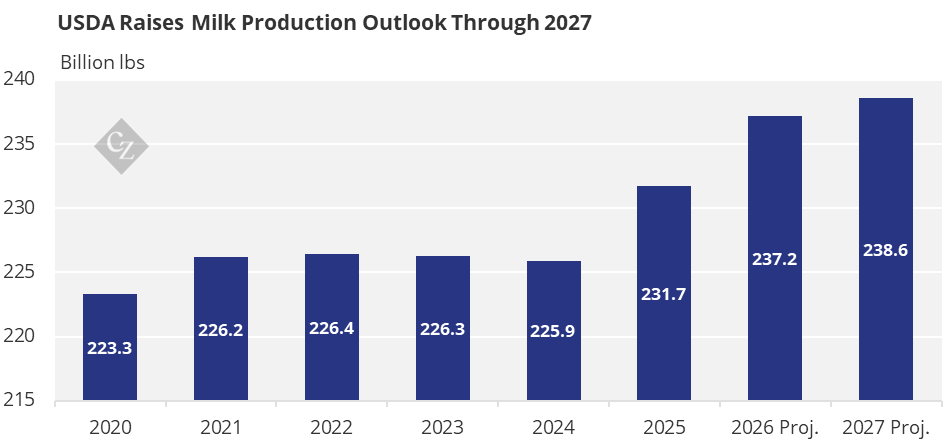
Global milk output is rising, but it is not translating evenly into dairy product availability. The balance now depends less on total milk supply than on where its components and processing capacity are directed.
Global dairy markets are presenting an unusual contradiction: milk production is improving in some major exporting regions, yet several powders and protein ingredients remain difficult or expensive to source, CZ App reports.
The explanation lies in what happens after milk reaches the factory. Processors are directing milk and its components toward the products offering the strongest demand, best returns or most efficient use of constrained capacity — creating abundance in some parts of the dairy complex and scarcity in others.

In Europe and the US, more skimmed-milk concentrate is being absorbed by fresh products such as yoghurt, leaving less for SMP (skim milk powder) and NDM (non-fat dry milk) drying, while strong demand for high-protein products pulls processing streams away from conventional powders. New Zealand’s strong early-season milk flows, meanwhile, look set to encourage heavy whole milk powder (WMP) production, creating a different constraint: lactose availability.
Milk supply no longer a sufficient market indicator
The volume of milk produced is only the first step in determining ingredient availability; where that milk is directed matters just as much.
In Europe, recent hot weather cut milk volumes and SMP output, while fresh dairy demand absorbed more skimmed-milk concentrate and finished SMP. In the US, skim streams have similarly been pulled toward products such as yoghurt and cottage cheese, reducing what is available to balancing plants and dryers.
Recent US market reports show this is occurring even as national milk production stays above year-ago levels — more milk does not automatically resolve a shortage when the incremental volume is already committed to another category.
Processors are creating different product balances
This allocation effect is most visible in the widening divide across the dry dairy complex: SMP and NDM availability has tightened, while conventional whey-powder output has been limited as processors favour higher-value protein products.
The protein complex is not moving uniformly, though — whey protein isolate (WPI) and some lower-protein whey protein concentrate (WPC) grades remain tight, while extra production has let WPC80 (80% whey protein concentrate) ease from earlier highs.
Operational disruptions have amplified near-term pressure: industry contacts report a salmonella-related issue at a large US processor and the temporary shutdown of a milk protein concentrate (MPC) dryer at a major New Zealand processor. In a market already constrained by specialised filtration and drying capacity, individual outages can have an outsized effect on availability.
Butter provides a contrast — sentiment stays broadly bearish and European inventories are understood to be comfortable, though some buyers report difficulty getting meaningful offers at the lowest published indications.
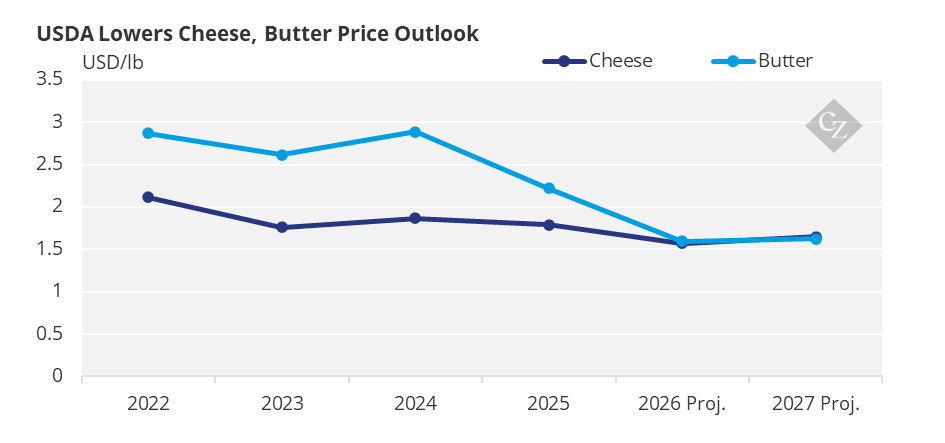
The divergent signals across butter, SMP and protein ingredients reinforce the same point: the market is balancing individual milk components, not simply total milk.
High relative prices are forcing reformulation
Buyers are responding by reconsidering formulations. Where whey-specific functionality is not essential, milk protein concentrate (MPC) can provide a lower-cost source of dairy protein than whey protein concentrate (WPC); the products are not interchangeable in every application, but partial substitution or blending can cut exposure to exceptionally expensive whey proteins.
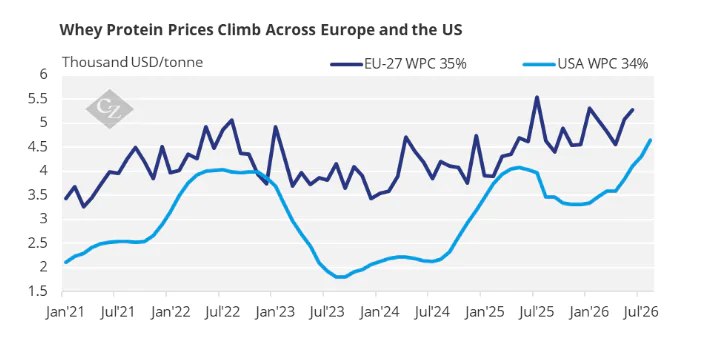
A similar calculation is now appearing further down the protein scale, with some market participants evaluating SMP plus whey permeate as a substitute for sweet whey powder where formulations allow. In each case, a distorted relative price creates demand for an alternative ingredient and begins rebalancing the market.
New Zealand has more milk, but its own ingredient constraint
New Zealand illustrates the opposite processing response. Wet conditions have supported expectations of strong early-season milk flows, with industry contacts reporting tanker volumes moving from the South Island to the North Island as southern processing capacity is fully used.
When seasonal milk is abundant, WMP is an efficient way to maximise plant throughput, supporting expectations of heavy WMP output — an important bearish influence, particularly if Chinese demand stays subdued.
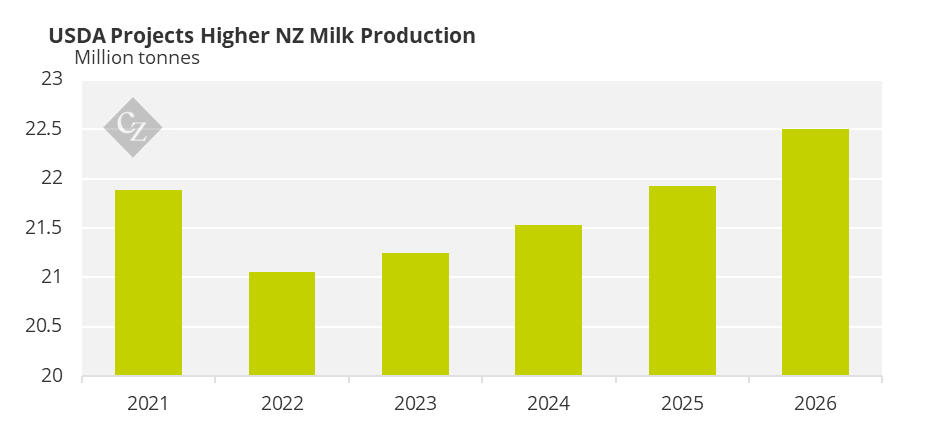
But maximum WMP output creates demand elsewhere in the system: at least one large New Zealand processor is reported short of lactose, consistent with a high-WMP manufacturing programme, and market contacts say lactose availability for 2026 shipment is now extremely limited.
More milk is therefore increasing the supply of one powder while tightening an ingredient needed to produce it.
Demand reallocated across regions
Buyers are adapting geographically as well as technically. Ramadan procurement has moved earlier than usual, bringing Middle Eastern demand forward and helping offset weaker anecdotal Chinese buying, while North Africa has attracted new butter buyers on relatively competitive European and Latin American pricing.
Algeria remains especially active — the recent Soummam tender closed at aggressive levels, and market contacts report significant volumes of Belarusian product moving into the country, adding another competitive origin, though unverified claims about the legal route used by EU-linked companies should not be treated as established fact.
Regional views on WMP remain divided, with Asian participants more cautious than Middle Eastern and European buyers — reflected in a recurring futures pattern of WMP selling down early in sessions before recovering as Western participants become more active.
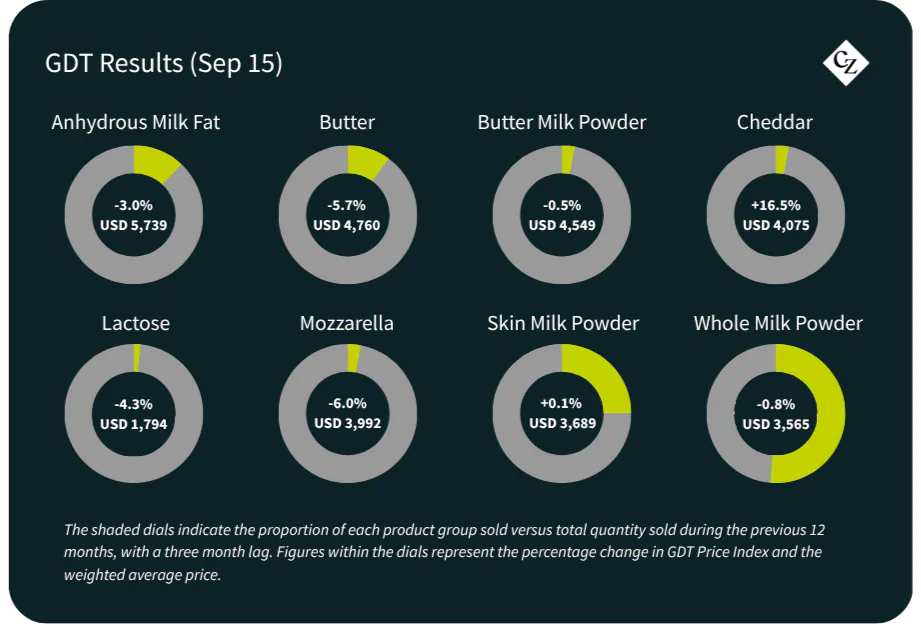
These regional and timing differences are helping the physical market absorb supply that might otherwise weigh more heavily on prices; the bearish WMP case has not disappeared, but its transmission is being delayed or diluted by demand arriving from different buyers at different times.
The market question has changed
Dairy markets are not responding to higher milk supply uniformly: milk is being pulled toward fresh products in some regions, channelled into WMP in others, and increasingly separated into higher-value protein streams, with each decision changing the availability of another component.
Buyers are adapting just as fast — reformulating products, bringing forward seasonal purchases and sourcing from different origins — which helps explain why bearish headline fundamentals have not produced a broad correction across the dairy complex.
The key question is therefore no longer simply whether the world has enough milk, but whether that milk is being converted into the products, specifications and locations where buyers need it.
Source: CZ App