
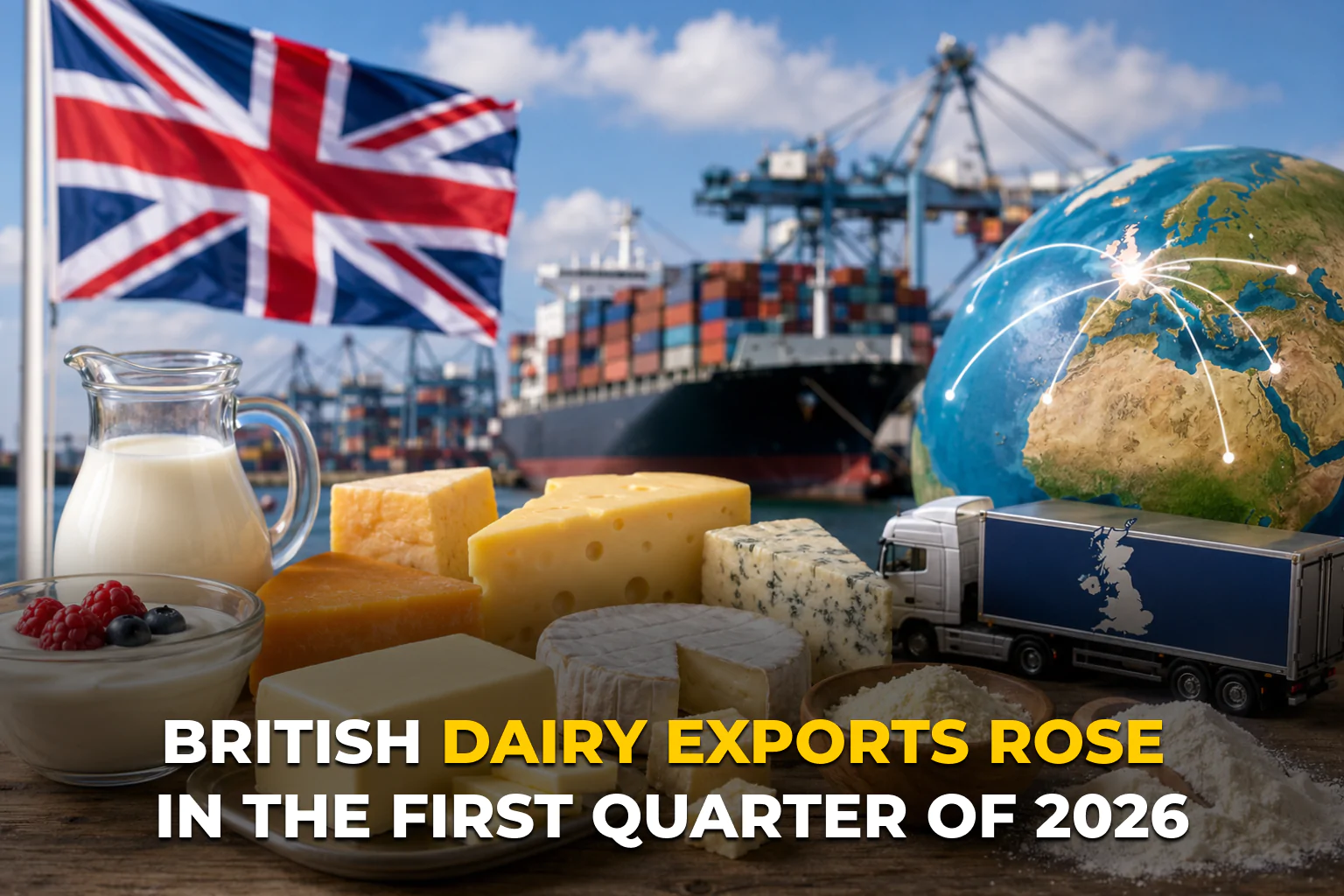
Exports of dairy products from the UK continued to rise in the first quarter of 2026, despite a fall in global prices for dairy goods. According to the AHDB, the main drivers were milk powder, yoghurt, butter and cheese.
The total volume of UK dairy exports in January–March 2026 rose by 2% year-on-year to 326,000 tonnes. The main growth came from shipments to non-EU countries, which increased by 9,000 tonnes, whilst exports to the EU fell by 1,400 tonnes due to high milk production volumes within the EU itself.
Despite an increase in physical volumes, the total value of exports fell by 7% to £478 million, due to a drop in global prices for dairy products.
Powders
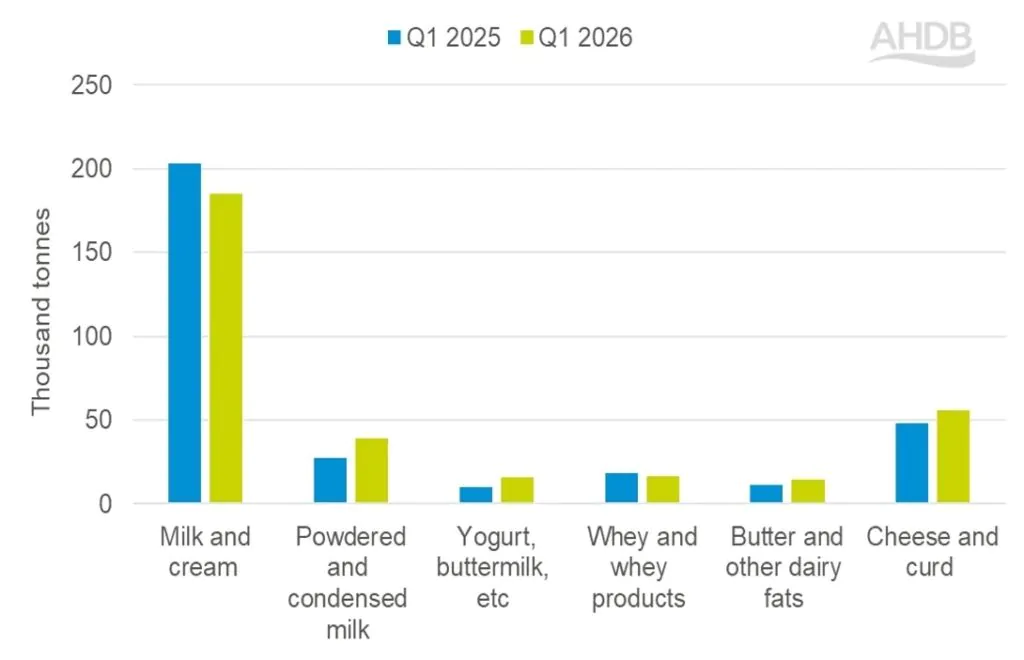
The greatest growth was recorded in the milk powders products segment. Exports of milk powders increased by 11.6 thousand tonnes, or by 42.4% year-on-year. Supplies increased both to EU countries — Italy, Ireland, the Netherlands, Belgium and Spain — and to markets outside the EU, notably the UAE, Egypt, Libya, Morocco, Bangladesh, the Philippines, Thailand and Singapore.
The AHDB notes that the UK remains competitive in the skimmed milk powder (SMP) sector compared with the US, Oceania and the EU, thanks to the high availability of raw materials following a record milk season. At the same time, exports to China have fallen due to weaker demand and demographic changes.
Chesse
The cheese segment also showed strong growth. Cheese exports rose by 15.6% (+7.5 thousand tonnes) and reached their highest quarterly level in the last six years. Supplies increased most significantly to the Netherlands, Belgium and France. Exports also grew to China, Indonesia, as well as countries in the Middle East and North Africa, notably Bahrain, Israel, Saudi Arabia and Lebanon.
At the same time, the AHDB warns that the conflict in the Middle East could disrupt supplies as early as the second quarter due to logistical problems. British exporters are also facing additional pressure from the growing competitiveness of American cheeses following an expansion of production capacity in the US.
Butter
Exports of butter rose by 26.7% (+3,000 tonnes), although in value terms shipments fell by 17% due to lower prices. The UK exported the most butter to Belgium, Germany, Poland, Malta and countries in the Middle East and North Africa.
Yoghurt
Yoghurts showed a significant recovery. Exports of yoghurts rose by 58% (+5.7 thousand tonnes) following several weaker quarters. The main markets were Ireland, France, Hong Kong and the UAE. The AHDB emphasises that yoghurt was one of the few categories to have a positive impact not only on volumes but also on the value of exports.
In total, around 87% of the UK’s dairy exports in the first quarter were destined for EU countries.
Figure 1. UK dairy products exports, Jan-Mar (Thousand tonnes)
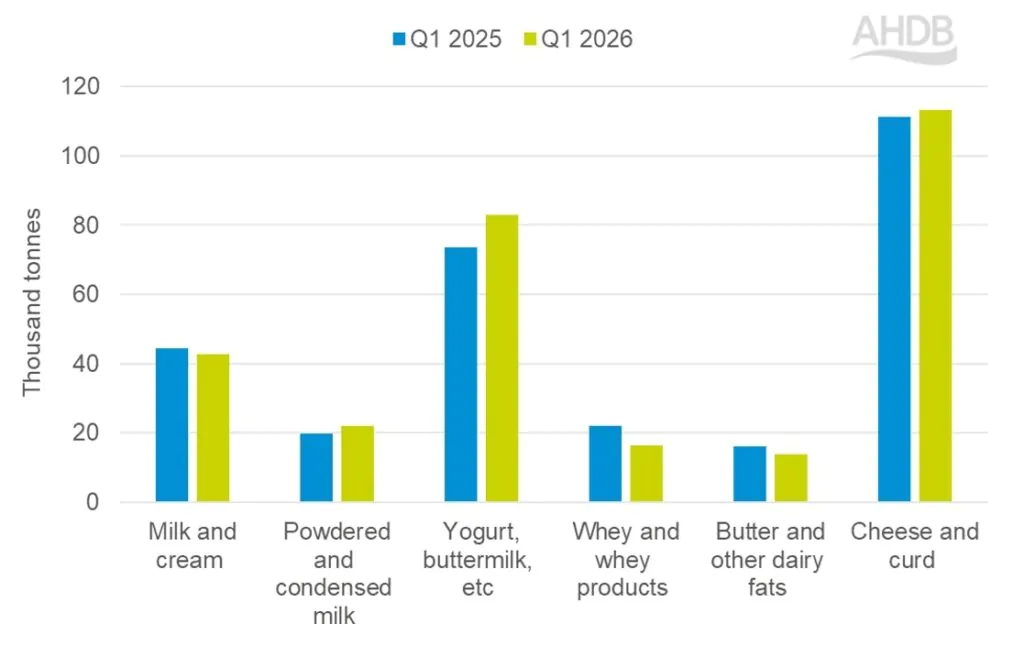
At the same time, imports of dairy products into the UK also rose—by 1.5%, to 291,400 tonnes. The largest increases were seen in supplies of yoghurt (+12.7%), milk powder (+11%) and cheese (+2%). The main suppliers were Greece, Spain, Switzerland, Denmark and France.
Figure 2. UK dairy products imports (Jan–Mar, thousand tonnes)
The AHDB notes that this season’s record milk production has significantly increased the availability of dairy products. That is why exports remain a key mechanism for reducing surplus stocks and supporting prices throughout the supply chain.
Analysts also expect that British exporters will continue to focus on value-added products — speciality cheeses, butter, ice cream and functional proteins — for which demand continues to grow in global markets.
Source: AHDB