

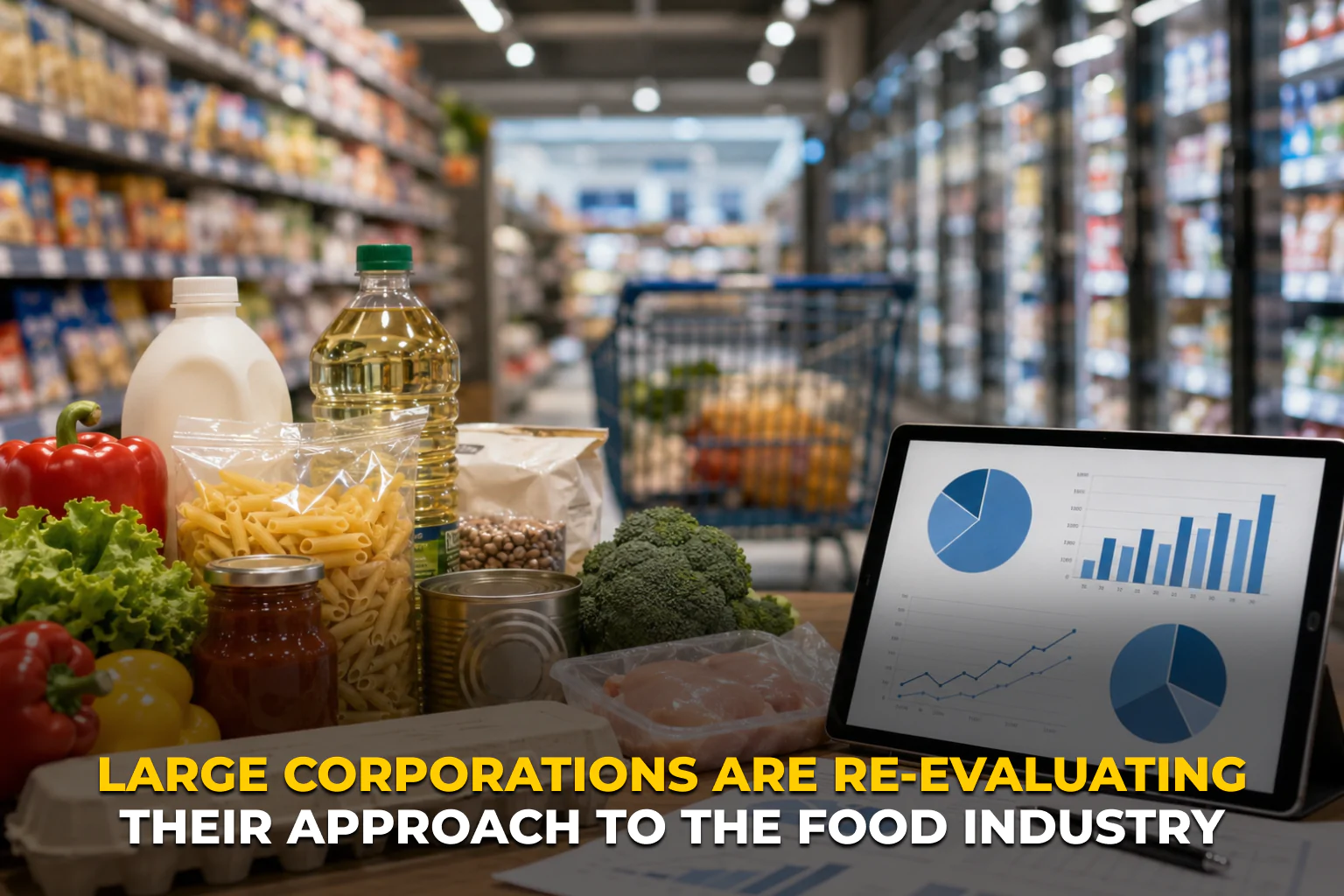
Large multinational companies are increasingly reviewing their food assets and redirecting their investments towards segments with higher margins and better growth prospects. According to FoodNavigator, the latest decisions by Unilever and IFF demonstrate a new approach to business development in the food industry.
The British company Unilever has announced its intention to merge its food business with the American company McCormick, with only its Indian division remaining outside the deal. If the deal goes through, Unilever will effectively exit the food sector entirely. Meanwhile, ingredients manufacturer IFF plans to sell 90% of its food business to investment firm CVC Capital Partners.
Experts stress that this does not mean that big business has lost interest in the food industry as a whole. According to Nandini Roy Choudhury, a senior consultant at Future Market Insights, the food sector remains one of the largest and most resilient consumer markets.
“The food sector remains a very large, resilient, and strategically important consumer market,” notes Choudhury.
At the same time, large corporations are becoming increasingly selective in their investment choices. Preference is given to sectors related to health, functional foods, premium products, convenience, and specialised technologies. Conversely, businesses that are heavily dependent on production scale, raw material markets, and operational efficiency are gradually losing their appeal.
According to Kate Cowley, founder of the Future Food Movement, climate risks, supply chain issues, regulatory requirements, and changing consumer expectations are placing additional pressure on the industry.
Profitability remains a particular challenge for many food companies. Producers of staple foods and ingredients are under the greatest pressure, as they are dependent on the prices of raw materials and energy, as well as the terms of their partnerships with retail chains. At the same time, raising prices is becoming increasingly difficult due to consumers’ high sensitivity to product costs and intensifying competition from private-label brands.
In contrast, the sports nutrition, functional foods, specialised ingredients, premium sauces and condiments, and clinical nutrition segments are demonstrating higher levels of profitability.
“The more commoditised the food business is, the more its margins depend on procurement and operational efficiency. The more differentiated it is, the more it can set prices in line with the value it creates,” explains Choudhury.
According to experts, the decisions taken by Unilever and IFF reflect a broader trend. Companies are increasingly selling off mature businesses with complex operational structures and limited growth potential, whilst investing in areas related to health, functionality, premiumisation, and proprietary technologies.
“Capital is shifting from traditional sectors into food products that are capable of delivering faster growth or are more relevant to consumers,” notes Choudhury.
Thus, large corporations are not abandoning the food industry, but are restructuring it, focusing on segments with higher added value and better growth prospects.
Source: FoodNavigator