
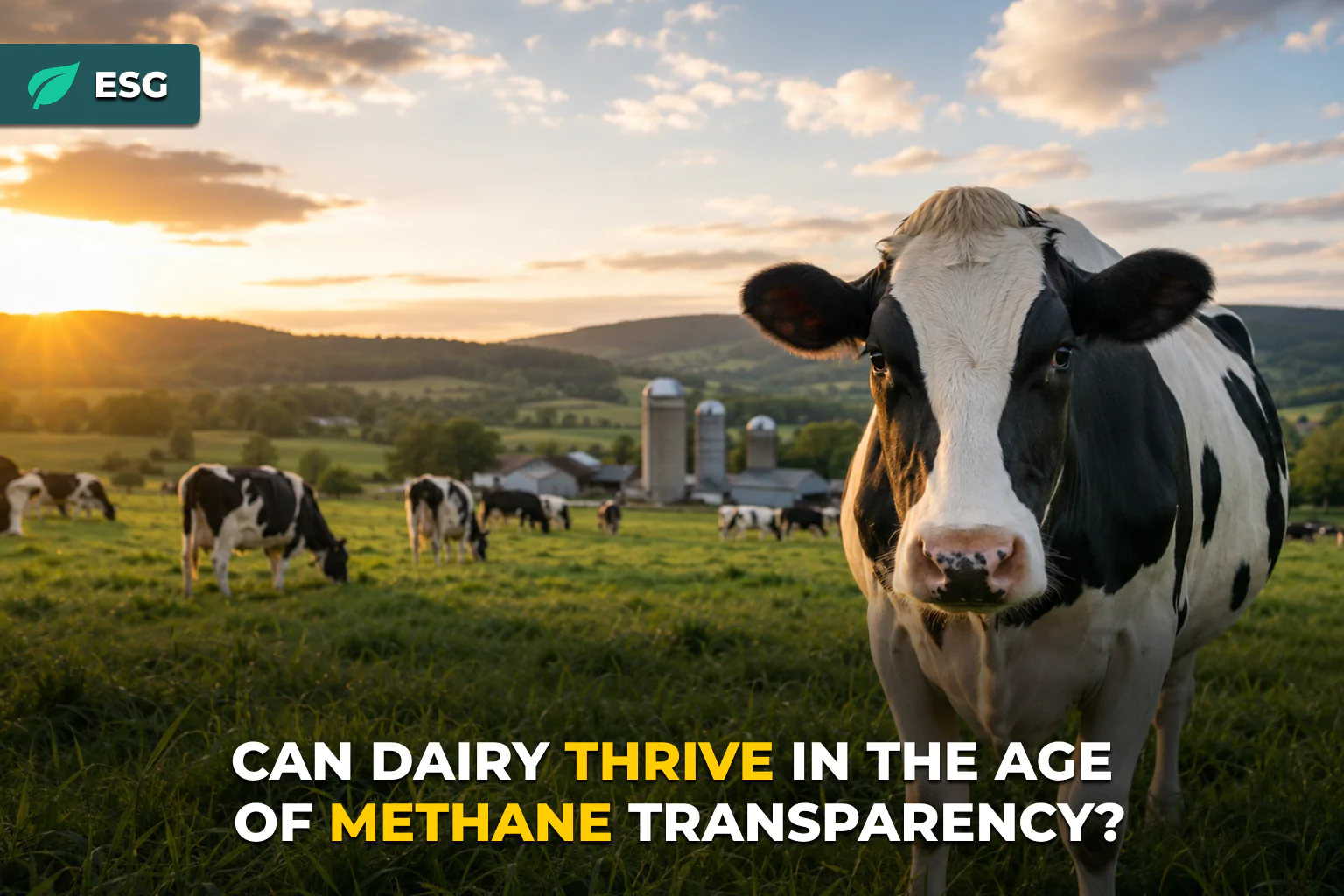
EU CSRD rules and investor pressure are pushing dairy firms to disclose methane emissions. As DairyReporter reports, only three companies currently have methane action plans — and regulation mandates disclosure, not reduction.
The EU Corporate Sustainability Reporting Directive (CSRD) requires large companies to disclose their climate impact in greater detail than ever. It applies a double materiality test — assessing emissions for both environmental impact and financial risk — making methane disclosure effectively unavoidable. CSRD covers companies with 1,000+ employees and €450m+ turnover; the main wave for EU dairy companies arrives in 2028.
The CSDDD (Corporate Sustainability Due Diligence Directive), applying from 2029 to very large companies, goes beyond disclosure but no longer requires mandatory climate transition plans. Companies must still identify and address environmental harms in their value chains.
According to a recent report by NGO Changing Markets, only three companies — Danone, General Mills and Bel Group — have methane action plans. Others are engaging through disclosure (Nestlé), broad climate targets (FrieslandCampina) or limited measures (Arla), but lack a specific methane plan. Lactalis, Müller and Dairy Farmers of America are not engaging meaningfully with the issue.
Only three companies — Danone, Le Groupe Bel and Nestlé — have reported actual methane reductions for 2024–2025. CSRD mandates reporting, not reductions; CSDDD requires harm prevention, not mandatory climate action.
Market pressure may force change where regulation falls short. Nestlé recently lost a major institutional backer (UK pension manager Railpen) over ESG management concerns. Norges Bank Investment Management has a methane-specific policy covering agriculture and requires portfolio companies to align with the Global Methane Pledge. JP Morgan and State Street also have methane-specific policies.
“Rapidly cutting methane emissions is widely deemed as a climate emergency brake, because it has the highest impact on slowing warming,” said Changing Markets CEO Nusa Urbancic. “If we do not act on methane, this will not only worsen the climate crisis but also impact crop productivity and human health.”
Source: DairyReporter