
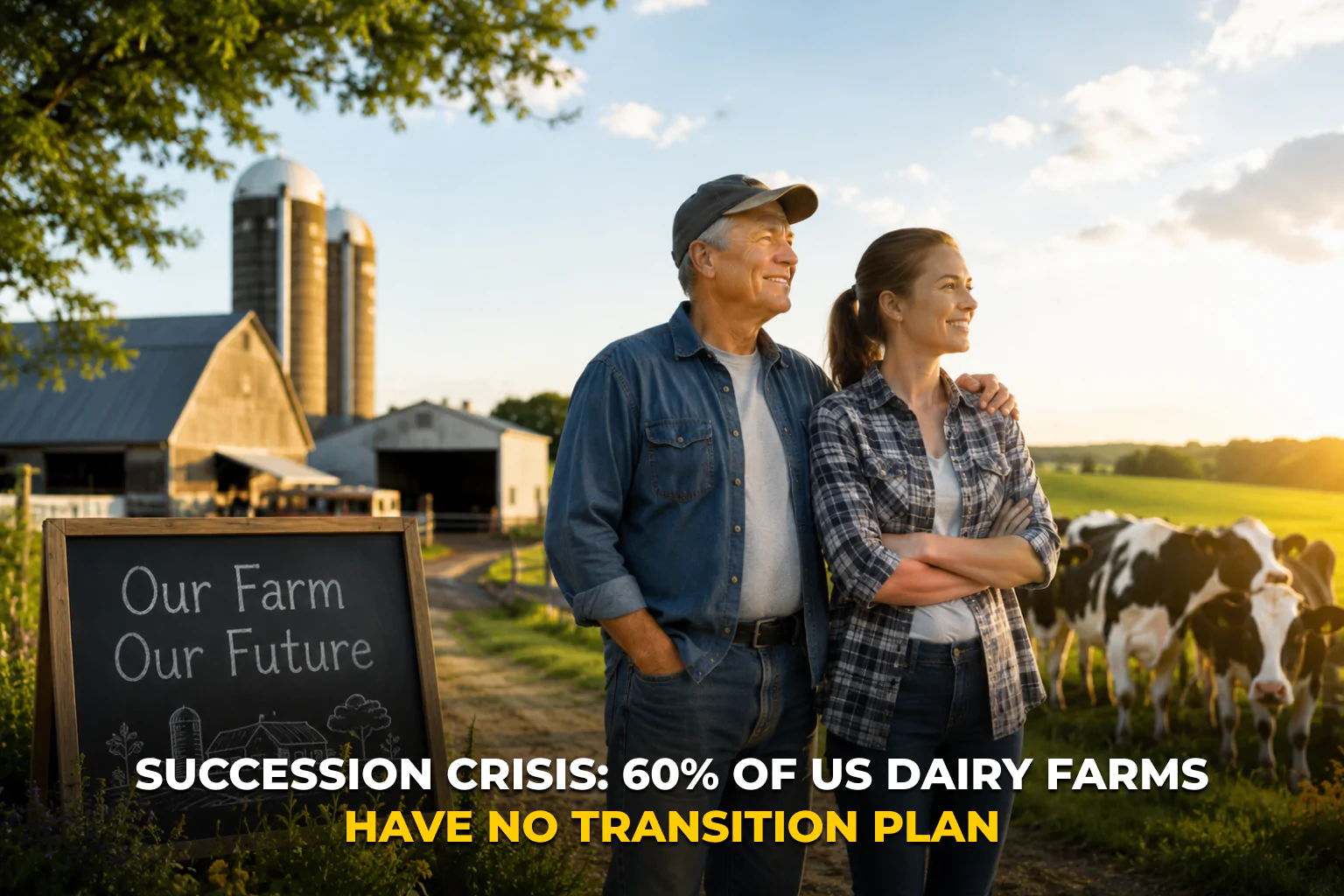
More than a quarter of US dairy operators plan to retire within five years, and 60% have no defined succession plan. As Dairy Herd reports, the industry is approaching a succession cliff that threatens to erase family legacies and vital operational knowledge.
More than 25% of dairy operators plan to retire within the next five years, while 60% report having no defined succession plan — signalling a looming crisis for the sector and a historic loss of operational knowledge and land.
The ‘no money, no fun’ barrier
Farm Journal’s 2026 report reveals the succession barrier is deeply personal.
“No money, no fun,” one producer bluntly stated; another cited “family. No one gets along.” “If you choose not to do anything, that is a strategy that has a zero percent chance of working,” says Shannon Ferrell, agricultural economics associate professor at Oklahoma State University.
The risk of operational knowledge loss
Operators who have managed farms for 26 years or more are most likely planning their exit, carrying decades of intuition on herd health, soil management and market navigation. Without a managed handoff, the result is often dispersal rather than transfer — a trend already accelerating in states like Colorado.
The optimism divide
Operators under 45 are significantly more optimistic about 2026 profitability (59%) than their older counterparts (34%) and are most likely to be seeking partners and planning expansions. The industry’s long-term confidence (45% planning growth) sits at odds with the short-term reality of the retirement wave.
A legacy at risk
The dairy industry is at a crossroads, tested by a perfect storm of high costs, low optimism and a lack of clear exit strategies. Without a defined plan, the succession cliff won’t just challenge individual families — it will be a structural shift for the entire US dairy landscape.
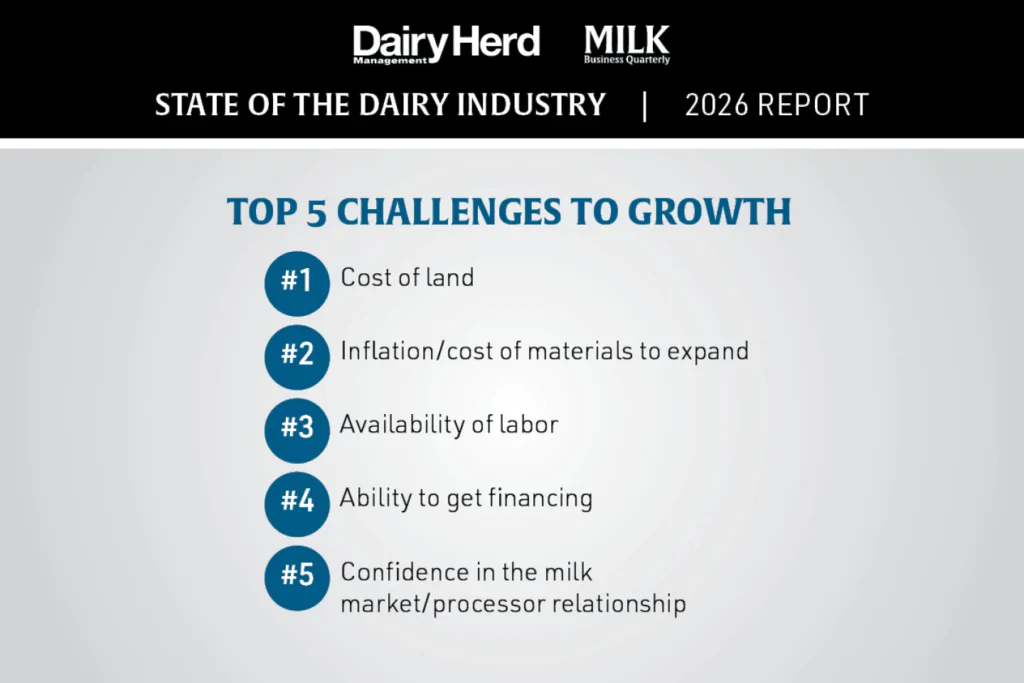
This article is part of Farm Journal’s State of the Dairy Industry 2026 report. The full 16-page report is available free to download.
Source: Dairy Herd