
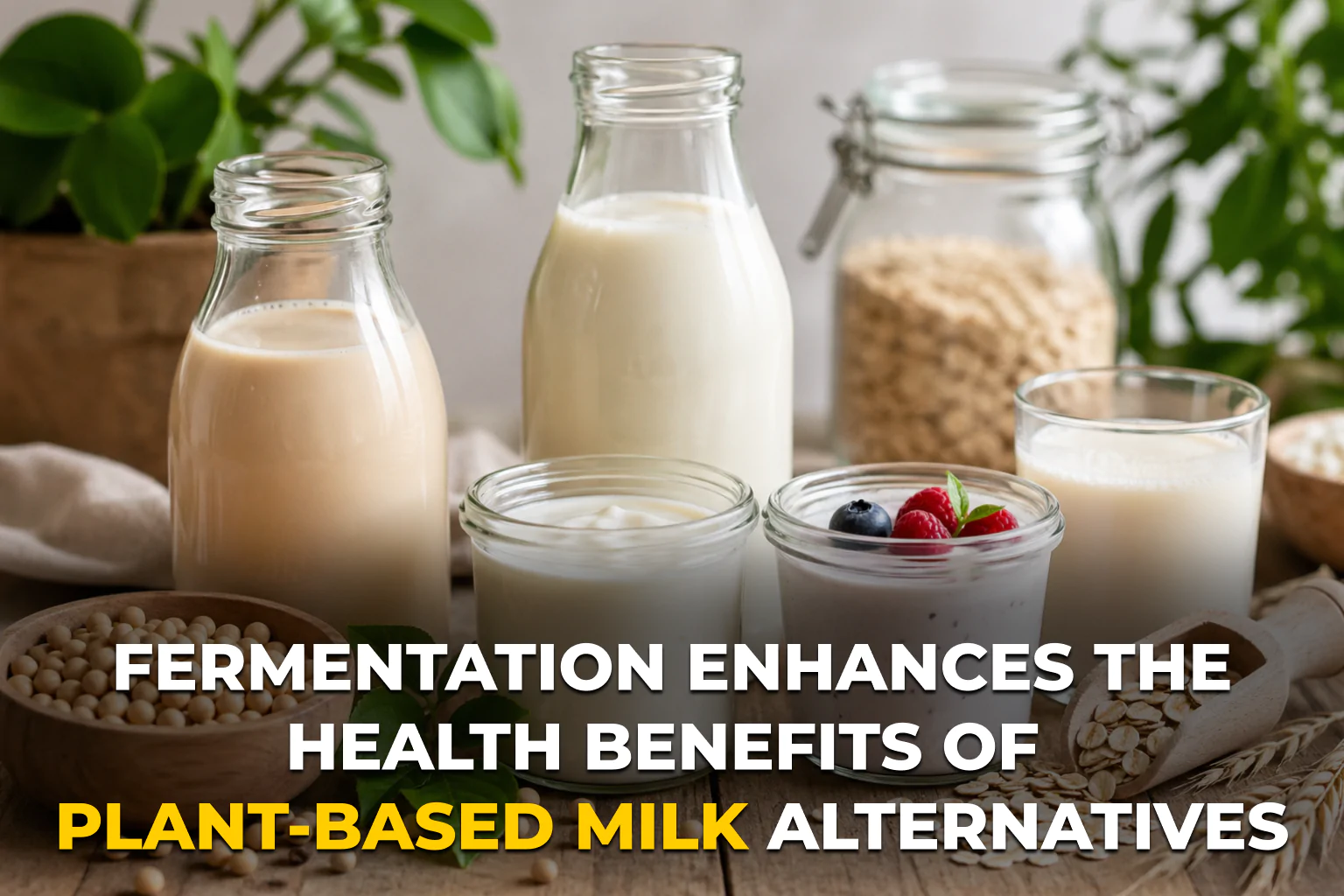
Fermentation can significantly enhance the functional properties of plant-based milk alternatives, particularly their impact on cardiovascular health. As noted by Dairy Reporter, new research highlights the additional benefits of fermented soy- and oat-based products.
A study conducted on samples from Greek supermarkets found that fermented soya products have a more pronounced anti-inflammatory and antiplatelet activities, whilst fermented oat alternatives demonstrate increased antioxidant activity compared to their non-fermented counterparts.
“These findings suggest that fermentation can substantially improve the biofunctional profile of plant-based dairy alternatives and highlight fermented oat- and soy-based products as promising dietary sources of bioactive polar lipids with potential cardioprotective properties,” researchers from Greece and Ireland wrote in Nutrients.
The growth of the alternative milk market
The market for plant-based alternatives to dairy products in Europe was valued at approximately $5.52 billion in 2023 and is forecast to grow at an average annual rate of 11.4% through to 2030.
Germany and the UK remain the largest markets. Demand is driven not only by consumers with lactose intolerance or those following a vegan diet, but also by those seeking variety and new products.
Plant-based alternatives to milk, including drinks and yoghurt-like products, contain a wide range of nutrients and bioactive compounds with antioxidant and anti-inflammatory properties.
Soya is a source of protein, phytoestrogens and polyunsaturated fatty acids, whilst oats are rich in soluble fibre, which is linked to the regulation of blood sugar and cholesterol levels, and also contain phenolic compounds.
The role of fermentation in enhancing value
Fermentation can increase the bioavailability of bioactive compounds, including isoflavones, phenols and carotenoids, which may enhance the functional properties of food products.
“Overall, the results highlight fermentation as an effective technological approach to enhancing the functional value of plant-based alternatives to dairy products,” the researchers note.
Details of the study
The study analysed four categories of products:
- non-fermented soy beverages;
- non-fermented oat beverages;
- fermented soy yogurt-type products;
- fermented oat yogurt-type products.
The samples contained standard ingredients, including 80–90% water, 8–15% plant extract, as well as stabilisers, emulsifiers, added sugars and vitamins.
Fermentation was carried out mainly using cultures of Lactobacillus spp. and S. thermophilus.
The results showed that fermented products exhibit improved antioxidant and antiplatelet aggregation capacity, as well as favourable changes in the ratio of omega-6 to omega-3 fatty acids.
The researchers noted that the “copresence of all these types of bioactives (phenolics, carotenoids, and polar lipids) in these extracts contributes synergistically to the overall health-promoting benefits associated with soy and oat-derived plant-based dairy alternatives.”
At the same time, they point out that further clinical trials are needed to confirm these effects.
Source: Dairy Reporter