
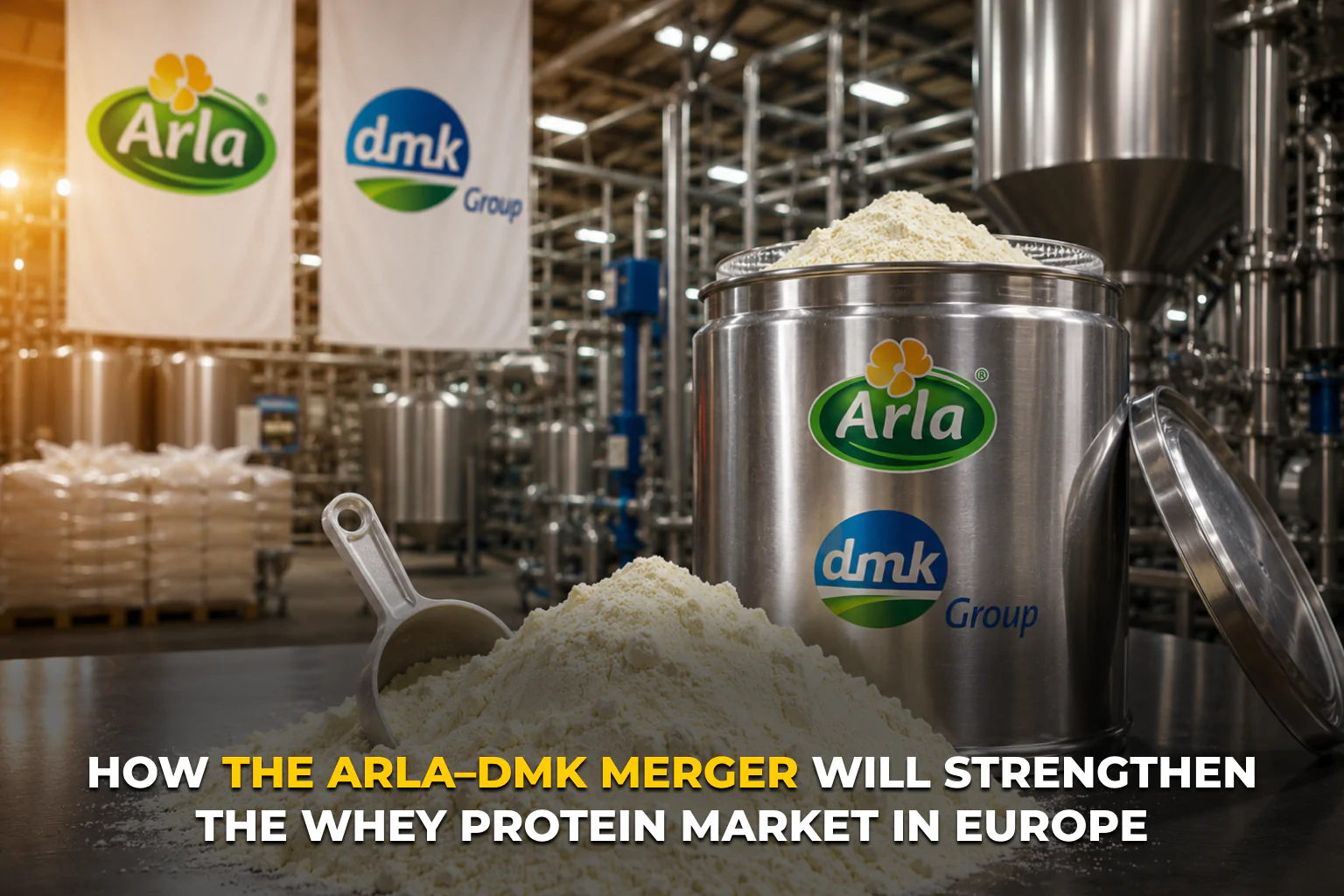
In one of European dairy’s biggest structural shifts in recent years, Arla Foods has absorbed Germany’s DMK to form the largest co-op on the continent — and significantly strengthened its position in whey production. As DairyReporter reports, the opportunity for the merged entity is compelling.
The main rationale is leveraging economies of scale to navigate market volatility and a complex regulatory landscape, while unlocking potential across the two integrated organisations. Leadership has set a two-year window to turn an ambitious merger into a well-functioning machine.
Across markets and categories, the expanded Arla Foods gains DMK’s strong access to one of Europe’s largest dairy markets, additional milk supply and cheese production capacity — and by extension, more whey streams for Arla’s ingredients business.
Whey protein ingredients — especially high-value concentrates and isolates commanding thousands of euros per tonne — remain one of dairy’s biggest commercial opportunities. Demand for WPC80 and WPI consistently outpaces supply, with availability often sold out months in advance. The protein trend shows no signs of slowing: consumers want more protein in their diets, and they want it from natural sources, placing dairy at the intersection of convenience, functional nutrition, and everyday wellness.
These dynamics support persistently high prices and a growing need for expansion. Processors are increasingly routing milk into cheese rather than butterfat, driving commodity price volatility. Even within whey, standard powders are in decline as production shifts toward higher-value ingredients.
For Arla, the DMK merger unlocks increased cheese capacity and more whey for the two co-ops’ processing joint venture — a key competitive lever in a market where scale determines the ability to meet manufacturers’ needs at speed and volume.
Competition is intensifying. FrieslandCampina — itself integrating following its Milcobel merger in late 2025 — is investing €90m to upgrade whey processing capacity at three Dutch sites and has acquired Wisconsin Whey Protein to strengthen its North American position. Arla, meanwhile, acquired Volac’s whey nutrition business in Wales and is converting a Danish facility into an ingredients hub. The fresh whey volumes unlocked by the Arla–DMK merger are set to further strengthen the co-op’s global ingredients position as protein remains a key value driver for dairy majors worldwide.
Source: DairyReporter