

As noted by Dairy Foods, the growing demand for lactose-free products is driving the adoption of membrane filtration, which allows lactose to be removed without protein loss and improves processing efficiency.
The GEA Group is investigating how advances in ultrafiltration and nanofiltration enable the effective removal of lactose, improve the energy efficiency of processes and create added value from by-products.
Demand for lactose-free products continues to grow. According to estimates by Global Growth Insights, the global market for such products could reach $12.5 billion as early as 2026 and grow to $18.9 billion by 2035. The main drivers remain lactose intolerance, health-conscious consumers and innovation in production.
At the same time, the membrane filtration market itself is expanding: according to King Research, it is set to grow from $17.4 billion in 2024 to nearly $33 billion in 2032. This reflects the industry’s investment in more efficient and resource-saving technologies.
The key advantage of membranes is their selectivity. They enable the separation of lactose whilst preserving the proteins and functional properties of the product. As Shanti Bhushan explains, modern membranes with hydrophilic surfaces and specialised polymer structures reduce fouling and allow for longer operation without any loss of performance.
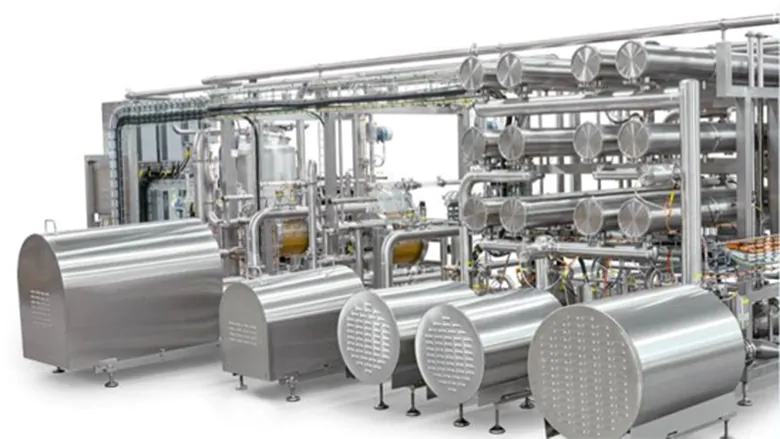
In practice, this means that processors can control the balance of milk components more precisely. Multi-stage diafiltration allows lactose and minerals to be ‘flushed out’ into the permeate, whilst retaining protein in the concentrate, thereby increasing product yield and reducing losses.
“By minimising unintended protein passage to the permeate and tightening mass‑balance control, processors can consistently hit specification and lower waste,” explains Bhushan.
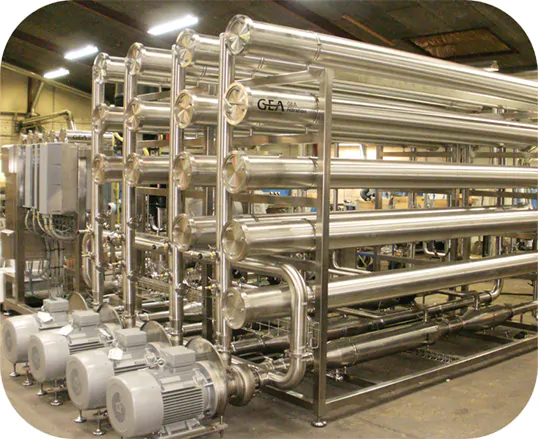
Systems are also evolving to accommodate new types of products. The growing popularity of thick products, such as Greek yoghurt or skyr, requires equipment to be adapted. Consequently, hybrid configurations are increasingly being used—a combination of spiral and tubular membranes that work effectively with both liquid and high-viscosity flows.
At the same time, there are still technical challenges to overcome. One of the main ones is the formation of mineral deposits during lactose concentration. To address this, temperature control, the selection of membranes with the required selectivity, and additional technical solutions are employed.
Process control is critical. Operators must monitor transmembrane pressure, temperature, solids concentration and conductivity. Digital instruments—such as refractometers and near-infrared spectroscopy—are increasingly being used for real-time monitoring.
It is important to note that membrane filtration affects not only the removal of lactose but also subsequent processes. For example, enzymatic hydrolysis of lactose can increase sweetness and alter the product’s flavour profile. This is precisely why many manufacturers prefer partial lactose removal using membranes, which allows them to preserve the ‘milky’ flavour balance.
In cheese production, these technologies also offer additional benefits: ultrafiltration increases protein yield, whilst microfiltration enables the production of native whey for high-value-added ingredients.
Overall, membrane technologies are becoming a key driver of transformation in the dairy processing industry. They not only enable the industry to meet the demand for lactose-free products, but also to improve production efficiency, reduce waste and create new sources of added value.
Source: Dairy Foods