
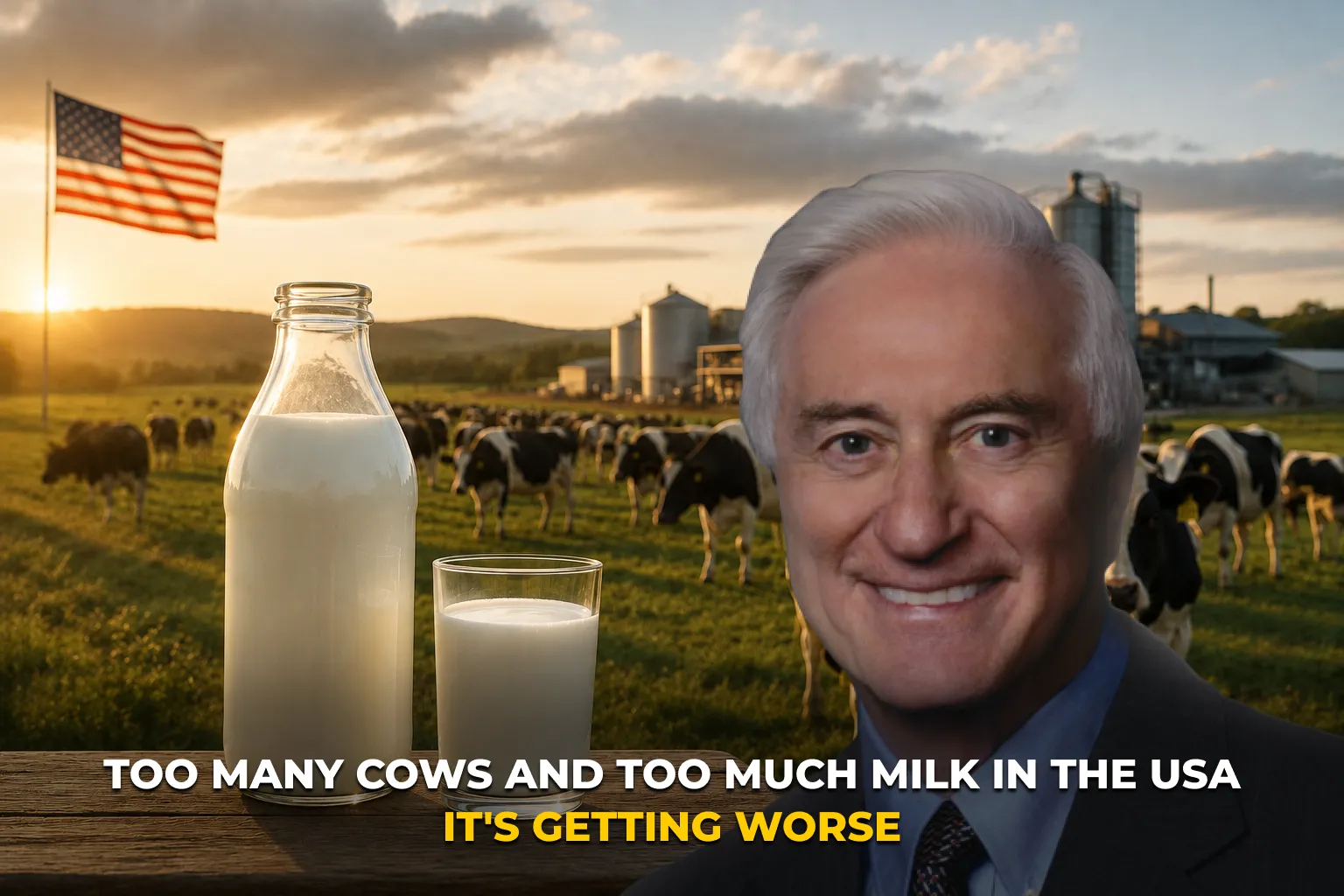
US producer milk prices are low. The primary factors are low butterfat and protein prices, driven by too many cows and too much milk.
US producer milk prices remain low, driven by low butterfat and protein prices — the result of too many cows and too much milk, a trend that is worsening, writes John Geuss in his column for the MilkPrice blog, Milk Pay reports.
Cow numbers are still rising, milk per cow is improving, and production keeps growing despite little change in domestic consumption.
The trends
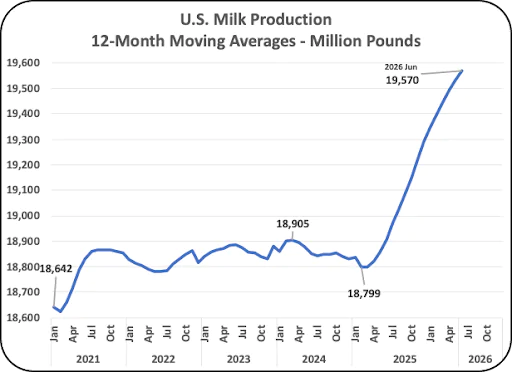
From 2021 to 2024 milk production was flat, but in 2025–2026 monthly volumes jumped by 771 million pounds (about 349,700 tonnes), a 4% increase.
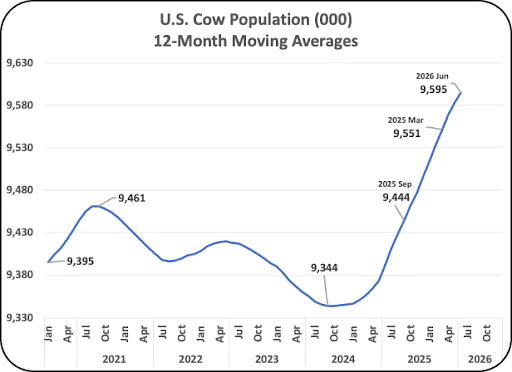
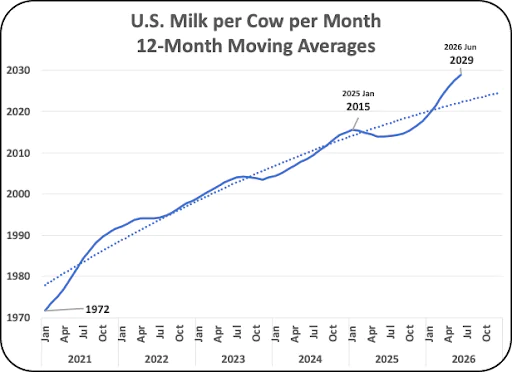
Milk-cow numbers rose steadily through June 2026, up 227,000 cows (3%), while milk per cow grew 3% from 2021 — which should reduce the number of cows needed, yet the herd expanded instead.
Where the growth is coming from
Texas had the largest increase (+109,000 cows), much of it moving from New Mexico, which lost 98,000 cows to limited water and financial issues.
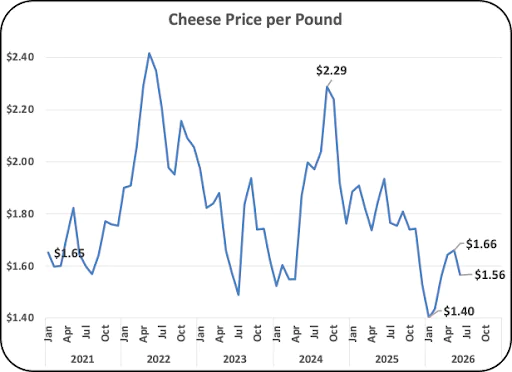
South Dakota was next (+103,000), boosting milk and cheese output thanks to good climate, feed, water and market access — 45% of total US milk-cow growth over the period, which has pushed US cheese prices down as domestic consumption stalls.
Idaho (out of the Federal order system since 2004) added 81,000 cows (+13%), and Kansas 66,000 (+38%) amid a strategic shift to the High Plains.
Impact on farm income
Income has dropped drastically and many farms — primarily small dairies — must close.
Butterfat has fallen 54% from its October 2023 peak.
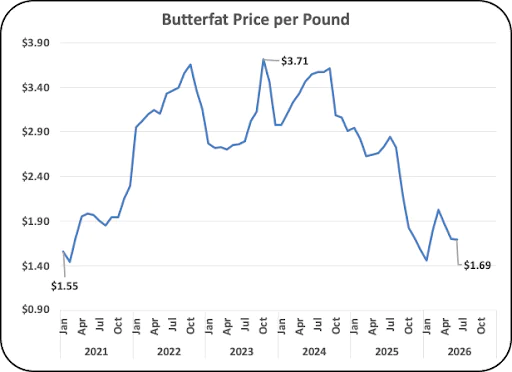
Protein prices usually rise when butterfat falls, but they have not in 2025–2026, as excess cheese has pushed wholesale prices down.
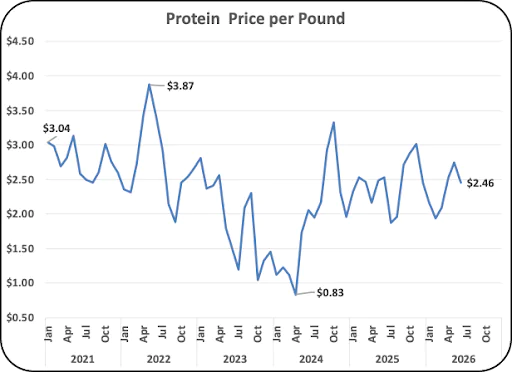
Are prices paid to farms rising? No. The author says future posts will cover shrinking dairy herds, as current economics cannot support small operations.
About the author
John Geuss writes the MilkPrice blog. He holds a B.S. in Engineering and an MBA from Ohio State University, and worked as a financial analyst at Eastman Kodak, 22 years at Borden (VP, engineering, plant and operations management) and 22 years at Adisseo (director, IT and marketing); he now consults in dairy and food processing and is a Licensed Professional Engineer. More on the author’s page.

Source: Milk Pay (MilkPrice Blog)