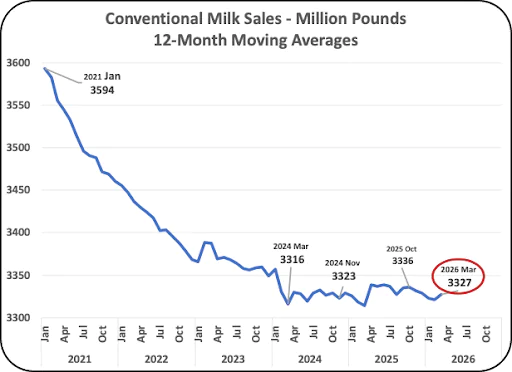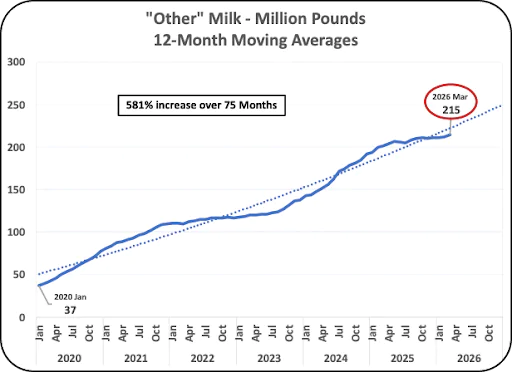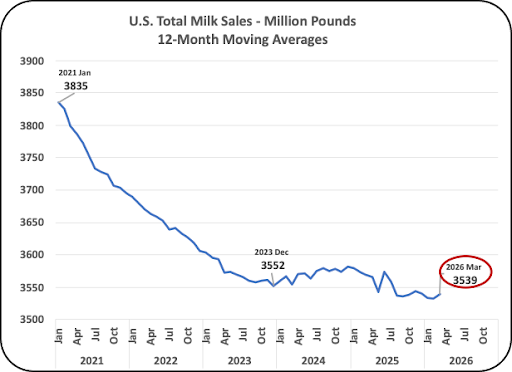

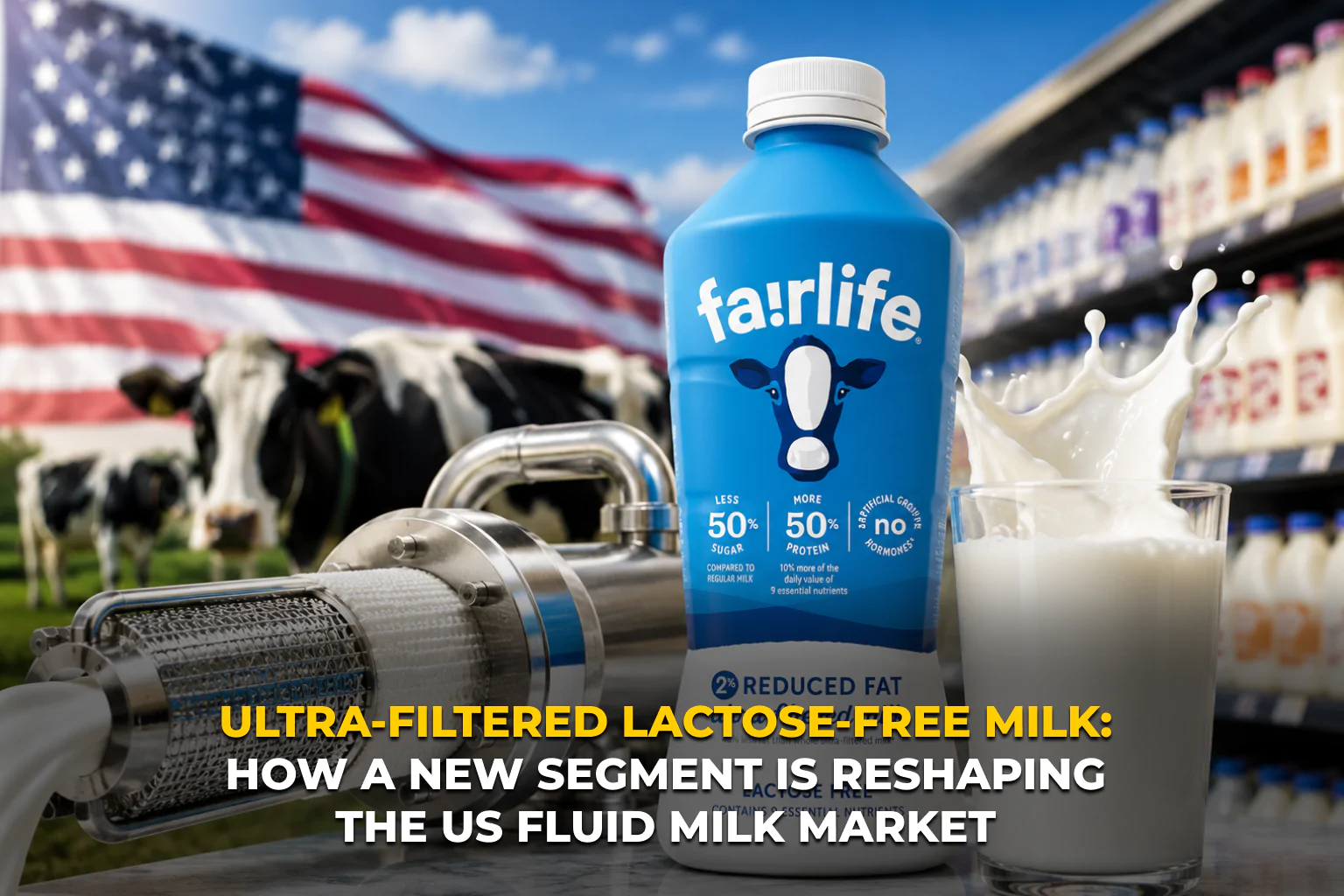
US fluid milk sales had been declining for years — but since 2024, the market has stabilised. As John Geuss notes in his blog on Milk Pay reports, the reason is the rapid rise of the ‘Other’ milk category, which has grown by nearly 600% in six years, driven by ultra-filtered, lactose-free products from Fairlife and Kirkland.
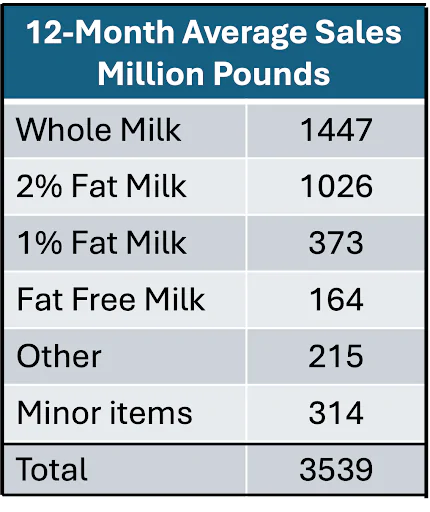
The USDA fluid milk report includes categories such as whole milk, 2%, 1%, etc. The ‘Other’ category is a catch-all for everything else. Traditionally negligible, it has expanded by nearly 600% in six years. Most of this growth is ultra-filtered milk — 100% lactose-free — sold under the Fairlife (Coca-Cola) and Kirkland (Costco) brands.
Ultra-filtration pushes milk through a semipermeable membrane filter, separating components by molecular weight. The process removes water containing soluble lactose, concentrating protein by 50%. The filtered lactose is repurposed for animal feed or converted to glucose for use as a sweetener. The result: more protein, less sugar, more vitamin D and calcium, no lactose — at twice the price of regular milk.
Ultra-high temperature pasteurisation gives the product a nine-month shelf life by eliminating harmful microorganisms. Products with lower fat content are cheaper to produce but retail at the same price as whole milk. Costco’s ultra-filtered milk is only available at 2.0% fat.
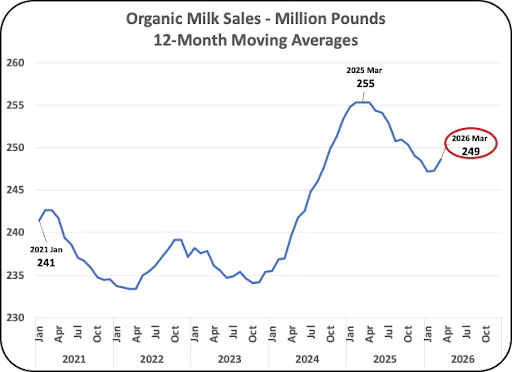
All major milk categories except ‘Other’ are in decline. Some of this reflects long-term trends; some is cannibalisation by growing ‘Other’ products. The ‘Other’ category is already larger than fat-free milk and may soon surpass organic milk and 1% milk. Whole milk has barely declined over five years, while 1% and 2% fat milk have fallen 22%.
Ultra-filtration products are technically processed foods, which are generally not considered healthy. However, none of the ingredients differ from milk straight from a cow. Ultra-filtration products are increasing overall milk consumption.
Source: Milk Pay