
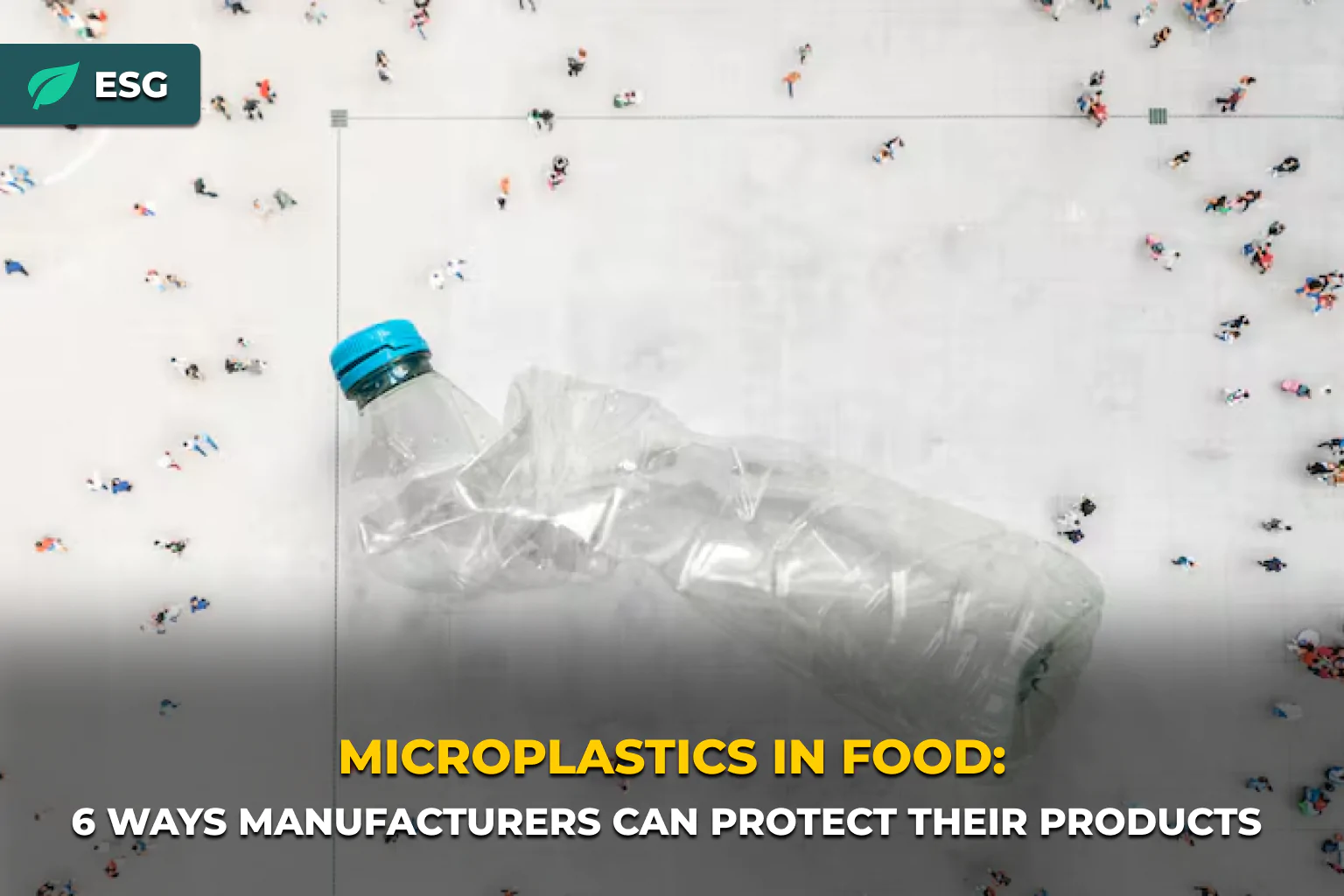
Microplastics were recently found in Nestlé Gerber and Danone baby foods. But how can food companies keep them out? As FoodNavigator reports, there are six approaches — from changing packaging to educating consumers.
Greenpeace identified microplastic particles in every analysed sample of Nestlé’s Gerber and Danone’s Happy Baby Organics products, sold in plastic squeeze pouches. Microplastics are a problem across the food industry, linked to abdominal pain, nausea and vomiting.
1. Replace synthetic coatings
PE or PET laminations on paperboard are a common source of contamination. Alternatives such as aqueous polymer dispersion coatings provide the same moisture and grease resistance with lower risk. Biodegradable and bio-based polymers are being explored for their lower propensity to generate microplastics, says Claire Sand of Packaging Technology and Research.
2. Source ingredients with lower microplastic contamination
Microplastics enter products through ingredients — water, seafood and agricultural products exposed to contaminated soils or irrigation water — before packaging even begins.
“Auditing and selecting ingredient sources with lower environmental microplastic burdens reduces the load that enters production before packaging or processing even begins,” says Sand.
3. Avoid plastic contact during high-risk processing conditions
Plastic fragmentation and migration increase with acidity, high temperatures and fat contact. Once high-risk contact points are identified, manufacturers can substitute non-polymer alternatives for those specific steps — reducing microplastic generation even if some plastic packaging is retained elsewhere in the system.

4. Filtration
Installing ultrafiltration or reverse osmosis systems at points where water contacts food during production captures microplastic particles before they reach the product. For liquid products such as oils, beverages and dairy, inline filtration systems can physically capture microplastics. Membrane filtration, depth filtration and centrifugal separation can all be applied at different production stages.
5. Advanced monitoring
Advances in spectroscopic and thermal analysis methods have improved microplastic detection accuracy. AI can further reduce errors in detection methods such as advanced spectroscopy.
6. Ensure consumers do not misuse packaging
Microplastic generation often results from consumer misuse — microwaving food in non-approved plastic containers, or storing food beyond the packaging’s intended shelf-life. It is essential to communicate clearly to consumers how to use materials safely.
What this means for industry
Microplastic contamination is widespread and not always easy to detect. Industry has an obligation to minimise it. While these methods will not eliminate risk entirely, they will help reduce it.
Source: FoodNavigator