

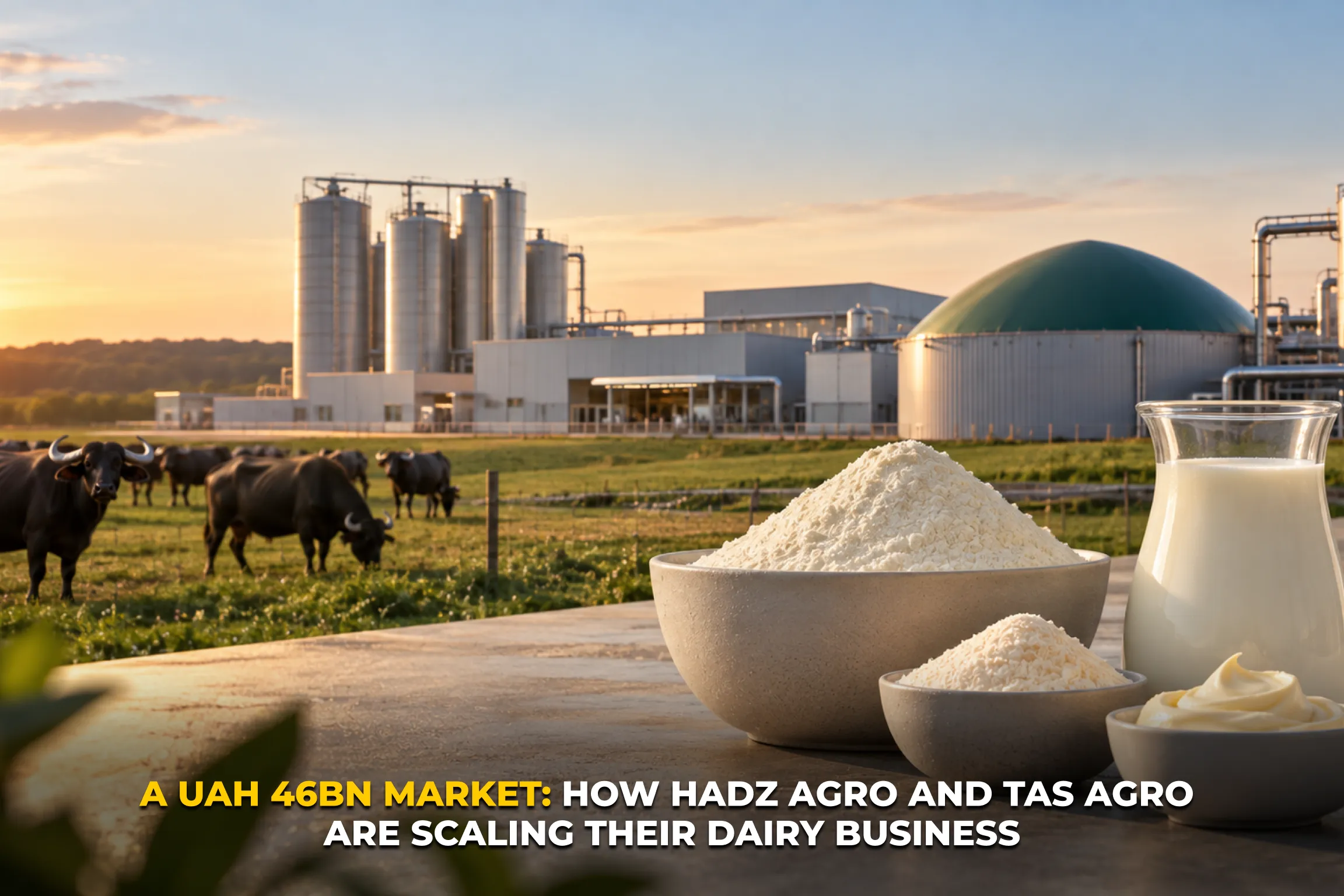
Ukraine’s cow herd fell 18% in a year. As some offload cattle, big companies are consolidating farms, investing in productivity and looking to earn from more than raw milk. Where is the UAH 46bn market heading?
Over the past year, Ukraine’s cow herd shrank 18%, to 933,000 as of 1 August 2026. Forbes Ukraine reports.
As a result, household cow herds fell 35% over the year, while the industrial sector’s herd grew 3% — and business now accounts for 54% of all cattle in the country.
«Industrial milk output is rising, says AMP deputy director general Olena Zhupinas: up about 7% last year and another 4% in the first half of 2026, driven mainly by higher cow productivity and farm consolidation».
In 2025, industrial farms produced roughly 2.8m tonnes of raw milk worth UAH 46.2bn at an average purchase price of UAH 16.65/kg, she calculates.
Serhiy Tihipko’s TAS Agro plans to raise its herd 1.6-fold, to 5,000, after consolidating and rebuilding farms. Ternopil-based Hadz Agro — half-owned by fuel company OKKO — has grown its herd about 16% since 2024, to 11,000, producing 210 t of milk a day.
Yet 2026 can hardly be called successful.
«After several profitable years, we are now working at the edge of profitability,» says Hadz Agro CEO Andriy Sanahurskyi.
The main cause: fuel rose 67–75%, lifting silage cost by at least 22%; roughage — the core of a cow’s diet — makes up over half of milk’s cost. Added pressure comes from EU animal-welfare and manure-management requirements that demand equipment investment, Zhupinas explains.
Low livestock margins used to be offset by crop profits — but not this year, when grain profitability hit a low amid blocked ports.
Long-term investment over quick fixes
Since 2024, Hadz Agro has boosted cow productivity by 50%.
«The strategy rests on genetics, feed quality and strict adherence to technological processes,» Sanahurskyi explains.
Livestock does not allow quick strategy shifts — the genetics-improvement cycle alone takes about three years, from inseminating a cow with quality genetic material to when its offspring itself starts giving milk.
The company won’t disclose its efficiency investment but has paused new ones: «Animals are at zero, grain too, so the main thing now is to wait for better times.»
Farm consolidation is the trend, especially in central and western regions, Zhupinas says. TAS Agro is merging four barns into two.
«We’ll grow the herd at two farms at the expense of the other two — we send no animal to slaughter,» says TAS Agro livestock head Ruslan Vyshnevyi.
The Kharkove farm’s herd is to rise from 650 to 2,100 head, and Mykhailivka’s from 250 to 1,200.
Consolidation saves on logistics, energy, machinery and eases labour shortages: «Where milk used to be collected from four points at 7 tonnes each, now it’s two locations at 20–25 tonnes», he explains — also cutting cooling-equipment and generator costs. Despite pricier energy, TAS Agro held milk cost at last year’s level, «or even cut it by 10–20 kopiykas through efficient use of technology and feed.»
From the barn to processing
«Trading raw material, as practice shows, is very unprofitable and very hard — you depend on many factors. So you have to go into processing,» says Vyshnevyi. TAS Agro plans an industrial park for drying milk and whey and making cream; the project is still seeking investment, with budget and timing undisclosed. Another direction is biogas — Hadz Agro and OKKO plan to produce it at their livestock complexes.
TAS Agro already has an example of moving toward higher value-added products: from the milk of 180 buffalo, it makes over 23 products, including yogurts, lactose-free milk and cheeses, sold across eight retail chains.
«We must look at different models — global milk production, big industrial farms, or craft processing — but not focus on raw material alone,» Vyshnevyi says.
Source: Forbes Ukraine