
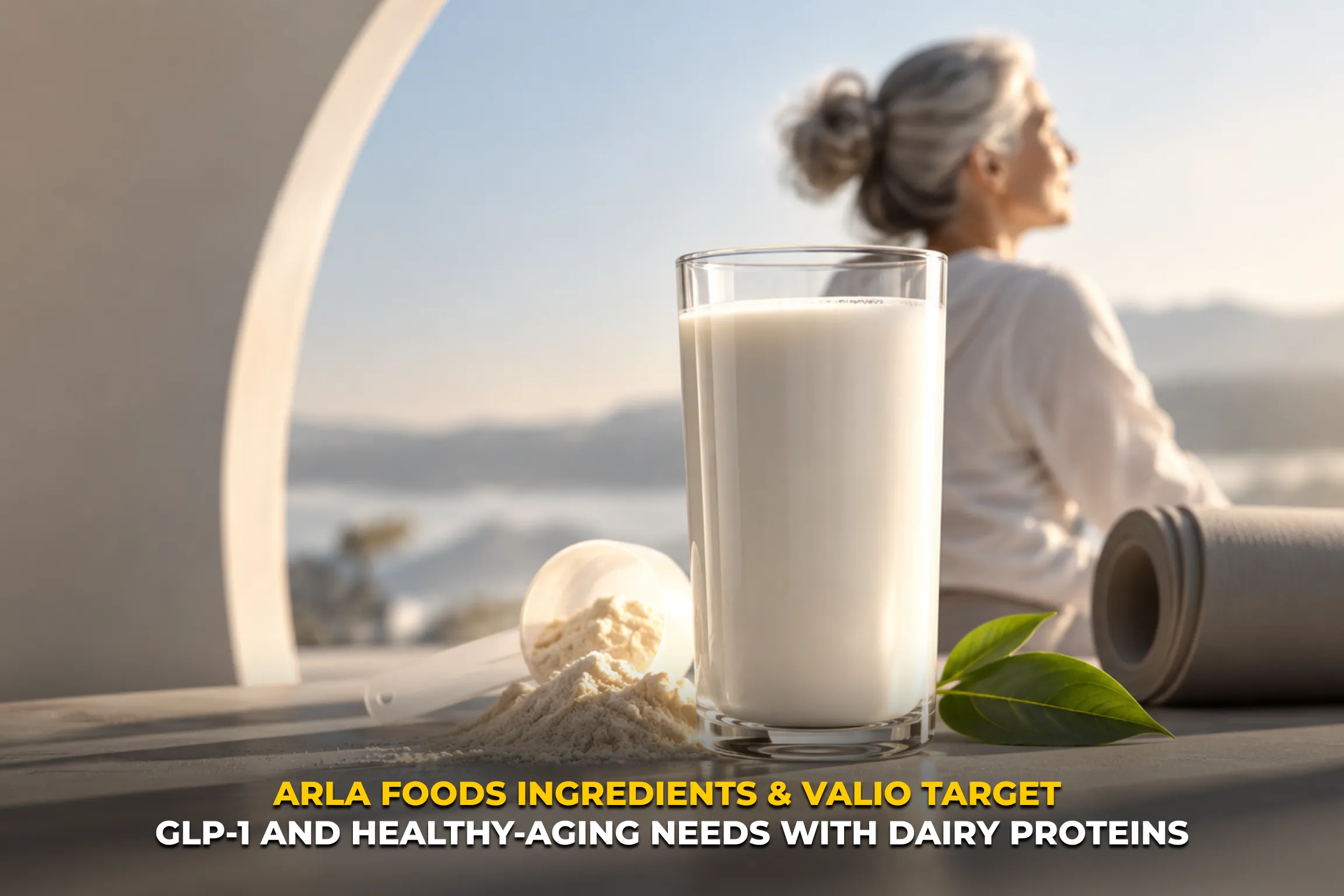
As global dairy-protein demand surges, Arla and Valio bet on high-purity whey, MFGM and milk fractionation for GLP-1 companion nutrition and healthy aging.
As the global appetite for high-quality dairy protein surges, functional-ingredient leaders are innovating with next-generation proteins aimed at evolving health trends — from GLP-1 (glucagon-like peptide-1) companion nutrition to multifunctional healthy-aging solutions.
Nutrition Insight spoke with representatives of Arla Foods Ingredients and Valio about GLP-1-driven weight-loss nutrition, high-purity whey, advanced milk fractionation, and navigating global regulatory and supply-chain hurdles, Nutrition Insight reports.
Key points:
- GLP-1 weight-loss drugs are driving demand for small-format whey products that prevent muscle loss and support digestion.
- Advanced dairy processing — fractionation and hydrolysis — enables targeted benefits for cognition, performance and healthy aging.
- Strict claims rules hinder on-pack messaging, while price sensitivity and supply-chain risks add broader market pressure.
„Demand for whey protein is surging globally, with manufacturers running at or near maximum capacity… driven not just by the ongoing protein megatrend, but also by increasing GLP-1 use, which has highlighted mainstream consumer concerns about muscle maintenance,“ says Katrine Helene Fruergaard Holm, marketing manager at Arla Foods Ingredients. Interest is growing in smaller servings that pack high protein, she adds, and whey proteins — supplying all the essential amino acids for muscle health — are ideal for them.
That demand is largely driven by appetite-reducing GLP-1 medications, which cause rapid weight loss but risk muscle degradation without adequate nutrition.
„While lean muscle loss typically comprises 25% of total mass loss with traditional weight-management interventions, this can be as high as 40% with GLP-1 use,“ Holm says — and it can persist after stopping the drugs, when many regain weight. During treatment, people often eat less and consume less protein.
Healthy aging remains a major long-term driver, says Annamari Lammi, SVP of Powders and Baby Food at Valio: consumers across life stages seek dairy-protein support for muscle health, satiety, digestive well-being, vitality and recovery — and increasingly expect more than one benefit, favouring combinations such as protein with digestive well-being, weight management or healthy aging.
What’s next for whey
Whey is ideal for the issues of rapid GLP-1 weight loss thanks to its amino acid profile, high digestibility and evidence-backed muscle benefits, Holm says. Arla Foods Ingredients has built application concepts for tasty, high-protein, lactose-reduced options for the GLP-1 market.
„Our latest concepts feature our Lacprodan BLG-100 and Nutrilac ProteinBoost whey protein solutions and include a water-based high-protein shot, a fermented shot, and fermented drinking and spoonable yogurts,“ Holm details — small formats that appeal to reduced appetites, delivering all essential amino acids and incorporating probiotics or cultures for digestive well-being, making whey a trusted companion both on and off GLP-1 medication.
MFGM-boosted formulas
Valio frames „new age dairy“ as advanced dairy science plus targeted nutrition and scientifically supported benefits, Lammi says. Its innovation focus spans high-protein dairy ingredients, advanced protein processing and hydrolysis, and milk fractionation.
„Our clinical research has shown promising results for high-protein dairy products rich in milk fat globule membrane (MFGM) in supporting physical performance and cognitive well-being during aging,“ she highlights.
The company has also shown that protein-hydrolyzed lactose-free milk made with Valio technology can improve digestive tolerance in people with functional gastrointestinal disorders or milk intolerance.
Market challenges in dairy
Even as GLP-1, active-aging trends and social-media protein talk have raised health literacy, Holm sees a growing disconnect between what consumers can grasp and what manufacturers may say on pack.
„While scientific evidence consistently shows that not all proteins are nutritionally equivalent, regulatory frameworks generally allow only broad protein-related claims, such as ‘protein contributes to the growth and maintenance of muscle mass’… These claims apply to protein as a category and do not differentiate between protein sources,“ she underscores.
Current rules focus on protein overall rather than quality differences between sources, Holm notes, so consumers grasp that protein matters but get little guidance on which proteins work best for specific outcomes — leaving a gap between nutrition science and consumer understanding. The opportunity, she says, is educating health-care professionals, scientific stakeholders and consumers through channels beyond packaging, stressing protein quality over quantity.
Fragmented demand is another challenge, Lammi notes: some consumers pay for premium products while others stay highly price-conscious, calling for targeted rather than one-size-fits-all solutions. Geopolitical tension, trade uncertainty and economic change affect dairy markets, supply chains and investment, while climate challenges, extreme weather and animal-health risks can raise milk-production volatility.
„For the dairy industry, the challenge is therefore twofold: remaining agile and competitive in an uncertain operating environment while continuing to improve the sustainability and resilience of food production.“
Source: Nutrition Insight